
storytelling

  • The Power of Storytelling: Building Confidence Through Real Autistic Experiences

    You have probably noticed it, too. How the shelves of children’s books are filled with stories that feel… distant. I remember sitting on the floor of the library with a young Adrián, my heart sinking as I flipped through book after book. There were stories about “being kind to everyone,” which is beautiful, but none where he could truly “see” himself. None where the character got overwhelmed by the hum of the lights, or communicated joy with their whole body, or saw the world in patterns as breathtaking and complex as he does.

    That relentless search, that ache for a story that felt like a reflection and not a lesson, is where this all began. Storytelling, the right kind of storytelling, isn’t just a bedtime routine in our house. It’s a lifeline. It’s how we build confidence from the inside out, by showing my boys that their experiences are valid, real, and worthy of being the center of a great adventure. You can read more about our mission behind this in our post.

    The Quiet Magic of Seeing Yourself in a Story

    Let’s be real. For our kids, the world can feel like a place that constantly asks them to adjust, to mask, to explain. A story that mirrors their inner world does the opposite. It *comes to them*. It speaks their silent language.

    The Gift of Validation

    Imagine Guille, my five-year-old, pointing to a picture in a book of a boy covering his ears at a birthday party. His eyes get wide, and he looks at me, then back at the book, and pats his own chest. “Yes, mi amor,” I say. “He hears it too. It’s loud.” In that moment, he isn’t “too sensitive.” He is understood. By a character, by a story, and by me.

    That is the first, most profound power of authentic storytelling: validation. It tells my children, “You are not alone in this feeling. Your experience is real, and it is part of a story.” For Adrián, reading about a character who infodumps about dinosaurs and then feels awkward about it didn’t make him feel awkward. It made him feel seen. It gave his own passionate way of loving things a name and a home in a narrative. That is a building block of confidence you cannot create with just praise. It has to be felt.

    Finding a Roadmap in the Pages

    Confidence isn’t just about feeling good. It’s about believing you can handle things. This is where relatable characters become gentle guides.

    I remember when Adrián was dreading a school field trip to a crowded museum. We read a story about a character who used a “secret mission” checklist (first floor, find the blue whale, then find the quiet corner for five minutes) to navigate a busy place. It was a story, just a fun tale. But the next week, he asked if he could make a checklist for the museum. The story didn’t lecture him about coping strategies. It showed him a hero using one. It gave him a roadmap, disguised as an adventure. He felt in control, not because I told him he would be okay, but because a character he trusted had shown him how.

    More Than a Book: A Tool for Connection

    In our house, the right book is less about literature and more about a toolkit for understanding, for my boys, for me, and for their world.

    Building the Language for Feelings

    Before stories, frustration was a tornado in our house. Guille would cry, Adrián would shut down, and I would be left guessing. Stories gave us a common language. We read about a character who felt like a “soda bottle shaken up.” Now, when Adrián feels that bubbling overwhelm, he can sometimes say, “I’m a soda bottle, Mom.” That is huge. That is self-awareness, born from a metaphor in a picture book. It turns a confusing internal storm into something we can name and, therefore, something we can begin to manage together. Even Social stories hand-drawn work!

    Creating Bridges to Their World

    This is perhaps the most hopeful part. These stories aren’t just for my kids. They are for their peers, their teachers, their extended family. When I share our Loving Pieces Books with Adrián’s class, I’m not asking the kids to be nice. I’m inviting them into a fascinating, different perspective. I’m showing them why Guille might need to jump to feel calm, or how Adrián’s detailed memory works like a super skill.

    It transforms “that weird thing he does” into “oh, that’s how he works.” It builds empathy not from obligation, but from understanding. It helps create a supportive community around them, one curious reader at a time.

    This Is Why I Do What I Do

    I am not a children’s author by trade. I am a mom and along with my husband got tired of not finding the stories our sons deserved. We wrote the books needed in those lonely library aisles. I personally wrote them for the moms and dads who are searching for that mirror. I wrote them for the teachers who want to connect but need a doorway in. Most of all, I wrote them for the Adrian’s and Guille’s, to whisper through the pages: You are the main character of this story. Your way of being is not a side plot. It is the magic itself.

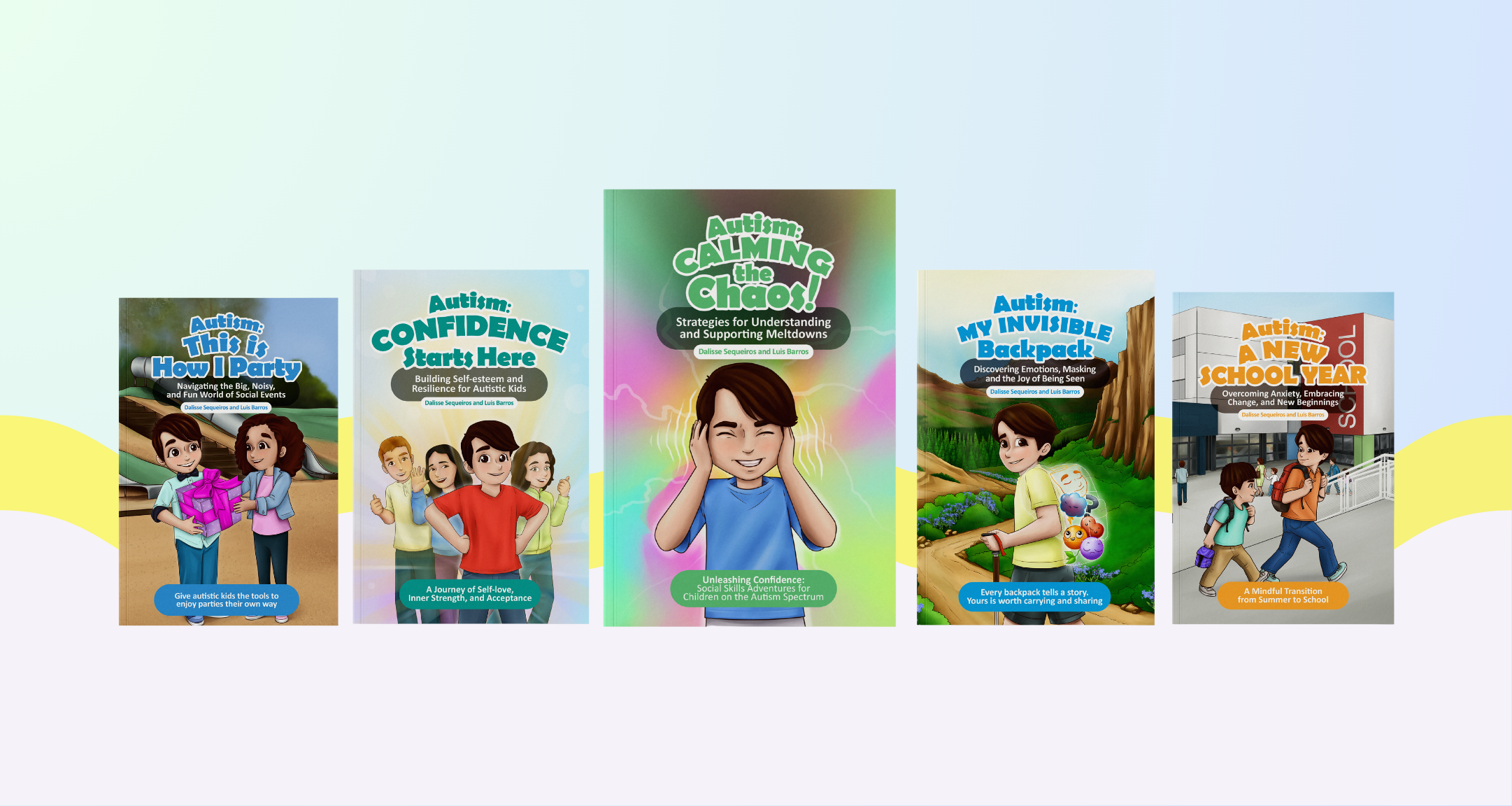
    If this resonates with you, if you are also searching for that authentic reflection for your child, I invite you to explore our book series, It’s a collection of stories and guides born from our real, messy, beautiful life a place to start when you’re ready to see your child’s story celebrated.

    Remember, the most powerful story you will ever help write is the one your child believes about themselves. Let’s make it a good one.

  • Building Self-Confidence in Autistic Children Through Storytelling: A Journey of Empowerment

    I want to start with a moment I don’t usually talk about.

    A few years ago, I was sitting on the floor of my son’s bedroom, surrounded by books that were supposed to “help” him, the kind with perfectly behaved cartoon kids and neat, tidy resolutions. You know the type: the stories that feel nothing like real life.

    He was flipping through one of them, half-interested, half-checking out. And I remember thinking, “This isn’t him. This isn’t us. These stories don’t see him.”

    I felt that familiar ache, the one that whispers, You’re not doing enough.

    But then something shifted. I picked up a different book, one where the main character moved through the world the way he did. Literal. Sensitive. Observant. Beautifully unique.

    Halfway through the story, he did something incredibly small but incredibly meaningful: he scooted closer. No words. Just a tiny movement… but to me, it felt like a bridge had formed between us.

    That’s when it hit me:

    Confidence begins the moment a child feels genuinely seen. And stories have the power to do that in a way nothing else can.

    Why Stories Matter So Much for Autistic Children

    I’m not here to lecture you with a stack of research papers, but experts have long known that storytelling helps children understand emotions, develop identity, and build resilience.

    I’ve seen this in real life, too, both with my own kids and with countless families in our community.

    Stories don’t just teach lessons.
    They offer mirrors.
    They offer language.
    They offer belonging.

    Especially for autistic children, who often navigate a world that misunderstands their rhythms, interests, and sensitivities.

    Let’s break down the real magic behind storytelling, the kind that actually builds confidence from the inside out. The books that we pour our our love in creating for all Autistic Children not only ours.

    Seeing Their Strengths Reflected Back

    When you read stories that resonate, they become a mirror. They reflect the strengths within. For autistic children, tales that show characters like themselves can be transformative. These stories help them see their potential. Imagine a child reading about another who excels in areas they too find interesting. This connection is powerful. It reinforces what they are already good at. Here’s the key insight: seeing their strengths in stories can boost their confidence.

    But it’s more than just seeing strengths. It’s about understanding them. Autistic children often have unique interests. Stories that highlight these interests validate their passions. This validation is crucial. It tells them that what they love is important. It encourages them to pursue what they’re passionate about. This pursuit can lead to personal growth. And when growth happens, confidence follows.Have you ever watched your child light up when something finally “clicks” for them?

    That spark is everything.

    When autistic children see characters who think like they think, feel like they feel, and love what they love, they begin to understand something powerful:

    “My strengths matter. My interests matter. I matter.”

    So many autistic children have deep passions, for my kids they love trains, animals, space, history, weather patterns. When those passions show up in stories, something shifts. Their shoulders soften. Their eyes widen. There’s this quiet sigh of relief because, for once, the world matches them instead of the other way around.

    And if I’m honest, it’s a relief for us, too.
    It’s like, Okay, they see themselves.
    That alone builds confidence more than any motivational speech ever could.

    Resilience Through Relatable Characters

    Let me share a tiny scene from our home.

    One night, while reading a story about a boy who struggles with sensory overload, my son paused and whispered, “Like me.” Two words. That’s it. But those two words were the doorway to a conversation we had never been able to touch before.

    Stories can give our children the courage to face hard things, not because the character is perfect, but because the character keeps trying.

    They learn:

    • Everyone struggles
    • Struggles are normal
    • There are different ways to solve problems
    • They are not alone in what they feel

    That’s resilience… not the tough-it-out kind, but the deeply human kind that grows slowly and quietly.

    Embracing Identity Through Narratives

    Let’s be honest. Growing up autistic in a world designed for neurotypicals can chip away at a child’s self-worth. I’ve seen it. Maybe you’ve seen it too.

    That’s why it matters so much when stories celebrate neurodiversity instead of trying to “fix” it.

    When a child sees affirming stories, they learn:

    “My identity is not a problem. It’s a strength.”

    These stories give them the words to name their needs without shame. They teach them how to advocate. They help them understand their sensory world. They normalize differences instead of highlighting them as flaws.

    This is where confidence begins to root itself deeply, in identity, not performance.

    Safe Spaces for Expression

    I’ll be honest with you: my kids didn’t always have the language to express their emotions. And I didn’t always know how to help them find it.

    Stories changed that for us.

    Characters model how to name feelings, how to ask for help, how to say “I need a break.” And suddenly, those hard conversations become softer, easier, more accessible.

    Stories create the emotional safety net many autistic children need before they can step into self-confidence.

    And as parents, reading with them becomes its own version of therapy, one we get to share from the couch under a blanket.

    Books as Tools for Social-Emotional Learning

    This isn’t about “fixing” our kids. It’s about equipping them.

    Books naturally teach:

    • empathy
    • problem-solving
    • emotional regulation
    • communication skills
    • navigating friendships
    • understanding boundaries

    And when these lessons come through characters who feel familiar… they stick.

    Research backs this up, but honestly, our lived experiences say the same thing.

    The right story at the right time can change everything.

    Authentic Books for Neurodiversity

    Authentic books are more than stories. They are tools for inclusion and learning. They celebrate neurodiversity and teach valuable lessons.

    The Truth: You Don’t Need to Be a Perfect Parent to Build Confidence

    If you take nothing else from this blog, I hope it’s this:

    Confidence does not come from perfection. It comes from connection.

    Every time you read a story that feels like your child…
    Every time you help them see their strengths in a character…
    Every time you give them language for their inner world…
    You’re building confidence, brick by brick.

    Even on the days when you feel like you’re winging it.
    Especially on those days, actually.

    You’re already doing more than you realize.

    If You Want to Take This Journey Even Deeper…

    If something in this conversation resonated with you, if you felt a little spark of recognition or relief, I created something with you and your child in mind.

    Check out our book Autism: Confidence Starts Here

    It’s filled with the kind of stories I wish I’d had when I first started parenting autistic children stories that validate, empower, and help kids see the brilliance in who they are.

    Your child deserves to feel confident.
    You deserve tools that actually help.
    And you’re not alone in this.

    One story at a time, we can help our children stand a little taller in who they already are.

    Check out our books and FREE Resources

    With love and Kindness,

    Dalisse