

Loving Pieces Books
Navigating Autism Together Through Social Emotional Learning


Children's Book
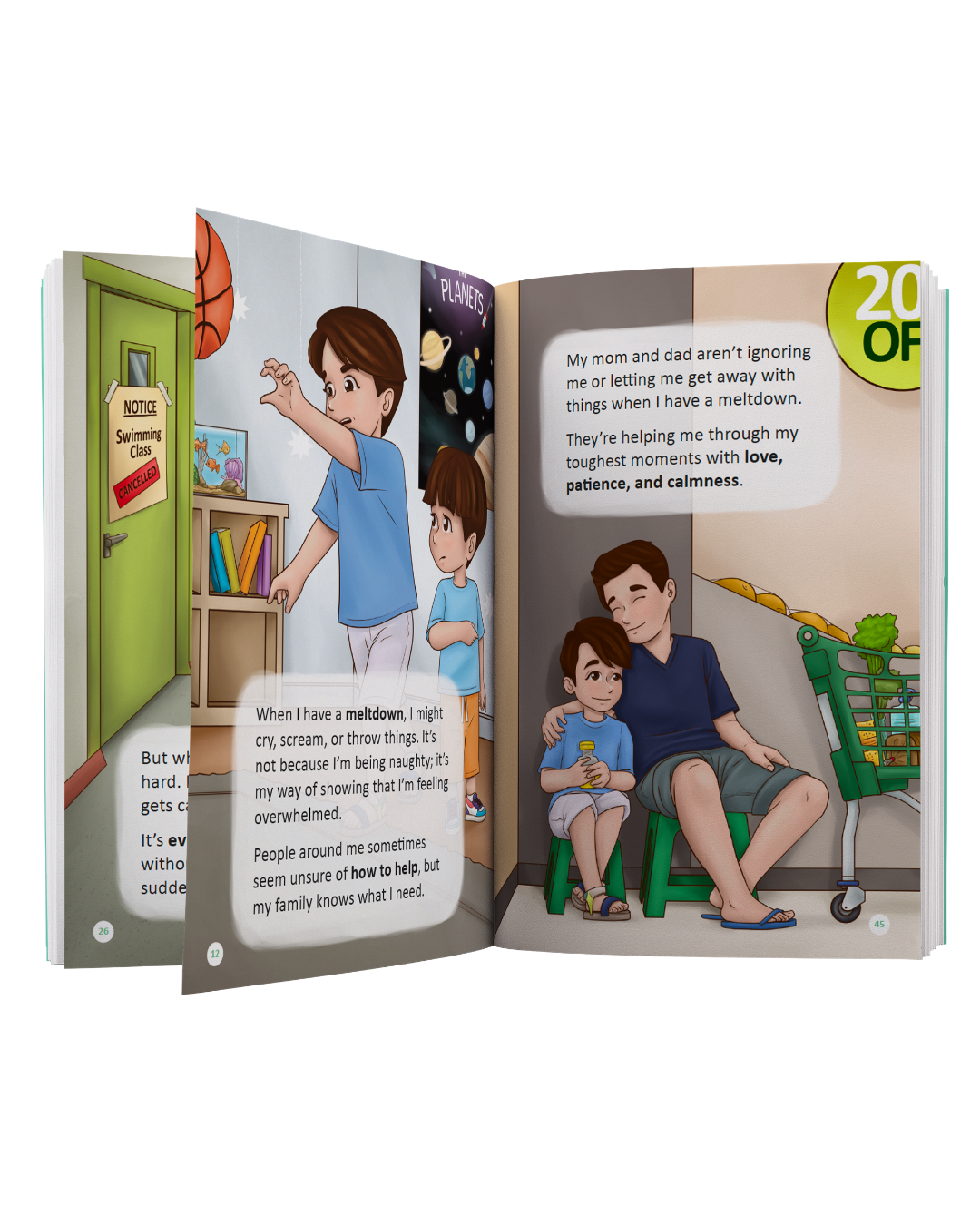
Meltdowns Are Not Tantrums.
This Book Explains the Difference.
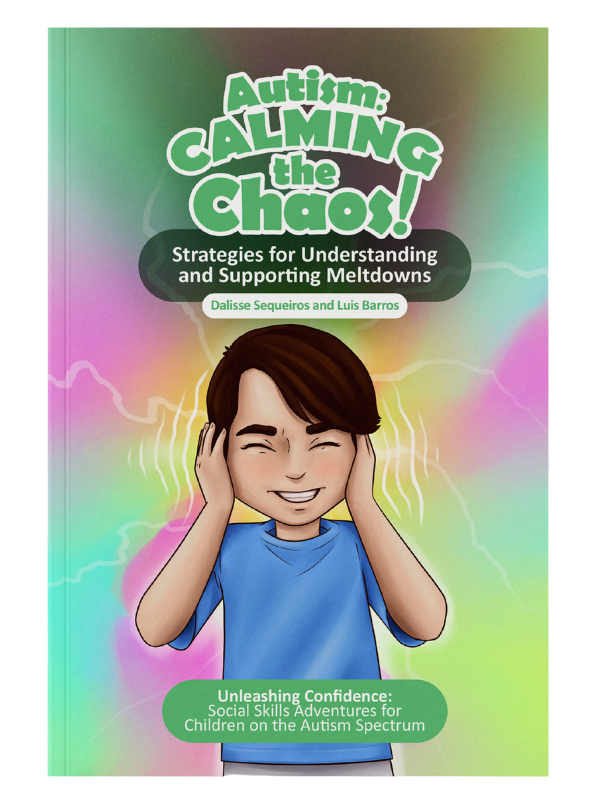
When Adrián’s world gets too loud, too bright, too much, this story shows him and the people who love him that his feelings make complete sense. With warmth and zero shame it gives autistic children real tools to ride out the storm and come back to calm.
What families are saying
5/5
“A supportive and easy-to-read book that explains autism in a way both kids and adults can understand. The illustrations bring the story to life, while the tips for handling meltdowns are practical and kind. Warm, clear, and empathetic, it’s a valuable resource for families, educators, and anyone wanting to promote inclusion.“
— Amazon Reviewer
5/5
“This book would be a great gift for anyone who has a neurodivergent child in their life. It offers very clear explanations of common behaviors and, most importantly, strategies for how to help. Written with incredible empathy towards both children and parents.”
— Amazon Reviewer
5/5
“I got this book so my kids could understand why their cousin had meltdowns at family reunions. The illustrations are beautifully done and the story is perfect for explaining autism to children. It opened my eyes too.”
— Amazon Reviewer
⭐⭐⭐⭐⭐ Rated 4.8 out of 5 on Amazon
Read what over 100 families are saying about Autism: Calming the Chaos!
Featured in:



Paperback & Ebook · Free Travel Kit included · Available worldwide
A note from our family
In the beginning, we saw meltdowns as bad behavior. We talked too much when we should have stayed quiet. We have made every mistake in this book. That is why we wrote it.
We are an Autistic Family, and we wrote this book because we needed it. Adrián’s and Guillermo’s meltdowns were among the hardest things we faced as a family. Not the meltdowns themselves. The not knowing. We share what we learned so your family does not have to figure it out alone.
We Hear You
Does This Sound Like You?
You try helping your child more than anything. And you still feel completely helpless in those moments when everything falls apart.
You cannot tell the difference between a meltdown and a tantrum.
And that matters, because they need completely different responses. When you treat a meltdown like a tantrum, it makes everything harder for your child and for you.
You feel like you are always one step behind.
You can see the storm coming but you do not know how to stop it. And in the middle of it, you freeze. Afterwards you replay it wondering what you could have done differently.
Your child feels shame after a meltdown. And so do you.
In public, at school, at family dinners. The looks from other people. The exhaustion. The worry that your child believes something is wrong with them. Nothing about this is okay and you know it.
Imagine The Possibility
What Changes When You Both Understand What Is Happening
Before This Book
- Meltdowns feel sudden, unpredictable, and impossible to manage
- Your child feels ashamed of something they cannot control
- You respond with discipline and it makes everything worse
- Everyone around you has an opinion and none of it helps
- You dread going out in public with your child
After This Book
- Your child understands what is happening in their body and why
- They have real tools they can reach for before things get too big
- You know how to co-regulate with them instead of escalate
- Meltdowns become something you move through together, without shame
- Your child knows their feelings make sense and they are not broken
Is This Right For You?
This Book Was Made For Your Family If...
This IS for you ✓
- Your child has frequent meltdowns at home, school, or in public
- You want to understand the difference between meltdowns and tantrums
- Your child struggles to identify or express overwhelming emotions
- You want to read this with your child so they feel understood, not fixed
- You are a therapist or educator working on emotional regulation
- You are a grandparent or family member who wants to truly understand
This is NOT for you if...
- You are looking for a clinical intervention or therapy manual
- Your child does not experience sensory or emotional overwhelm
- You want a book that frames meltdowns as behavior to be corrected
- You are looking for a quick fix rather than genuine understanding
Introducing
Autism: Calming the Chaos
A story about what it actually feels like when a nervous system reaches its limit. Adrián does not have a tantrum. He has a meltdown. And this book helps him, and the people around him, understand the difference. Written by an autistic family. Built for the hard days.
Inside the Book
What Adrián Discovers. What Your Child Takes Away.
Every moment in this story comes from real life. Here is what your child will feel reading each part of Adrián’s journey back to calm.
Chapter 1 & 2
Understanding Meltdowns and Sensory Overload
Your child sees their own experience named clearly for the first time. Not as bad behavior. As a nervous system that has reached its limit.
Loud noises, bright lights, crowded restaurants. Things that do not bother other people can make Adrián’s brain feel like it is spinning. This section gives children the language to name what is happening inside them before anyone else can misread it.
Chapter 3 & 4
Routines, Schedules and Communication
Your child understands that needing a plan is not a weakness. It is how they stay safe in a world that does not always warn them before it changes.
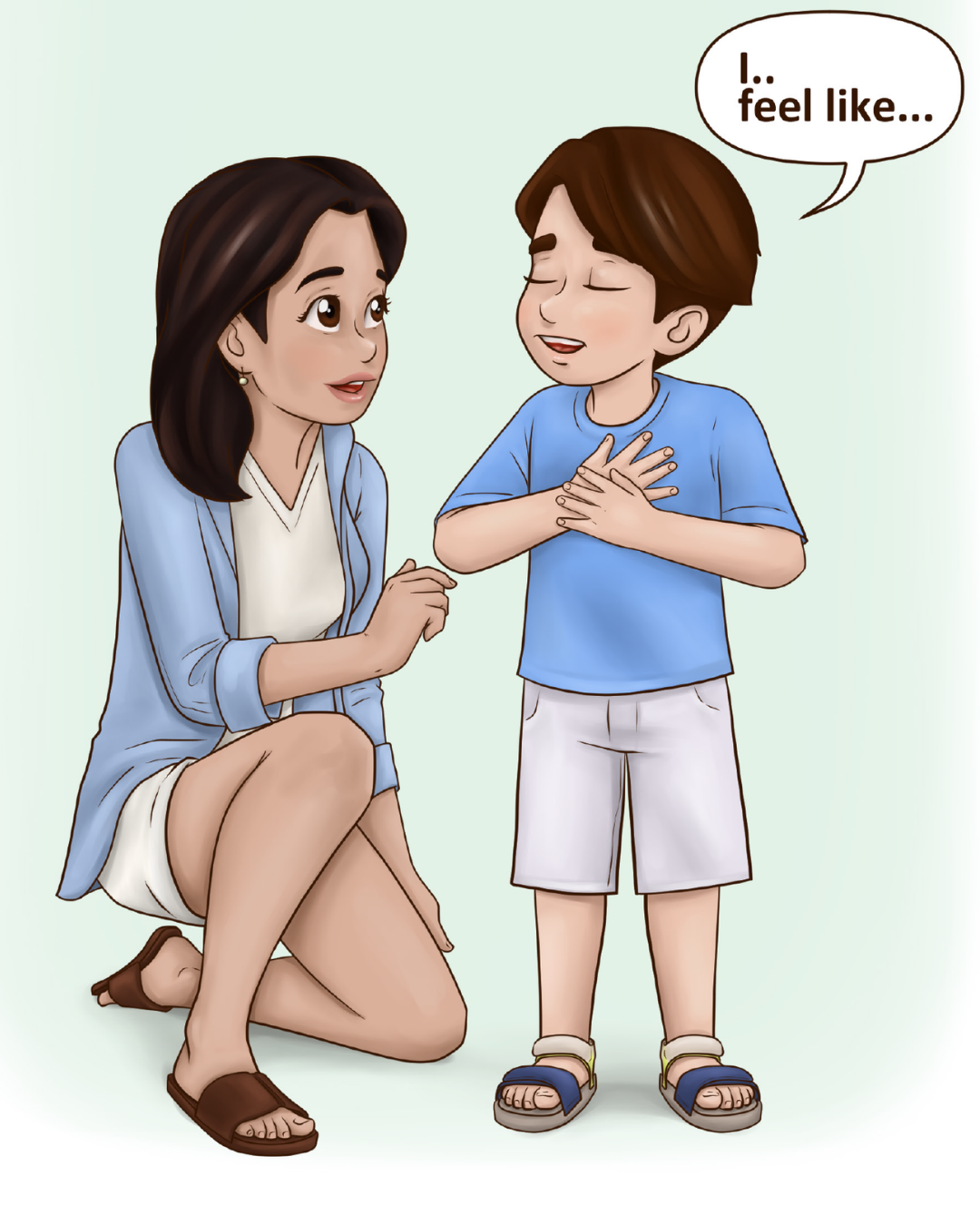
When Adrián’s after-school activity gets cancelled without warning, everything unravels. His parents and teachers use picture cards and stories to help him understand what is happening. Mom listens patiently, offers the communication cards, and says: I know the words are hard right now. Can you point to what you need?
Chapter 5 & 6
Helping During a Meltdown and at School
Your child sees what it looks like when the adults around them get it right. And they feel the relief of knowing that someone knows how to help.
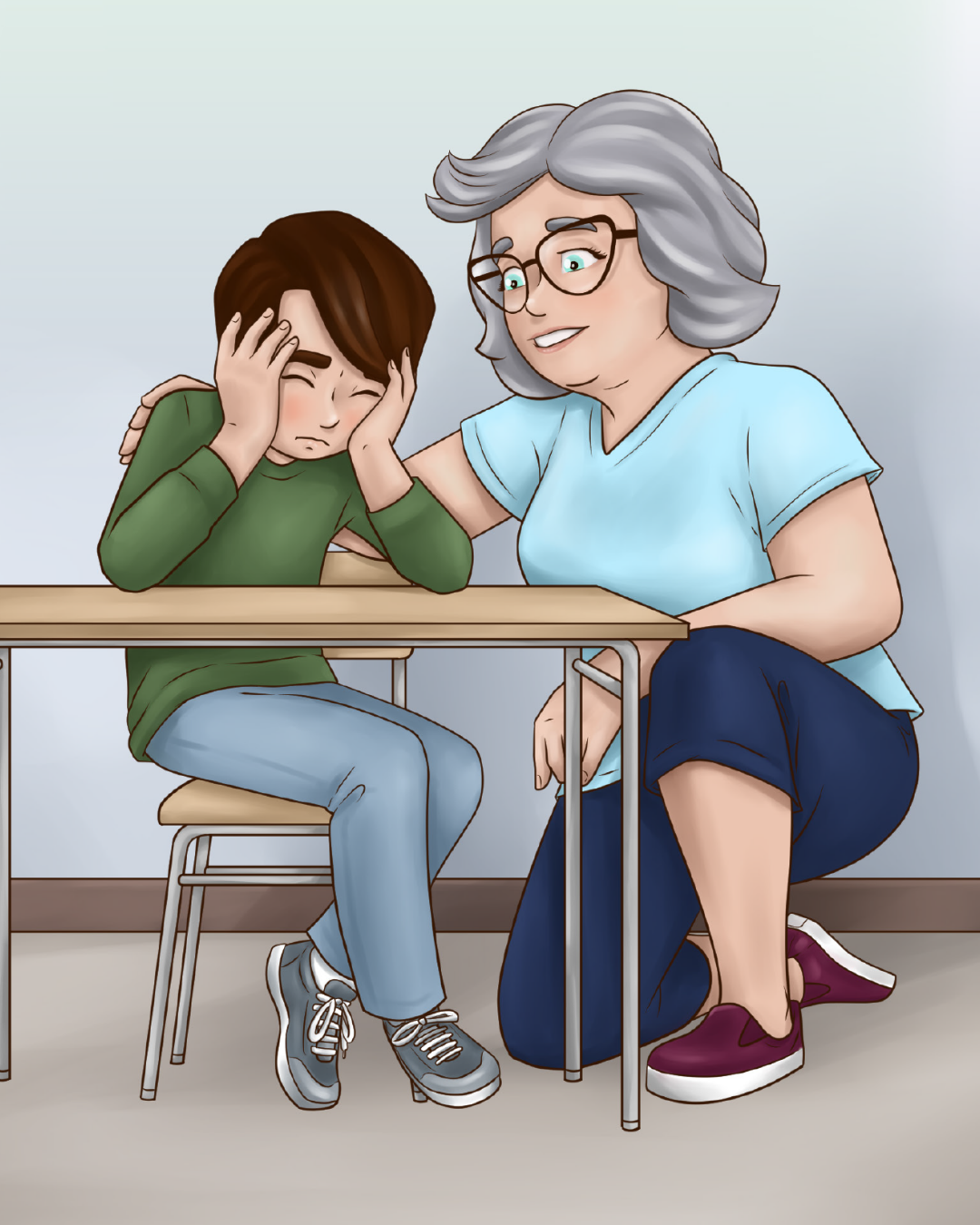
Dad kneels beside Adrián and stays quiet. He does not talk too much. He does not punish. He just stays. At school, Mrs. Nuria uses a calm voice, offers the calming corner, and says: I see you are feeling really upset right now. It is okay to feel this way. We are here for you.
Chapter 7
Stimming and Meltdowns
Your child learns that stimming is not something to be ashamed of. It is one of the tools their body already knows how to use.
Sometimes Adrián flaps his hands, rocks back and forth, or repeats a sound. His parents and teachers help him understand that this is how he manages his feelings and keeps himself focused. Not something to stop. Something to understand.
Chapter 8
Lost and Found
Your child sees that meltdowns can happen even when nothing is obviously wrong. And that the people who love them know how to help them find their way back.
Adrián cannot find his red double-decker London bus. His chest tightens. His eyes fill with tears. Mum and Dad sit with him, let him feel what he feels, and then gently help him follow the trail of pirate toys until they find it hidden under the pillows. Sometimes that is all it takes.
Chapter 9 and Tips for parents
Celebrating Differences and the Parents' Guide
The book does not end when the story ends. The guide at the back is where the real work begins for parents and educators.
Other kids, who are also autistic, presents about planets wearing his headphones and everyone claps. The book closes with the full Tips for Parents section covering triggers, meltdown management, co-regulation, stimming, post-meltdown care, and self-care for parents. Because you matter too.
For Parents and Educators
The Part Where You Stop Reacting and Actually Know What to Do.
This is not just a story to read at bedtime. It is a tool to open conversations that are hard to start any other way. The Tips for Parents section at the back gives you strategies organized by moment, before a meltdown, during it, and after.
- Explains the neurological difference between meltdowns and tantrums in language your child and family can actually understand
- Helps identify your child's unique triggers, whether sensory, emotional, or environmental
- Provides step-by-step strategies for moving through meltdowns with more calm at home and in public
- Teaches co-regulation techniques that build real trust between you and your child in hard moments
- Works for teachers and therapists as a story-based tool for emotional regulation sessions
- Removes shame from both sides and replaces it with understanding and genuine connection
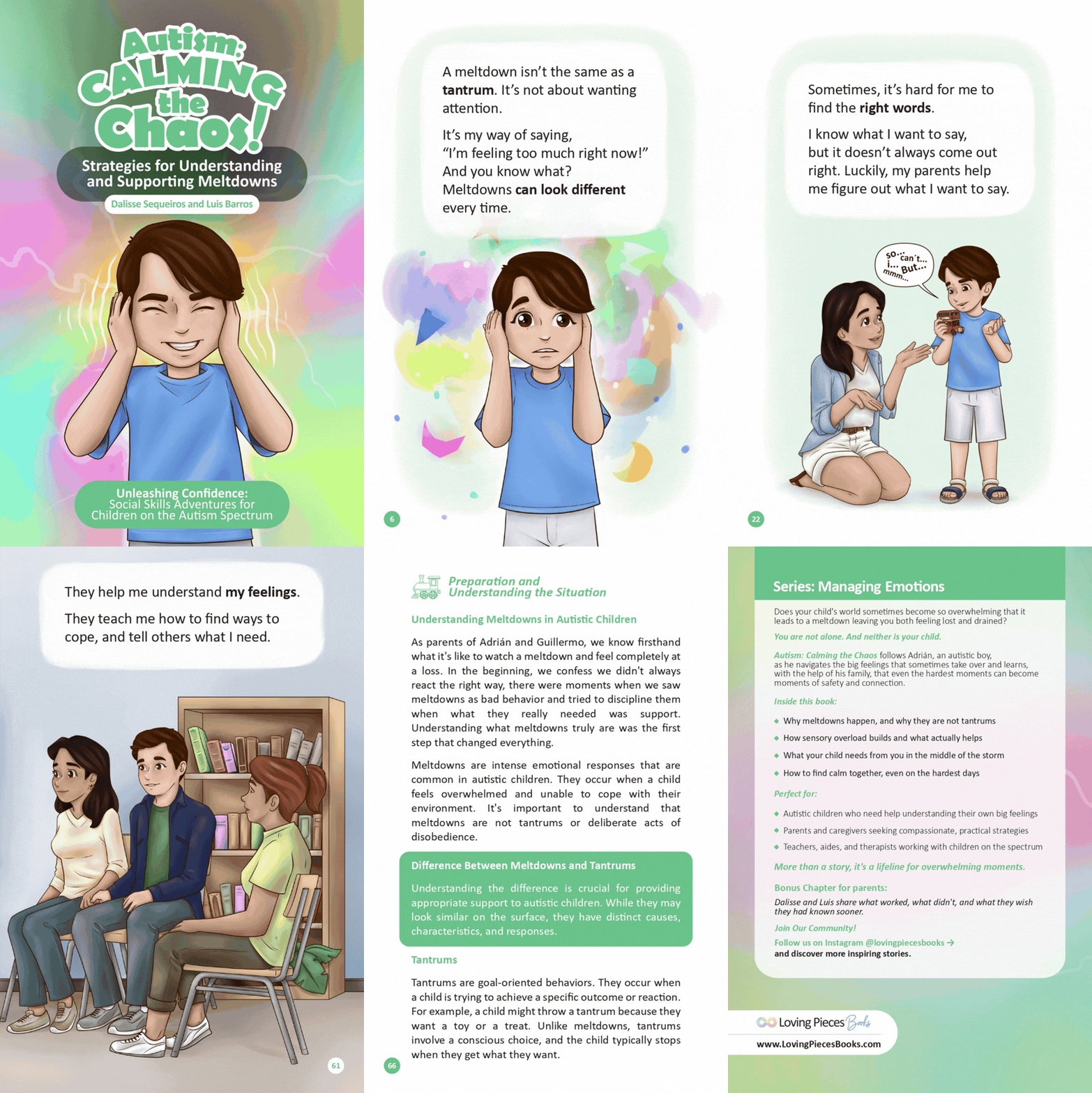
"Meltdowns are not bad behavior. They are your child's nervous system saying: I am overwhelmed and I do not know how to handle it" Dalisse and Luis, Loving Pieces Books
Free Bonus included with every purchase
Meltdowns and Autism: A Parent's Guide to Calming the Chaos
When you buy this book you get our complete Meltdown Guide as a free digital download. You are not failing. You just need a better map. This guide gives you one. Download instructions are inside the book.
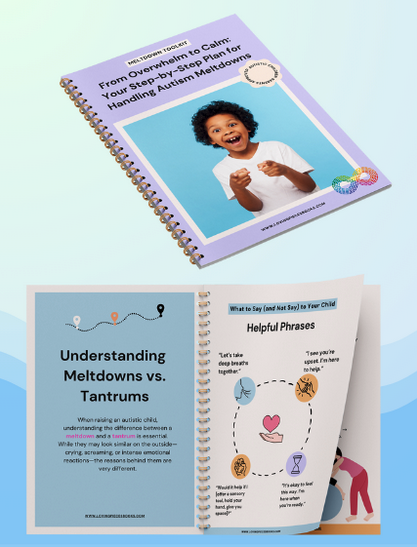
Why Meltdowns Happen
A clear explanation of why meltdowns occur and how they are genuinely different from tantrums, because understanding this changes everything about how you respond.
Identifying Your Child's Triggers
How to identify your child’s unique triggers, whether sensory, emotional, or environmental, so you can see the storm coming before it arrives.
Step-by-Step Management Strategies
Practical strategies to move through meltdowns with more calm, both at home and in public, without making things worse.
Co-Regulation Techniques
Techniques that help your child feel safe and supported in the moment, building the kind of trust that makes future meltdowns easier to navigate together.
Printable Calming Toolkit Checklist
A practical sensory checklist you can print and use right away, including the tools that actually help and how to have them ready before you need them.
After the Meltdown Guide
How to reconnect with your child after a hard moment without blame on either side. Because what happens after matters just as much as what happens during.





Meet the Authors
Written by a Family Who Made Every Mistake First
We are Dalisse and Luis, and we are raising two autistic boys, Adrián and Guillermo. We wrote this book from the inside of the experience, not from observing it.
In the beginning, we saw meltdowns as bad behavior and tried to discipline them when what our boys really needed was support. We talked too much when we should have stayed quiet. We insisted on activities we thought were good for them when they simply were not interested. We took far too long to share our experience with other families, and we regret that.
We share this not to blame ourselves, but because we know many of you have felt the same. Meltdowns are not your fault. Nor your child’s. They are complex reactions to a world that is sometimes just too much for them.
Dalisse is also autistic, diagnosed as an adult after recognizing herself in her sons. Every strategy in these pages has been lived. Not just researched.
You Have Questions
We Have Answers
This book is designed for parents to read together with their children. The right age depends on your child’s support needs and reading level. As a guide, most families find it works best between ages 6 and 16. Some children will enjoy reading it independently. Others will get the most from it as a shared experience with a parent, carer, or therapist. There is no single right way to use it. You know your child best.
The story follows an autistic child, but the emotional regulation tools and the understanding it builds are useful for any child who experiences intense emotions or sensory overwhelm. It is also a powerful tool for neurotypical siblings, classmates, and family members who want to understand what their autistic loved one experiences.
Absolutely. Many therapists use this as a story-based entry point for conversations about emotional regulation, the nervous system, and self-advocacy. Teachers have used it to open classroom discussions about inclusion and empathy. The Tips for Parents section is equally useful for educators and therapists.
The free Meltdown Guide includes an explanation of why meltdowns happen and how they differ from tantrums, strategies for identifying your child’s triggers, step-by-step management strategies for home and public, co-regulation techniques, and a printable calming toolkit checklist. Download instructions are inside the book.
Every autistic child is different. We share what worked for our family and what we learned along the way. Some of it may work for your child. Some of it may need adapting. We never claim these strategies work for every child, because we know they do not. You know your child best. This book gives you a starting point, not a guarantee.
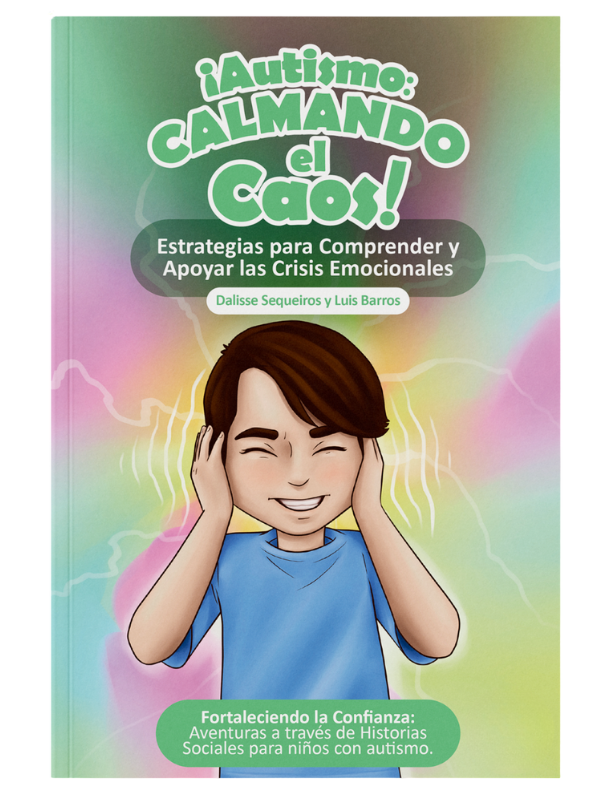
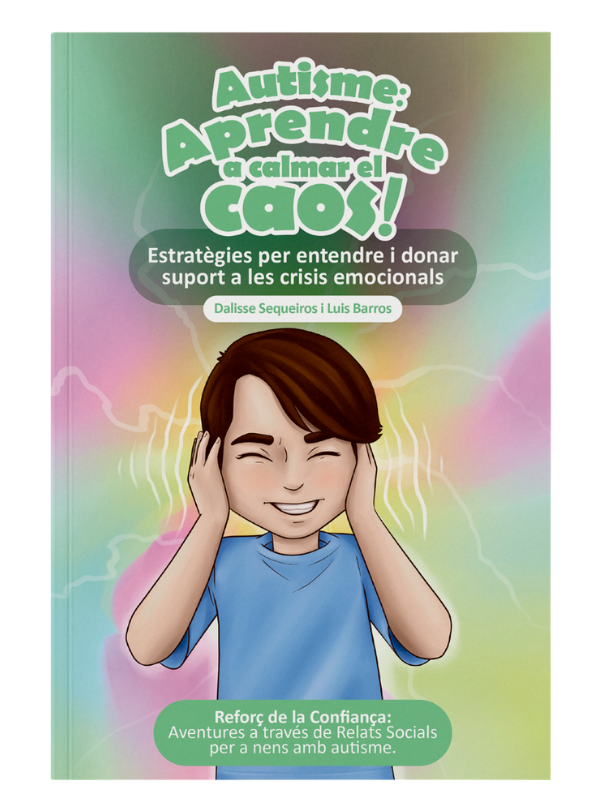
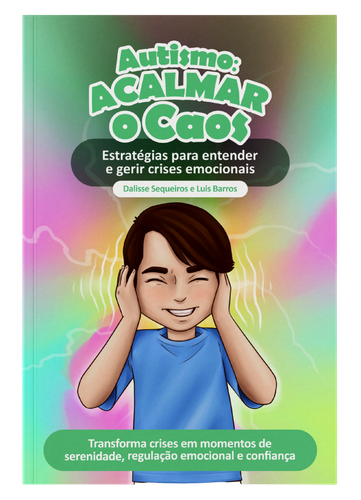
Paperback and ebook, available on Amazon worldwide in English, Spanish, Catalan, and Portuguese.
Continue the Journey
More Books for Your Neurodiverse Family
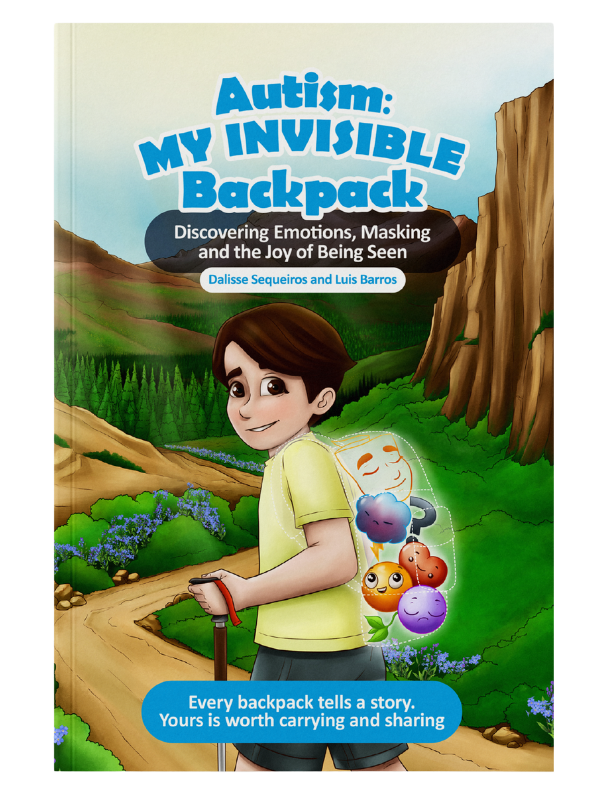
Autism: My Invisible Backpack
Everyone carries emotions they cannot always name. Adrián calls his the invisible backpack. On a family hike, he discovers what is inside it: big feelings, borrowed feelings, the exhaustion of masking, and the relief of finally taking the mask off. This book gives your child a language for their inner world and shows them they do not have to carry it alone.
Perfect for: kids learning to identify emotions, families navigating sensory overload and masking, therapists introducing emotional regulation tools
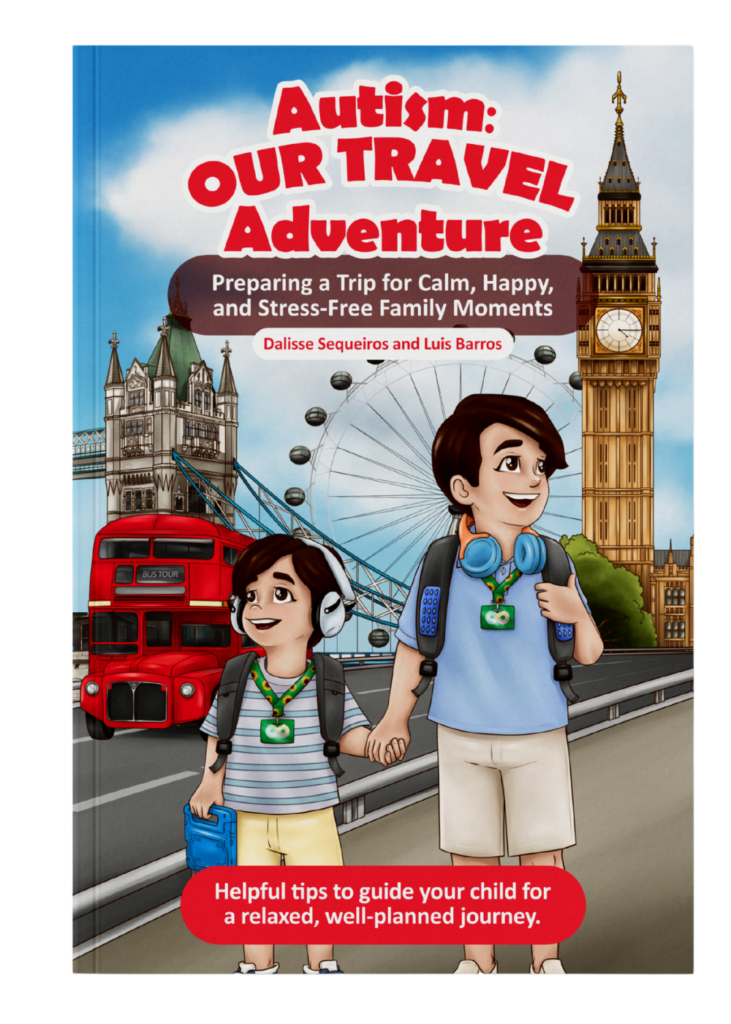
Autism: Our Travel Adventure
You have probably imagined it. The meltdown at airport security. The sensory overload on the plane. The voice that says: maybe we should just stay home. This is the book for the families who decide to go anyway.
Perfect for: autistic kids getting ready to explore. Families preparing a trip. Parents who need a clear, visual way to explain travel.
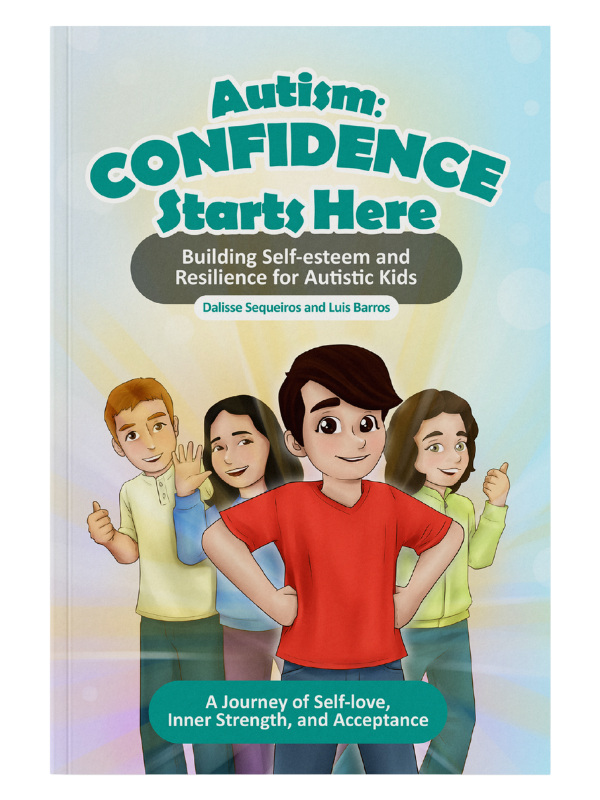
Autism: Confidence Starts Here
Adrián feels left out at recess. He loves history and trains and does not quite speak the same social language as the other kids. This book walks him through understanding what makes him unique, building real self-esteem from the inside out, and finding the courage to show up as himself even when it is hard. It includes affirmation cards your child can use every day.
Perfect for: kids who feel different, parents working on self-esteem and social confidence, therapists using story-based tools
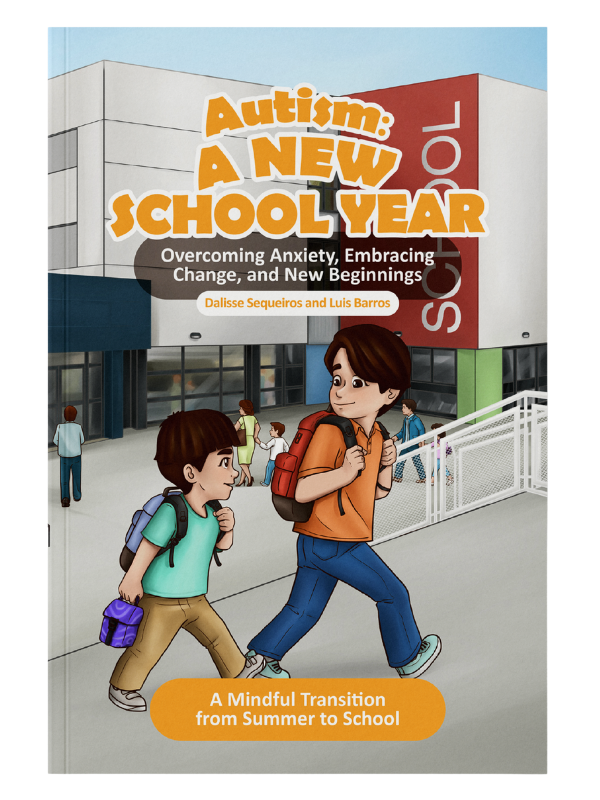
Autism: A New School Year
The summer is ending and the worries are starting. Adrián knows that feeling in his stomach, the tight chest, the tummy full of tiny bubbles. This book walks families through meeting a new teacher, building visual schedules, preparing sensory-friendly outfits, and arriving on day one feeling as ready as possible. Because readiness is not about being fearless. It is about having a plan.
Perfect for: back to school transitions, kids with anxiety around change, parents preparing their child’s teacher to truly understand them
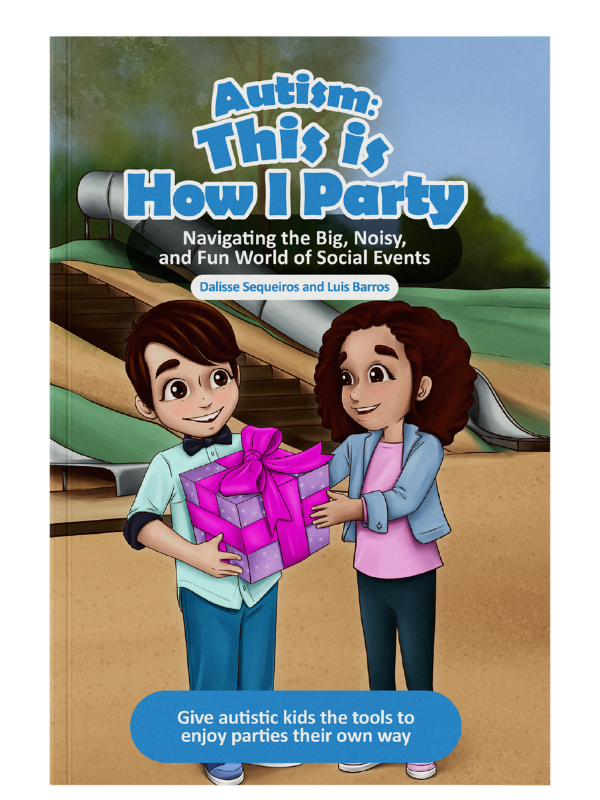
Autism: This is How I Party
Adrián gets invited to his friend Amelia’s birthday party. He is excited and nervous in equal measure. His family makes a Party Plan together, they practice the Birthday Candle Breath, and they talk through the where, who, what, and when. This book shows your child that social events are not something to survive. They are something you can actually enjoy when you go in prepared.
Perfect for: kids with social anxiety around events, families preparing for birthday parties or gatherings, therapists working on social readiness
Your Child Is Not Broken
They Just Need Someone to Explain What Is Happening Inside.
Meltdowns do not define your child. They do not have to define your family either. This book gives your child a language for what they feel and gives you a real way through the hard moments together.
The chaos does not have to win. This book shows you both the way back to calm.
Paperback & Ebook · Available Worldwide on Amazon
English · Spanish · Catalan · Portuguese
Free Travel Kit included with every purchase