
emotional regulation

  • Unpacking Your Child’s Invisible Backpack: A Journey Toward Emotional Understanding

    When Your Child’s Invisible Backpack Gets Too Heavy to Carry

    Five o’clock pickup. Every day.

    I watch Adrián walk out of school, and I can see it, the weight he’s been carrying all day finally starting to show.

    His shoulders are tense. His face is tight. His usual animated energy? Gone!

    By the time we get to the car, he’s barely speaking. And by the time we get home? Full meltdown!

    For years, I thought I was doing something wrong. Why does he hold it together at school but fall apart at home? Why is he so exhausted after a “normal” day?

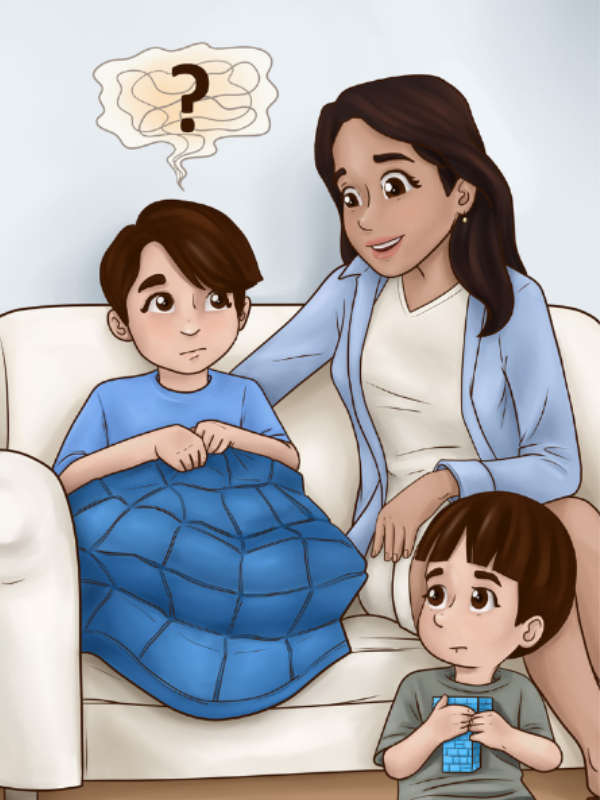
    We came up with a concept that changed everything: the invisible backpack

    Every autistic child carries one. And most of us… parents, teachers, even the kids themselves, don’t realize how heavy it gets.

    What IS the Invisible Backpack?

    Imagine starting your day with an empty backpack.

    But every sensory input… every fluorescent light buzz, every unexpected loud noise, every texture that feels wrong, every social interaction that requires masking+adds a stone to that backpack.

    By lunchtime, it’s getting heavy!

    By afternoon, it’s almost unbearable.

    By the time your child gets home, their safe place, that backpack is so full, so heavy, that it all comes tumbling out…

    That’s what I was seeing with Adrián.

    He wasn’t “fine all day and then acting out at home.” He was holding it together where he had to, then finally releasing the weight where he felt safe enough to let go.

    Understanding this changed how I saw those after-school meltdowns. They weren’t behavior problems. They were evidence of how hard he’d been working all day just to keep it together.

    The Signs I Wish I’d Recognized Sooner

    Looking back, Adrián was showing me his backpack was getting heavy. I just didn’t know what I was looking at.

    The Quiet Withdrawal

    SOme days when Adrián comes home from school, he used to immediately go to his room. No hello. No “how was your day?” Just… retreat……

    I thought he was being rude or antisocial. But he was seeking the quiet, the solitude, the sensory reduction he desperately needed after hours of holding it together.

    Now I understand: That withdrawal isn’t rejection. It’s self-preservation.

    The Delayed Meltdowns

    Adrián would have a great day at school, his teacher would tell me so. Then he’d come home and have a massive meltdown over something tiny, or something that happened ages ago.

    I couldn’t understand the disconnect. If school was good, why the meltdown?

    Because the backpack doesn’t empty instantly. Just because he made it through the day doesn’t mean the emotional and sensory load disappears. It needs to be unpacked, and sometimes that unpacking is messy.

    The Exhaustion

    On weekends, Adrián would sleep late, move slowly, resist any plans or outings.

    I worried he was depressed or lazy. But he was exhausted. Carrying that invisible backpack all week is genuinely, physically draining…

    Now I know: He needs that recovery time. It’s not optional…

    For Guillermo (My 5-Year-Old)

    Guille’s backpack signs look different:

    • Increased stimming – More hand-flapping, more spinning, more vocal sounds

    • Regression in skills – Losing words he had earlier, needing more help with things he usually does independently

    • Physical symptoms – Headaches, tummy aches, difficulty sleeping

    • Clinginess – Not wanting to separate from me or Luis, even for short periods…

    The backpack fills differently for every child. But it always fills.……

    What Goes IN the Invisible Backpack?

    Let me walk you through a typical school day for a child, and show you how the backpack could get filled up:

    7:00 AM – Morning routine
    Stones added: Rushing, loud noises from breakfast, bright bathroom lights, uncomfortable school clothes with tags. Nervousness of getting late to school because unexpected traffic or something else.

    8:30 AM – Arrival at school
    Stones added: Crowded hallway, multiple conversations at once, fluorescent lights, unexpected schedule change announced.

    9:00 AM – Classroom
    Stones added: Sitting still for long periods, maintaining “appropriate” body language, suppressing stims, making eye contact when called on…

    12:00 PM – Lunch
    Stones added: Loud cafeteria, overwhelming smells, navigating social interactions, someone sitting too close, unexpected fire drill…

    3:00 PM – End of day
    Stones added: Transition to dismissal, crowded hallway again, loud buses, holding everything in “just a little longer”…

    By the time he gets home? That backpack is FULL!!!!!

    And as parents we tend to add MORE by immediately asking questions, making demands, expecting him to transition right into homework or chores…

    No wonder this can escalate to a meltdown……This is why it´s so important to unpack with Care

    How We Help Adrián and Guillermo Unpack their Backpacks

    Once I understood what was heavy, Luis and I completely changed our after-school routine.

    Step 1: Quiet Arrival

    Before: “Hi! How was your day? What did you learn? Did you have fun? What’s for snack? When’s homework?”……

    Now: “Hi, love. We missed you all day.” Then… silence. Space. No demands……

    Car ride home in silence. Adrián goes straight to his room for 20-30 minutes. No questions asked… And Guillermo audits the house to make sure we did not change his toys.

    Step 2: Sensory Reset

    In his room, Adrián has:

    • Dim lighting (a Salt Lamp does the trick for him and Guillermo)

    • His favorite comfort items (currently TV with his favorite Youtube train channels)

    • Permission to stim freely, no one’s watching, no one’s judging…

    This isn’t avoidance. This is regulation...

    Step 3: Gradual Reentry

    After his alone time, Adrián emerges when he’s ready. Sometimes it’s 20 minutes. Sometimes it’s an hour. We follow his lead…

    When he does come out, we offer:

    • A preferred snack (he chooses)

    • Quiet activity options (Playing with his books, or train sets or just any game at the playroom)

    • Casual presence (we’re available if he wants to talk, but we don’t push), he usually leads the talks specially with his ecolalias and infodumping.

    Step 4: Delayed Conversations

    We used to have “the talk” about his day immediately. Now? We wait…

    After dinner, when he’s regulated and comfortable, we might ask gentle questions:

    • “Want to tell me about your day?”

    • “Anything you’re proud of from today?”

    • “Anything that was hard?”……

    He can say “not right now” and that’s okay. Sometimes we don’t process the day until the next morning…

    For Guillermo

    At 5, Guille can’t articulate his backpack yet. So we read his body:

    • If he’s clingy: Extra physical closeness, weighted lap pad while he watches his show

    • If he’s overstimulated: Dim lights, quiet environment, maybe a bath with gentle music

    • If he’s about to have a meltdown: Safe space to let it out, minimal talking, just presence…

    We’re teaching him language for his feelings, but right now, our job is mainly to recognize the signs and provide the support…

    Building Emotional Vocabulary (Without Adding Pressure)

    Here’s something that helped Adrián understand his own backpack: giving him language for what he was experiencing

    We use a “backpack check-in” now. It’s simple:

    “How full is your backpack right now?”

    • Empty

    • A little full

    • Medium full

    • Pretty full

    • Overflowing…

    Adrián can point to a visual chart or just say the words. This gives him a way to communicate his internal state without having to explain everything.

    We also practice naming emotions when he’s calm:

    • “Remember yesterday when you felt overwhelmed? Your backpack was pretty full.”

    • “Today you seemed more relaxed. Your backpack wasn’t as heavy.”

    This isn’t therapy homework. It’s just giving him tools to understand himself.

    What About School? (Creating Mask-Free Zones There Too)

    I’ve had honest conversations with Adrián’s teachers about the invisible backpack… our school has a lot of experience with special needs students so this has giving us more peace of mind.

    Some things that have helped Adrián and Guillermo that they practice at school:

    ✓ Sensory breaks built into the day – Not as a reward or punishment, just regular breaks where Adrián and Guillermo can regulate

    ✓ A quiet space option – A corner of the library or resource room where he can go if his backpack is getting too full. They have one in the classroom, all the kids use it.

    ✓ Reduced expectations for eye contact and “looking interested” – Letting him stim, letting him look away while listening, trusting that he’s still engaged

    ✓ Heads up about changes – Advance notice when possible about schedule changes, substitute teachers, fire drills

    ✓ Understanding after-school needs – His teacher doesn’t pile on homework or expect lengthy parent communications at pickup. She gets it…

    Not all teachers understand this immediately. But starting the conversation, explaining the invisible backpack metaphor, has opened doors to many parents……

    The Guilt I Had to Let Go Of

    For years, I felt guilty about those after-school meltdowns.

    What am I doing wrong? Why can’t I make coming home easier? Other kids don’t do this..

    But here’s what I finally understood: Adrián having a meltdown at home isn’t a sign of failure. It’s a sign of trust.

    He feels safe enough with us to let down his mask, to release the weight, to be vulnerable… same with Guillermo.

    That’s not something to fix. That’s something to honor.

    My job isn’t to prevent them from ever having a full backpack. My job is to help my sons unpack their own backpacks safely.

    For Guille’s Future

    At 5, Guille is just beginning to navigate the world with his invisible backpack.

    We’re starting early with:

    • Creating mask-free zones at home where he never has to hide who he is

    • Teaching him words for his feelings as they emerge

    • Modeling unpacking our own “backpacks” (yes, I have one too as an autistic adult)

    • Building in regulation time as part of the routine, not as a response to crisis……

    The goal isn’t to eliminate the backpack. The world will always add stones to it. That’s reality.

    The goal is teaching him to recognize when it’s getting heavy and giving him tools to unpack it before it overflows.

    Resources That Have Helped Us

    If you’re realizing your child has been carrying an invisible backpack and you want to support them better, here’s what has genuinely helped our family:

    📚 Autism: My Invisible Backpack – This is the book Luis and I wrote specifically about this concept. It explains masking, emotional overload, hyper-empathy, and the invisible load autistic kids carry, told through Adrián and Guillermo’s perspective……

    📚 Autism: Calming the Chaos – Helps kids and parents understand what happens when the backpack gets too full and overflows into a meltdown……

    And we’ve created FREE downloadable resources including:

    • Invisible Backpack visual chart

    • Emotion identification cards

    • After-school routine templates

    • Mask-free zone planning guide…

    That 5:00 PM pickup doesn’t scare me anymore……

    I no longer worry when Adrián walks out of school looking exhausted. I no longer panic when he immediately retreats to his room. I no longer feel guilty about the evening meltdowns.

    Because I understand what his invisible backpack is carrying. And I know how to help him unpack it.

    Your child is carrying weight you can’t see. But once you understand it’s there, everything changes.

    You stop seeing behavior problems and start seeing a child who needs support.

    You stop feeling like you’re failing and start feeling like you’re finally seeing clearly.

    And your child? They feel less alone carrying that weight.

    With understanding and solidarity,
    Dalisse (& Luis)
    Loving Pieces Books

    💙 Does your child carry an invisible backpack? What signs do you see? Share with our community, we’re all learning together. Find us on Instagram @lovingpiecesbooks or explore more resources at lovingpiecesbooks.com.

  • The Moment I Finally Understood: Meltdowns Aren’t Tantrums

    I used to think I was failing as a parent.

    Every time Adrián had what I called a “tantrum” in public, I felt the weight of judgmental stares. The whispers. The head shakes. The well-meaning advice: “You just need to be firmer with him.”

    And honestly? Part of me believed them. Maybe I wasn’t being firm enough. Maybe I was “giving in” too easily. Maybe I was doing something wrong.

    Then one day, our therapist said something that changed everything:

    “Dalisse, that’s not a tantrum. That’s a meltdown. And the difference matters more than you realize.”

    I sat there in her office, tears streaming down my face, because suddenly, finally…things started to make sense.

    Understanding the difference between meltdowns and tantrums literally transformed how Luis and I parent. It changed how we respond, how we prepare, how we feel about ourselves as parents.

    If you’ve been confusing the two, if you’ve been treating meltdowns like behavior problems, I want you to know: you’re not alone. And understanding this difference? It changes everything.

    The Day It All Clicked

    Let me tell you about the grocery store incident that finally made it all make sense.

    Adrián was 5. We were shopping for dinner, just a quick trip we did not plan and he had a long at school. Within minutes, he was on the floor, hands over his ears, screaming. People stared. Someone muttered “something something” An older woman actually came up to me and said, “Pick him up.”

    I picked him up, abandoned our cart, and carried him…still screaming to the car.

    I drove home feeling like the worst mother in the world. Why can’t I control my own child? What am I doing wrong?

    But here’s what I didn’t understand then: Adrián wasn’t trying to do anything. He wasn’t manipulating. He wasn’t being difficult. He wasn’t throwing a tantrum to get his way.

    His nervous system had hit complete overload.

    The fluorescent lights buzzing. The refrigerators humming. Five different food smells competing. A baby crying three aisles over. Shopping cart wheels squeaking. Strangers’ conversations bouncing off tile floors. I will never forget this how I felt, how I imagined my son felt … ufff 

    For his autistic brain, it all added up until there was nowhere for the sensory input to go except OUT, in the form of what looked like a “tantrum” but was actually a meltdown.

    What’s the Actual Difference? (And Why It Matters So Much)

    We explain this visually to Adri and Guille nos with our book Autism: Calming the Chaos it’s even easier. 

    Okay, let’s break this down in a way that finally made sense to me.

    Tantrums: Goal-Oriented

    What they are: A child’s strategy to get something they want or … avoid something they don’t want.

    What they look like:

    • Crying, whining, arguing
    • Stopping when they get what they want (or realize they won’t)
    • Awareness of their surroundings (watching to see if it’s “working”)
    • Some level of control over their behavior

    Example: Guillermo sees a toy at the store. I say no. He cries, begs, throws himself on the ground. When I stay firm and we walk away, he eventually stops and moves on.

    That’s a tantrum. He had a goal (get the toy), used a strategy (crying/begging), and when it didn’t work, he regulated and moved on.

    Meltdowns: Nervous System Overload

    What they are: An involuntary response to complete overwhelm, sensory, emotional, or cognitive.

    What they look like:

    • Total loss of control
    • Continuing even after getting what they “wanted”
    • No awareness of surroundings (they’re in survival mode)
    • Can’t stop even if they want to

    Example: Adrián at that grocery store. Even after we left (removing him from the situation), he couldn’t stop. In the car, he was still crying, still covering his ears, still completely overwhelmed. It took 20 minutes in a quiet, dark space for him to even begin to regulate.

    That was a meltdown. His nervous system hit overload. The thinking, rational part of his brain went offline. He wasn’t choosing anything, he was drowning.

    Why I Was Getting It So Wrong

    Here’s what was happening before I understood the difference:

    When Adrián had a meltdown, I would:

    • Try to reason with him (“Calm down, we’re leaving!”)
    • Feel frustrated that “nothing worked”
    • Worry I was being “too soft” by not punishing him
    • Feel embarrassed by the public spectacle
    • Question my parenting constantly

    All of that made everything worse.

    Because you can’t reason with someone in a meltdown. Their brain literally cannot process language when they’re in that state.

    You can’t punish someone out of a meltdown. That’s like punishing someone for having a panic attack, it doesn’t work and it’s not fair.

    And the embarrassment? That was coming from a fundamental misunderstanding of what was happening.

    What Changed When I Finally Got It

    Once Luis and I understood that meltdowns were neurological, not behavioral, everything shifted.

    We Stopped Trying to “Fix” the Behavior

    Before: “Adrián, you need to calm down right now. This is not acceptable.”

    After: “You’re safe. I’m here. Take your time.”

    We Started Preventing Instead of Punishing

    Before: Consequences after meltdowns, hoping it would “teach” him.

    After: Identifying triggers, avoiding overload when possible, building in breaks before meltdowns happened.

    We Changed Our Own Emotional Response

    Before: Frustration, embarrassment, feeling like failures.

    After: Compassion, understanding, knowing we were supporting our son through something really hard.

    The Triggers I Wish I’d Recognized Sooner

    Looking back, Adrián’s meltdowns almost always had clear triggers. I just didn’t know what to look for.

    Sensory Overload (The Big One)

    This was behind probably 70% of his meltdowns:

    • Loud or unpredictable noises
    • Bright or flickering lights
    • Strong smells
    • Crowds and chaos
    • Certain textures (tags in clothing, sticky hands)
    • Too much visual input

    The grocery store? Sensory overload central.

    Changes in Routine

    Autistic kids often thrive on predictability. When routines change unexpectedly—even small changes, it can trigger anxiety that builds into a meltdown.

    Taking a different route home. A substitute teacher. Dad leaving for work at a different time. Plans changing last minute.

    For Adrián, these felt destabilizing in a way I didn’t initially understand.

    Communication Frustration

    Imagine knowing exactly what you need but being unable to express it. Or expressing it repeatedly and no one understanding you.

    That frustration builds. And builds. And eventually explodes into a meltdown.

    Emotional Overwhelm

    Sometimes the emotion itself is the overwhelm, even positive emotions like excitement.

    Adrián has had meltdowns on Christmas morning. At birthday parties. During celebrations. Not because he was unhappy, but because the emotion was too BIG for his system to process.

    The “Accumulation Effect”

    This one took me forever to understand: sometimes the meltdown happens after the overwhelming thing.

    Adrián would hold it together all day at school, managing all the sensory input, social demands, and schedule changes. Then he’d come home and completely fall apart.

    I used to think, “Why is home the place he loses it?” But a therapist explained: home is his SAFE place. He held it together where he had to, then released it where he felt secure enough to let go.

    That’s not a problem. That’s actually healthy.

    What Actually Helps During a Meltdown

    Okay, this is the practical part. What do you actually DO when your child is in a meltdown?

    Priority #1: Safety

    Make sure they can’t hurt themselves or others. That’s it. That’s the first job.

    Move sharp objects. Block stairs. Stay close enough to intervene if needed. But don’t crowd them unless they want physical comfort.

    Lower the Sensory Input

    If you can:

    • Move to a quieter space
    • Dim the lights
    • Reduce noise
    • Remove crowds
    • Offer headphones or a weighted blanket

    Even if you can’t change the environment, removing your child from it can help.

    Minimize Talking

    I know your instinct is to explain, reassure, problem-solve. Mine too.

    But during a meltdown, their brain can’t process language. Too many words = more overwhelm.

    Keep it simple:

    • “You’re safe.”
    • “I’m here.”
    • “Take your time.”

    That’s it.

    Give Space (But Stay Present)

    Some kids need physical comfort during meltdowns, Luis can hug Guillermo and it helps him calm.

    But Adrián needs space. If we touch him during a meltdown, it makes it worse.

    Learn what YOUR child needs. And respect it, even if it’s not what you want to give.

    Remember: This Will Pass

    In the moment, meltdowns feel endless. But they do end. Your job isn’t to stop it, your job is to keep them safe while their nervous system resets.

    What Comes After: The Recovery Phase

    Once the meltdown is over, your child will be exhausted. Think about it, they just had the neurological equivalent of running a marathon.

    What helps:

    • Quiet time with no demands
    • Comfort (if they want it)
    • Maybe a preferred activity
    • Definitely no lectures or “talks about what happened”

    There’s a time for reflection and learning, but it’s NOT immediately after a meltdown.

    Luis and I wait until Adrián is fully regulated, usually hours later, sometimes the next day, before we gently discuss what happened and what might help next time.

    The Guilt I Had to Let Go Of

    Here’s something nobody talks about: the guilt.

    I felt guilty every time Adrián had a meltdown. Like I should have prevented it. Like I should have known better. Like I was failing him.

    But here’s what I’ve learned: you can’t prevent all meltdowns.

    Even with the best preparation, best strategies, best understanding, sometimes the world is just too much. And that’s not your fault. It’s not your child’s fault. It’s just… reality.

    What you CAN do:

    • Recognize triggers and minimize them when possible
    • Build in preventive breaks
    • Create safe spaces for regulation
    • Respond with compassion instead of punishment
    • Learn and adjust as you go

    That’s not failing. That’s parenting an autistic child with love and wisdom.

    For the Tantrums (Yes, Autistic Kids Have Those Too)

    Let me be clear: autistic kids can have tantrums AND meltdowns. They’re not immune to typical childhood behavior.

    Guillermo absolutely throws tantrums when he doesn’t get his way. And we handle those differently than meltdowns.

    For tantrums:

    • Stay calm but firm
    • Set clear boundaries
    • Don’t give in to the behavior
    • Offer choices when appropriate
    • Follow through with consequences if needed

    The key: During a tantrum, they’re still in control. They’re testing boundaries, expressing frustration, trying to influence the outcome.

    During a meltdown, they’re NOT in control. They’re drowning.

    Different situations require different responses.

    What I Wish Every Parent Knew

    If you take nothing else from this post, please hear this:

    Meltdowns are not bad behavior. They’re communication.

    They’re your child’s nervous system saying, “I’ve hit my limit. I need help.”

    When you respond with understanding instead of punishment, with compassion instead of frustration, everything changes.

    Not just for them, for you too.

    Because parenting from a place of understanding feels so different than parenting from a place of shame and confusion.

    Resources That Actually Helped Us

    If you’re looking for more support in understanding meltdowns and how to respond, here’s what genuinely helped our family:

    📚 Autism: Calming the Chaos – This is the book Luis and I wrote specifically about meltdowns. It’s told from Adrián’s perspective and includes strategies that have actually worked for our family.

    And we’ve created FREE downloadable resources including:

    • Meltdown vs. Tantrum comparison chart
    • Trigger identification worksheet
    • Early warning signs checklist
    • Calm-down strategies cards

    That grocery store meltdown I told you about? It doesn’t haunt me anymore.

    Because now I understand what was really happening. Now I know Adrián wasn’t being difficult… he was struggling. And now I know how to help.

    You can get there too. Understanding is the first step. Compassion is the second. And practical strategies? Those come with time and practice.

    You’re not failing. You’re learning. And that’s exactly what your child needs you to do.

    With understanding and solidarity,
    Dalisse (& Luis)
    Loving Pieces Books

    💙 Have you had a moment when understanding meltdowns vs. tantrums changed how you parent? What was your “aha” moment? Share with our community—we’re all learning together. Find us on Instagram @lovingpiecesbooks or explore more resources at lovingpiecesbooks.com.


  • The Grocery Store Meltdown That Changed Everything

    I’ll never forget the day I truly understood what a meltdown felt like for Adrián.

    We were at the grocery store, just a quick trip to grab dinner ingredients. Within minutes, my then-three-year-old son was on the floor, hands over his ears, tears streaming down his face. People stared. Someone whispered “tantrum.” An older woman shook her head disapprovingly.

    But Luis and I knew better. This wasn’t defiance. This wasn’t manipulation. This was our son’s nervous system screaming, “I can’t handle this anymore.”

    That moment, sitting on that grocery store floor with Adri while strangers judged us, became a turning point. Not because we magically figured everything out that day, but because we finally stopped asking “Why is he doing this?” and started asking “What is he experiencing?”

    If you’re reading this because your child has meltdowns and you feel lost, overwhelmed, or misunderstood, I see you. And I want you to know: understanding changes everything.

    Recognizing Autistic Meltdowns

    What Actually Happens During a Meltdown

    Thankfully we always have our therapists who help us along the way. Here’s what my therapist told me years ago: meltdowns aren’t behavioral problems. They’re neurological responses to overwhelm.

    Think about the last time you were completely overwhelmed, maybe during a stressful work deadline, or when too many things went wrong at once. Remember that feeling of your brain just… shutting down? Of being unable to think clearly or control your emotions?

    Now multiply that by ten. Add sensory input that feels physically painful. Remove the adult coping mechanisms you’ve built over decades. That’s closer to what an autistic meltdown feels like. And at the time Adrián was non-verbal so he couldn’t tell me with words what was going on.

    The Science (In Plain Language)

    When an autistic child experiences sensory overload, emotional distress, or too much cognitive demand, their nervous system goes into fight-flight-freeze mode. The logical, thinking part of their brain essentially goes offline. They’re not choosing to have a meltdown they’ve been pushed past their capacity to cope.

    Research shows that around 40% of autistic individuals experience meltdowns regularly. But here’s what the research doesn’t always capture: the shame autistic kids carry afterward, the exhaustion parents feel, the isolation of being judged by people who just don’t understand.

    Meltdowns vs. Tantrums: Why the Difference Matters

    I can’t count how many times someone has told me, “You just need to be firmer with him. Don’t give in to tantrums.”

    And every time, I’ve had to take a deep breath and explain: This isn’t a tantrum.

    Here’s the difference:

    Tantrums are about getting something. They:

    • Have a clear goal (I want that toy, I don’t want to leave)

    • Stop when the child gets what they want or loses interest

    • Are somewhat within the child’s control

    • Respond to consequences or ignoring

    Meltdowns are about being completely overwhelmed. They:

    • Have no goal, the child isn’t trying to get anything

    • Continue even after getting what they “wanted”

    • Are NOT within the child’s control

    • Get worse if you try to ignore or punish them

    When Adrián or Guillermo has a meltdown, he’s not trying to manipulate us. His nervous system has hit overload, and he needs support to regulate, not discipline.

    Understanding this difference literally transformed how Luis and I respond. Instead of feeling like we were “giving in,” we realized we were providing the support our son desperately needed. And when Guillermo started experiencing his meltdowns since we already had the knowledge and experience with Adrián this helped us as parents help him. Im not saying its easy no, but it surely helps to know what a meltdown is.

    What Triggers Meltdowns (And Why They’re Different for Everyone)

    After years of keeping mental notes (and eventually a journal), we started recognizing Adri’s patterns, and later on with Guillermo. Your child’s triggers might be different, but here are the most common ones we’ve learned from our family and our community:

    Sensory Overload

    This was Adri’s biggest trigger. The grocery store that day? The fluorescent lights were buzzing, the refrigerators hummed constantly, there were at least five different smells competing for attention, and a toddler was screaming three aisles over.

    For Adri, it all added up until his sensory cup overflowed.

    Other common sensory triggers:

    • Certain textures (clothing tags, sticky hands, unexpected touch)

    • Loud or unpredictable noises

    • Strong smells

    • Bright or flickering lights

    • Crowded spaces

    Changes in Routine

    Autistic children often thrive on predictability because it helps them feel safe. When routines change unexpectedly, even small changes, it can trigger anxiety that builds into a meltdown.

    For Guille, this is huge. If we take a different route home from school without warning him, he becomes visibly distressed.

    Communication Frustration

    Imagine knowing exactly what you need but being unable to express it. Or worse, expressing it repeatedly and no one understanding you.

    This frustration builds and builds until it explodes into a meltdown.

    Emotional Overwhelm

    Autistic children often experience emotions more intensely than neurotypical peers. When emotions get too big even positive ones like excitement, they can trigger a meltdown.

    Hidden Triggers

    Sometimes the meltdown happens after the overwhelming experience. Adri might hold it together all day at school, only to completely fall apart the moment he gets home.

    That’s not about home being a bad place, it’s about home being the safe place where he can finally release all that built-up stress.

    What We’ve Learned About Responding (The Hard Way)

    I’m not going to pretend we handled every meltdown perfectly. We made mistakes. Lots of them. But here’s what Luis and I have learned works:

    During the Meltdown

    Priority one: Safety. Make sure your child can’t hurt themselves or others. Move sharp objects, block stairs, stay close enough to intervene if needed.

    Lower the sensory input. If possible:

    • Dim the lights or move to a darker space

    • Reduce noise (turn off music, close windows, speak softly or not at all)

    • Remove crowds if you can

    • Offer noise-canceling headphones or a weighted blanket

    Give space, but stay present. Some kids need physical comfort during meltdowns; others need you nearby but not touching them. Learn what your child needs, and respect it.

    Don’t talk too much. When Adri’s in a meltdown, my instinct is to explain, reassure, problem-solve. But his brain can’t process language when he’s overwhelmed. Short, simple phrases work better: “You’re safe.” “I’m here.” “Take your time.”

    Remember: This will pass. In the moment, meltdowns feel endless. But they do end. Your job isn’t to stop it, it’s to help your child feel safe while their nervous system resets.

    What We Wish We’d Known Sooner: Prevention Strategies

    Here’s the truth: you can’t prevent all meltdowns. But you can often reduce their frequency and intensity.

    Know Your Child’s Early Warning Signs

    Before a full meltdown, there are usually signs that your child is getting overwhelmed:

    • Increased stimming

    • Becoming quieter or more withdrawn

    • Getting sillier or more hyperactive

    • Covering ears or eyes

    • Saying “I’m fine” repeatedly when they’re clearly not

    Learn these signs, and you can sometimes intervene before they hit full overload.

    Build in Sensory Breaks

    We used to push through activities, thinking we needed to help Adri “get used to” overwhelming environments.

    Big mistake.

    Now we build in regular breaks. Even just five minutes in a quiet space can help reset his sensory system before it hits overload.

    Use Visual Supports

    Visual schedules help both our boys know what’s coming next. Fewer surprises = less anxiety = fewer meltdowns.

    We also use a “feelings thermometer” where Adri can point to show how close he is to overwhelm, even when he doesn’t have the words.

    Teach Regulation Skills (When They’re Calm)

    You can’t teach coping strategies in the middle of a meltdown. But during calm times, you can practice:

    • Deep breathing exercises

    • Using a calm-down corner

    • Asking for breaks

    • Identifying feelings before they get too big

    Our book Autism: Calming the Chaos actually walks kids through these strategies in a way they can understand and practice. Adri reads it regularly, and it’s helped him recognize his own warning signs.

    Create a “Yes Space”

    Every child needs a place where they can completely let go and be themselves. For Adri, it’s his room with dim lighting, his weighted blanket, and his favorite sensory toys.

    When he feels overwhelmed, he knows he can retreat there. No questions, no shame… just safety.

    What This Journey Has Taught Us

    That day on the grocery store floor, I felt like the worst parent in the world. I was convinced everyone thought my child was “out of control” and that I’d failed as a mother.

    Now? I see that moment differently.

    That wasn’t failure. That was me learning to see the world through my son’s eyes. That was the beginning of understanding that love sometimes looks like sitting on a dirty grocery store floor, blocking your child from strangers’ stares, and just being present while his nervous system finds its way back to calm.

    Meltdowns aren’t bad behavior. They’re communication.

    They’re your child’s nervous system saying, “I’ve hit my limit. I need help.”

    And once you understand that … once you stop seeing meltdowns as something to punish or prevent at all costs, and start seeing them as information … everything changes.

    You stop feeling like you’re fighting your child, and you start feeling like you’re supporting them.

    You stop worrying so much about what other people think, and you start trusting your own understanding of what your child needs.

    You stop feeling guilty for not “fixing” them, and you start celebrating the tiny victories: the meltdown that was five minutes shorter, the time they used their words before completely melting down, the day they recovered faster because you knew exactly what they needed.

    Resources for Your Journey

    Understanding meltdowns is just the beginning. If you’re looking for more support, here’s what has genuinely helped our family:

    📚 Autism: Calming the Chaos – This is the book Luis and I wrote specifically to help kids understand what’s happening in their bodies before, during, and after meltdowns. It includes strategies that Adri himself uses, told through his character’s experiences.

    📚 Autism: Confidence Starts Here – Because building self-esteem can actually reduce meltdowns. When kids feel confident in who they are, they’re less likely to become overwhelmed by social situations or self-doubt.

    And we’ve created FREE downloadable resources including:

    • Meltdowns & Autism: A Parent’s Guide to Calming the Chaos

    • Visual supports for identifying feelings

    • Printable calm-down strategies cards

    You’re not alone in this. Every parent in our community has sat on a metaphorical (or literal) grocery store floor at some point.

    What matters isn’t that meltdowns happen… they’re going to happen. What matters is that when they do, your child knows you’re there, you understand, and you’re not going anywhere.

    That’s not just parenting. That’s love.

    With understanding and solidarity,
    Dalisse (& Luis)
    Loving Pieces Books

    💙 Has your understanding of meltdowns shifted over time? What’s been your biggest “aha” moment? Share with our community—we’re all learning together. Find us on Instagram @lovingpiecesbooks or explore more resources at lovingpiecesbooks.com.