


Your Pre-Thanksgiving Pep Talk: Managing Your Anxiety to Help Your Child
The Night Before our family gathering When I Couldn’t Sleep
It’s 2 AM the night before our family gathering, and I’m lying awake running through worst-case scenarios in my head.
What if Adrián or Guillermo has a meltdown in front of everyone?
What if someone makes another comment about our parenting?
What if I can’t keep it together and end up crying in the bathroom like last year?
What if Guillermo refuses to eat anything?
My chest feels tight. My mind is racing. And I know … I know… that if I show up, already frazzled and anxious, my boys will absorb that energy like sponges.
Sound familiar?
Here’s what I’ve learned the hard way: I cannot pour from an empty cup. And I definitely cannot create calm for my kids when I’m drowning in my own anxiety.
This isn’t another blog post telling you to “just relax” or “enjoy the holidays!” (As if we hadn’t thought of that.) This is your permission slip to acknowledge that any family gathering …Thanksgiving, Christmas, Easter… is legitimately hard when you’re parenting autistic kids here is a practical guide to managing your anxiety so you can actually show up for them.
Because here’s the truth: your nervous system regulation is the foundation for theirs.
Why Thanksgiving Anxiety Hits Different for Autism Parents

Thanksgiving is around the corner so let’s talk about this family gathering.
Let’s talk about what we’re actually dealing with.
It’s not just “holiday stress.” It’s:
The hypervigilance. You’re constantly scanning the environment, anticipating triggers, watching for early signs of overwhelm in your child. It’s exhausting.
The judgment. Real or perceived, you feel eyes on you every time your child does something “different.” You brace for comments, questions, unsolicited advice.
The guilt. You feel guilty for dreading a holiday. Guilty for not being able to give your child a “normal” Thanksgiving. Guilty for feeling relieved when it’s over.
The isolation. Even surrounded by family and friends, you can feel completely alone because nobody seems to truly get what you’re managing.
The weight of responsibility. You’re not just attending Thanksgiving, or a family gathering you’re orchestrating an entire support system to make it possible for your child to participate.
Past years, I spent so much energy trying to make everything work that I didn’t actually enjoy a single moment of our gatherings. I was a tightly wound ball of anxiety from the moment we woke up until we finally got home and I could collapse.
And you know who noticed? Luis, my husband. He later told me, “You seemed really stressed. That made me more stressed.”
Ouch. But also, that’s when I realized something had to change.
The Connection Between Your Anxiety and Theirs
Here’s what I wish I’d understood sooner: autistic children are often highly attuned to other people’s emotions.
Adrián and Guillermo can sense when I’m anxious, even when I think I’m hiding it well. My tension becomes their tension. My worry becomes their worry.
It’s not their fault. Many autistic people experience hyper-empathy, they absorb the emotions around them like emotional sponges. (We actually wrote about this in our book Autism: My Invisible Backpack.)
So when I’m anxious about Thanksgiving, Adrián and Guillermo picks up on that anxiety, even if they weren’t anxious to begin with. It compounds their own nervous system stress.
This isn’t about being a perfect, never-stressed parent. (That doesn’t exist.)
It’s about recognizing that managing my own regulation isn’t selfish… it’s one of the most important things I can do to support my kids.
What My Anxiety Actually Looks Like (And Maybe Yours Too)
Let me get vulnerable for a second, because I think we need to normalize what parental anxiety actually looks like during the holidays:
Physical symptoms:
-
Tightness in my chest
-
Trouble sleeping the nights leading up to gatherings
-
Stomach issues (stress does a number on my digestion)
-
Tension headaches
-
Feeling jittery or on edge
Mental patterns:
-
Catastrophizing (imagining every possible thing that could go wrong)
-
Replaying past difficult Thanksgivings on a loop
-
Obsessively planning and re-planning to try to control outcomes
-
Difficulty being present because I’m always three steps ahead
Behavioral signs:
-
Snapping at Luis or the kids over small things
-
Over-explaining or over-justifying our kids’ needs to family
-
Avoiding making eye contact because I might cry
-
Wanting to cancel everything and stay home (even though that’s not always possible)
If you’re reading this list thinking “Yes, that’s me” … you’re not alone. And you’re not failing. You’re a parent managing a genuinely challenging situation.
The Strategies That Actually Help Me Regulate
I’m not going to tell you to take a bubble bath or do yoga (though if those work for you, great!). These are the practical strategies that have actually helped me manage my anxiety during the holidays:
1. The “20-Minute Morning Reset”
Let’s take for example the gathering: Thanksgiving. That morning, before anyone else wakes up, I give myself 20 minutes.
Sometimes it’s sitting with coffee in silence. Sometimes it’s journaling. Sometimes it’s literally just sitting on the bathroom floor doing deep breathing because that’s the only place I have privacy.
The breathing technique that works for me:
-
Breathe in for 4 counts
-
Hold for 4 counts
-
Breathe out for 6 counts
-
Repeat 5 times
That exhale being longer than the inhale tells your nervous system it’s safe to calm down.
Those 20 minutes set the tone for my entire day. It’s the difference between starting from a place of depletion versus starting with at least some reserves. If 20 min sounds too long take what you can and feels right for you.
2. The “Worst-Case Scenario” Reality Check
When my anxiety spirals, Luis does this exercise with me:
Him: “What’s the worst that could happen?”
Me: “Adrián has a massive meltdown in front of everyone.”
Him: “Okay. And if that happens, what will we do?”
Me: “We’ll use our exit strategy. We’ll leave.”
Him: “And then what?”
Me: “We’ll go home. Adrián will regulate. We’ll eat leftovers. Everyone will survive.”
Him: “Exactly. It’ll be uncomfortable, but manageable. You’ve handled worse.”
Just walking through the actual worst-case scenario, not the catastrophized version in my head, but the real one, helps me see that even the worst outcome is survivable.
3. The “Control What You Can” List
Anxiety loves uncertainty. So I make a list of what I can control:
Things I CAN control:
✓ What time we arrive
✓ What we bring for the boys to eat
✓ Our sensory survival kit
✓ How long we stay
✓ Having an exit strategy
✓ My responses to comments
✓ Whether I take breaks when I need them
Things I CANNOT control:
✗ How relatives react
✗ Whether Adrián or Guillermo has a great day or a hard day
✗ What other people think
✗ The noise level or chaos
✗ Whether people “get it”
Seeing it written out helps me redirect my mental energy to the things that are actually within my power.
4. The “Permission Slip Practice”
I literally write myself permission slips. It sounds silly, but it works.
“I give myself permission to leave early if needed.”
“I give myself permission to not explain or defend my parenting choices.”
“I give myself permission to feel however I feel about this day.”
“I give myself permission to prioritize my kids’ well-being over others’ expectations.”
Reading these before we leave helps me remember that I’m allowed to set boundaries, even on holidays.
5. The “Co-Regulation Buddy System”
Luis and I have a system. If one of us is getting overwhelmed, we have code words:
“I need a minute” = I’m reaching my limit, can you take over for a bit?
“Temperature check?” = How are we all doing? Should we think about wrapping up?
“I need backup” = Someone’s making comments and I need you to intervene
Just knowing I’m not handling this alone makes such a difference.
Because guess what?! I´m Autistic too so I’m like the sum of my own sensory things and also parenting! – Luckily Luis helps us in so many ways!
Creating a Calm Environment (For You AND Your Kids)
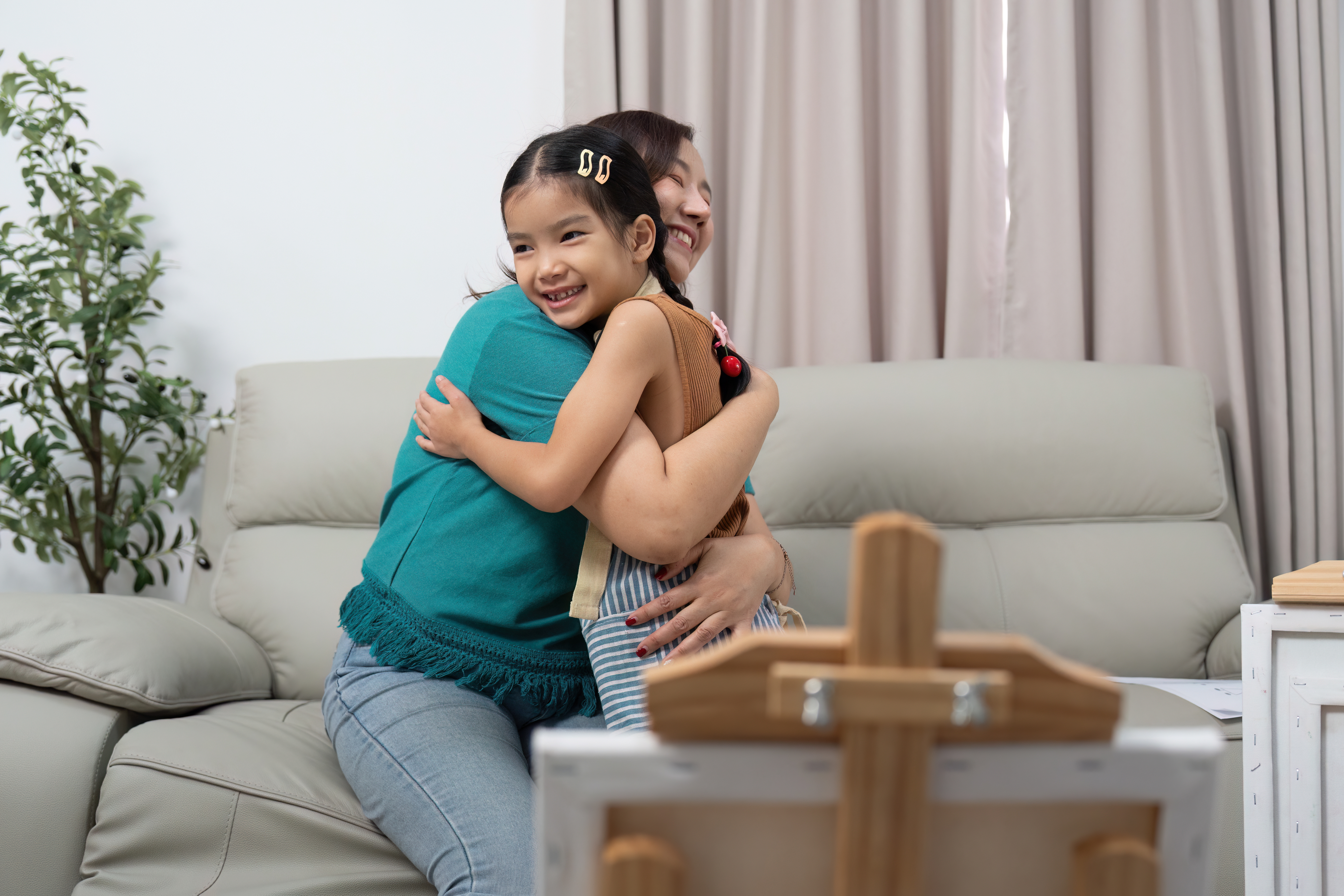
Here’s what I’ve learned about creating calm: it starts with me being calm. Or at least, calmer.
Lower Your Expectations
This was the hardest thing for me to accept: Thanksgiving doesn’t have to be perfect, magical, or even particularly fun.
The goal is: everyone gets through the day without complete overwhelm.
That’s it. That’s the bar.
If we manage that? Success.
If someone actually enjoys parts of it? Bonus.
Simplify Everything
We used to try to do it all: multiple gatherings, elaborate dishes, staying for hours.
Now? We do less. Way less.
-
We attend one gathering
-
We bring simple foods we know work
-
We arrive late and leave early
-
We skip traditions that don’t serve our family
And you know what? The holidays got so much better when we stopped trying to do them the “right” way.
Build in Breaks (For Everyone)
Every hour, we check in as a family. Sometimes just Luis and I step outside for three minutes of fresh air. Sometimes Adrián retreats to the quiet room. Sometimes Guille needs to run around outside. Sometimes me and the boys go and just sit together, (I have to “check” the kids)
These breaks aren’t failures, they’re maintenance. They’re how we make it through.
What to Do When Relatives Don’t Understand
Chatting with my fellow Autism Moms I realized, that I am lucky that our closest family members and Friends are very interested in learning about Autism but for many families this is not the case. And this is the part that can trigger so much of my anxiety: dealing with family members who don’t get it.
The Comments That Sting
“He seems fine to me. Are you sure he’s really autistic?”
“You just need to be more firm with him.”
“Back in my day, we didn’t have all these labels.”
“Maybe if you didn’t cater to him so much…”
Some of these has been said to me. And every single one made me want to scream, cry, or leave immediately.
The Responses That Work
I used to over-explain, trying to educate everyone. Now I keep it simple:
“We’ve got this handled, thanks.”
“His doctors and therapists are really happy with his progress.”
“We appreciate your concern, but we’re following professional guidance.”
“This isn’t up for discussion.”
Said warmly but firmly. Then change the subject or walk away.
You don’t owe anyone an explanation. You don’t have to justify your parenting. You don’t have to convince them.
When to Use Your Exit Strategy
If someone is repeatedly:
-
Criticizing your parenting
-
Making your child uncomfortable
-
Ignoring boundaries you’ve set
-
Creating more stress than the visit is worth
Leave. You have permission to leave.
Protecting your family’s wellbeing is more important than avoiding awkwardness.
Taking Care of Yourself After Thanksgiving

Here’s something nobody talks about: the aftermath.
Even if Thanksgiving goes okay, you’re probably exhausted. Depleted. Running on fumes.
What helps me recover:
The day after, we have NOTHING scheduled. Nothing. We stay in pajamas, eat leftovers, watch movies. It’s sacred recovery time.
I check in with Luis. “How are you doing? What do you need?” Because he’s usually depleted too.
I don’t process everything immediately. There’s time later to debrief what worked and what didn’t. Right after? I just rest.
I’m gentle with myself. If I didn’t handle something perfectly, if I got snappy or emotional—that’s okay. I’m human. I was doing my best in a hard situation.
A Pep Talk for Right Now
If you’re reading this in the lead-up to Thanksgiving, feeling that familiar dread building:
You are not overreacting. This is genuinely hard. Anyone who says otherwise hasn’t walked in your shoes.
You are doing an incredible job. The fact that you’re here, reading this, trying to prepare—that shows how much you care.
Your anxiety is understandable. You’re not broken. You’re responding normally to a challenging situation.
Your kids are lucky to have you. Someone who advocates for them, prepares for their needs, and manages their own regulation so they can show up.
It’s okay if it’s not perfect. Actually, it’s okay if it’s kind of a mess. What matters is that you tried, you cared, and you kept your family safe.
You can do hard things. You’ve done them before. You’ll do them again. And you don’t have to do them alone.
Resources for Your Journey
If you’re looking for more support managing holiday stress and anxiety, here’s what has genuinely helped our family:
📚 Autism: My Invisible Backpack – This book explores emotional overload and hyper-empathy, understanding how our kids absorb our emotions helped me see why managing my anxiety matters so much.
📚 Autism: Calming the Chaos – The regulation strategies in this book work for kids AND adults. Many parents have told us they use these techniques themselves.
And we’ve created FREE downloadable resources.
Take care of yourself. Not because you’re selfish, but because your wellbeing matters, both for you and for the people you love.
You’ve got this. And on the days when you don’t feel like you’ve got this? That’s okay too. We’re all just doing our best.
With solidarity and understanding,
Dalisse (& Luis)
Loving Pieces Books
💙 How do you manage your own anxiety during the holidays? What helps you stay regulated when things get overwhelming? Share with our community—we’re all learning together. Find us on Instagram @lovingpiecesbooks or explore more resources at lovingpiecesbooks.com.
With anxiety under control, you can now focus on practical ways to make your family gatherings more enjoyable and supportive.