
autism parenting

  • Empowering Voices: Encouraging Self-Advocacy in Autistic Children

    Empowering Voices: Encouraging Self-Advocacy in Autistic Children

    Most people think self-advocacy in autistic children just happens naturally. I used to believe that too—until I saw my own sons struggle to express their needs and set boundaries. Nurturing autistic self-advocacy takes patience, understanding, and the right tools. In this post, I’ll share what’s helped our family build confidence and voice in our boys, so your child can feel truly seen and heard.

    Nurturing Autistic Self-Advocacy Skills

    Helping your child find their voice can be the most rewarding journey. Confidence grows when communication channels are clear and supportive.

    Building Confidence Through Communication

    Imagine your child asking for what they need without hesitation. This dream is possible. Start with small steps. Encourage them to express preferences—like choosing between two snacks. These moments build confidence. When my son Adrián first voiced his choice, it was magical. It reminded me that our kids have strong opinions; they just need encouragement to share them.

    Create opportunities for dialogue. Ask open-ended questions like, “What do you think about this?” It invites your child to explore their thoughts. Use visual aids or storyboards if words are hard. These tools can help them express complex feelings more easily.

    Creating Safe Spaces for Expression

    A safe environment is crucial. Make sure your home feels like a sanctuary where your child can speak freely. I remember setting up a cozy corner with soft lights and familiar objects for Adrián. It became his retreat—a place where he felt secure.

    Encourage them to use this space whenever needed. It fosters a sense of ownership over their environment and emotions. Over time, Adrián’s corner became a place of creativity and reflection. Your child can have this too—a space to be themselves, free from judgment.

    Practical Strategies for Empowering Autistic Children

    Empowering your child starts with understanding their world. Help them navigate it by setting and respecting boundaries.

    Encouraging Boundaries and Self-Awareness

    Teaching boundaries is essential. Start by modeling them yourself. When you say, “I need a moment,” you’re showing self-care. This teaches your child it’s okay to do the same. Adrián learned to say, “I need a break,” when overwhelmed. It was a game-changer for us.

    Help your child recognize their body’s signals. Does their heart race in noisy places? Do bright lights cause discomfort? Discuss these sensations openly. This awareness allows them to set effective boundaries, creating a roadmap for self-advocacy.

    Using SEL Resources in Everyday Life

    Social Emotional Learning (SEL) tools are invaluable. They teach essential skills like empathy and self-regulation. Incorporate simple SEL activities into daily routines. For instance, use role-playing to explore different scenarios. It can be as fun as pretending to order at a restaurant.

    Books and stories are also effective. They offer relatable scenarios that foster understanding. In our family, reading together has opened up conversations about emotions and challenges. It’s a bonding experience that also empowers.

    Cultivating an Inclusive Education Environment

    The school setting should echo the supportive environment you cultivate at home. It’s essential for fostering a sense of belonging.

    Supporting Neurodiversity in the Classroom

    Talk to your child’s teachers about their unique needs. Most educators want to help but need guidance. Share what works at home. Maybe it’s a particular seating arrangement or the use of headphones during tests.

    Encourage classrooms to decorate with diverse materials that celebrate neurodiversity. Visual aids and sensory-friendly tools should be standard. These adjustments make a world of difference, helping your child feel understood and valued.

    Collaborative Efforts with Parents and Educators

    Building a network of support is key. Regularly communicate with teachers and staff. They are your partners in this journey. Share successes and challenges openly. This collaboration creates a unified front that benefits your child.

    Join or form parent support groups. We did, and it’s been a lifeline. Sharing resources and strategies with other parents has been invaluable. It creates a community where everyone learns and grows together, ensuring no one feels isolated.

    🙌📚

    By implementing these strategies, you’ll help your child develop a strong voice and a sense of self. Remember, progress may be slow, but each step is significant. Your child’s journey to self-advocacy is not just about them—it’s about creating a world that listens and values every unique voice.

    Check out our books and FREE Resources

  • The Day I Realized I’d Been Searching for the Wrong Kind of Help

    For the first two years after Adrián’s diagnosis, I devoured every autism resource I could find.

    Books. Websites. Expert advice. Therapy techniques. Evidence-based strategies.

    And you know what? I felt more lost than ever.

    Because all of it, ALL of it… felt clinical. Detached. Like it was written by people studying autism from the outside, not living it from the inside. It used big complicated concepts that between my sadness and my willingness to learn it was getting to much to gasp.

    Apart that none of it felt like us. None of it understood what our actual days looked like. The messy, beautiful, overwhelming reality of raising autistic kids.

    Then one day, I stumbled into an online group of autism parents, real parents, sharing real stories. No jargon. No clinical distance. Just: “Here’s what happened today. Here’s what worked. Here’s where I’m struggling.” Reddit did the trick.

    And for the first time since Adrián’s diagnosis, I felt like I could relate. Of course I am grateful for the professionals who guide us every day up to this day, but I felt I needed to see and hear from other parents too.

    That’s when my real autism parenting journey began. Not when I got the diagnosis. Not when I read all the books. But when I found community, and realized I wasn’t alone.

    If you’re reading this feeling overwhelmed, confused, or like you’re the only one who doesn’t have it all figured out, I see you. And I want you to know: you’re not alone. Not even a little bit.

    The Journey I Didn’t Expect

    Let me be honest about something: I thought an autism diagnosis would come with a roadmap.

    Like, here’s the diagnosis, here are the next steps, follow this path, and everything will be okay.

    Spoiler alert: That’s not how it works.

    Instead, it felt like being dropped in the middle of a forest with no map, no compass, and everyone around you speaking a language you don’t understand.

    IEPs. Sensory diets. ABA. OT. Speech therapy. Social skills groups. Developmental milestones. Red flags. Early intervention.

    The terminology alone was overwhelming. And underneath all of it was this constant, gnawing fear:

    Am I doing this right? Am I doing enough? Am I somehow making it worse?

    The Moment That Changed Everything

    Adrián was 6. We were sitting with luis listing all the things he “couldn’t” do.

    Can’t maintain eye contact.
    Can’t handle transitions.
    Can’t regulate his emotions.
    Can’t, can’t, can’t.

    I felt myself shrinking with every word. Like my beautiful, curious, creative son was being reduced to a list of deficits.

    Then Luis, my rock, my partner who always sees things more clearly than I do, spoke up:

    “Can we talk about what he can do? Because Adrián can name every Train Station in Spain in chronological order. He can draw the most intricate Road structures I’ve ever seen. He can tell you exactly how he’s feeling when he has the right words. He can do so many incredible things.”

    Then we actually smiled.

    “You’re right,” I said. “Let’s start there.”

    That was the day we stopped focusing on fixing Adrián and started focusing on supporting him to be the best version of himself.

    What “Support” Actually Looks Like (Hint: It’s Not What I Thought)

    I used to think supporting Adrián meant making him more “typical.”

    Helping him make eye contact. Teaching him to sit still. Getting him to stop stimming. Making him fit in.

    God, I cringe thinking about that now.

    Because here’s what I’ve learned: support doesn’t mean changing who your child is. It means giving them tools to navigate a world that wasn’t designed for them.

    The Visual Schedules That Saved Our Mornings

    Mornings used to be chaos. Pure, tear-filled chaos.

    Adrián would melt down almost every school morning because he couldn’t predict what was coming next. The uncertainty felt overwhelming.

    Then our OT suggested visual schedules. Simple picture cards showing the morning routine:

    1. Wake up
    2. Get dressed
    3. Eat breakfast
    4. Brush teeth
    5. Put on backpack
    6. Get in car

    Game. Changer.

    Suddenly, Adrián could see what was coming. He could prepare himself. The meltdowns didn’t disappear completely, but they decreased dramatically. We are using this more and more with Guillermo and he loves this!

    It wasn’t about changing him. It was about giving him a tool to manage something that was genuinely hard for his brain.

    The Sensory Tools That Made Public Spaces Bearable

    For years, we avoided places that were too loud, too bright, too crowded. Which meant we avoided a lot of life. Adrián did not mind the loud noises but he disliked crowded places, so we avoided them as much as we could.

    Guillermo has a hard time with noises and when we discovered noise-canceling headphones.

    Such a simple thing. But it transformed Guillermos experience of the world.

    Suddenly, he could go to school assemblies. Birthday parties. Family gatherings. The grocery store didn’t trigger immediate meltdowns.

    By boys are still autistic. They will still processed sensory input differently. But now we had a tool that helped Guillermo manage Loud noises, and we know to avoid crowded places for Adri to stay regulated.

    That’s support. Not changing who they are, but equipping them to participate in life on their own terms.

    The Social Stories That Built Understanding

    Adrián struggles with understanding unspoken social rules. Things neurotypical kids just… absorb? He needs them explained explicitly.

    So we started using social stories, simple narratives that walk through social situations step by step.

    “When we go to Grandma’s house, she might want to hug you. You can say ‘I’d rather do a high-five’ if hugs feel uncomfortable. That’s okay.”

    “At the park, if you want to play with someone, you can say ‘Can I play too?’ They might say yes, or they might say no. Both answers are okay.”

    These stories gave Adrián a framework for navigating social situations that felt confusing and unpredictable.

    Again, not changing him. Giving him tools.

    The Community That Became My Lifeline

    Here’s something they don’t tell you about autism parenting: the isolation is crushing.

    Even when you’re surrounded by people who love you, you can feel completely alone. Because they don’t get it.

    They don’t understand why you can’t just “make” your child behave.
    They don’t get why a birthday party feels like a military operation requiring days of preparation.
    They don’t know what it’s like to celebrate victories like “He wore jeans today!” while other parents are celebrating scholarships and sports trophies.

    I needed people who got it. And I found them online.

    The Facebook Group That Saved My Sanity

    I joined an autism parenting group when Adrián was 5, mostly just to lurk. I wasn’t ready to share my story yet.

    But reading other parents’ posts? Life-changing.

    “My son had a meltdown at Target today and I sat on the floor with him while people stared. I’m exhausted but I know I did the right thing.”

    “Small victory: She tried a new food today! Just a tiny bite, but I’m counting it as a win.”

    “Does anyone else’s kid line up all their toys in perfect rows? Is this normal?”

    Reading these posts, I realized: I’m not alone. Other people understand. This is hard, but it’s not just hard for me.

    Eventually, I started commenting. Then posting. Then forming real friendships with parents across the country who “got it” in a way my IRL friends couldn’t.

    That community became my lifeline.

    The Autistic Adults Who Taught Me Everything

    But here’s the thing: parent groups are crucial, but they’re not enough.

    The people who taught me the MOST about autism? Autistic adults.

    Following actually autistic people on social media opened my eyes in ways no parenting book ever could.

    They explained what stimming feels like from the inside.
    They described why eye contact is uncomfortable.
    They shared what masking costs them.
    They talked about what they wish their parents had understood.

    Listening to autistic voices transformed how I parent.

    And here’s a full-circle moment: years later, I discovered I’m autistic too. Late-diagnosed at 39, after my boys’ diagnoses prompted me to recognize myself in their experiences.

    Suddenly, so much of my own childhood made sense. The overwhelm. The masking. The feeling of being different but not knowing why.

    Understanding my own autism made me a better parent to my autistic kids.

    The Strategies That Actually Work in Real Life

    Okay, let’s get practical. Because understanding and community are crucial, but you also need tools for the day-to-day.

    Emotion Regulation Tools

    Both Adrián and Guillermo struggle with big emotions. When they’re upset, they can’t just “calm down” on command.

    What helps:

    Visual emotion charts – Pictures showing different feelings. Both boys can point to how they’re feeling when words are too hard.

    Calm-down corner – A designated space with dim lighting, soft textures, weighted blankets, and favorite comfort items. No punishment, just a safe place to regulate.

    Breathing exercises – We practice these when they’re calm, so the technique is familiar when they need it. Deep breath in for 4, hold for 4, out for 6.

    Sensory tools – Fidget toys, chewable necklaces, therapy putty. Different kids need different input.

    Building Independence Through Choice

    Autistic kids often feel like life happens to them, they have little control over their days, their schedules, their experiences.

    Giving choices: even small ones, builds confidence and autonomy.

    “Do you want to wear the blue shirt or the red shirt?”
    “Should we read two books or three books tonight?”
    “Do you want a snack now or after your shower?”

    These aren’t big decisions. But they give Adrián and Guille practice in self-advocacy and decision-making.

    Celebrating Progress, Not Perfection

    This one is hard for me. I’m a perfectionist by nature, and I had to actively retrain my brain to celebrate small victories.

    Adrián tried a new food? WIN.
    Guille used words instead of screaming when he was frustrated? WIN.
    We made it through a family gathering without a meltdown? HUGE WIN.

    I keep a “wins journal” where I write down these moments. On hard days, I flip through it to remind myself: we are making progress. It just looks different than I expected.

    The Books That Became Tools, Not Just Stories

    When Adrián was struggling with confidence, feeling different, wondering if anyone else felt like him, I searched desperately for books where he could see himself.

    Books that didn’t treat autism like a tragedy. Books that celebrated neurodiversity. Books written by people who actually understood.

    We did find some good ones but not as many options as other children’s book. So Luis and I created them.

    Autism: Confidence Starts Here was born from watching Adrián struggle with self-esteem. From hearing him say “Why am I different?” and wanting to show him that different is beautiful.

    Autism: Calming the Chaos came from our meltdown struggles. From wanting to help Adrián understand what was happening in his body, and help other families respond with compassion instead of punishment.

    Autism: My Invisible Backpack addresses masking and emotional overload, things I didn’t even have language for until my own diagnosis.

    These aren’t just books we wrote. They’re tools our family uses. Adrián rereads them when he’s struggling. They’re conversation starters. They’re validation.

    That’s what I was searching for all those years ago. Stories that understood.

    What I Wish Someone Had Told Me

    If I could go back and talk to myself the day Adrián was diagnosed, here’s what I’d say:

    1. The grief is real, and it’s okay.

    You’re allowed to grieve the future you imagined. That doesn’t mean you don’t love your child. It means you’re human.

    2. Your child is not broken.

    They don’t need to be fixed. They need to be understood, supported, and celebrated for exactly who they are.

    3. You will make mistakes.

    You’ll say the wrong thing. Use outdated terminology. Push when you should have pulled back. It’s okay. Learn and adjust.

    4. Find your people.

    The parents who get it. The autistic adults who can teach you. The therapists who see your child as whole. Build that community intentionally.

    5. Trust your instincts.

    You know your child better than any expert. If something doesn’t feel right, speak up. Advocate. Push back.

    6. Celebrate differently.

    Your milestones might not match other families’. That’s okay. Every step forward, no matter how small, deserves celebration.

    7. Take care of yourself.

    You can’t support your child from a place of depletion. Rest. Ask for help. Let some things go.

    8. It gets easier.

    Not because autism goes away, but because you learn. Your child learns. You develop systems. You find your rhythm.

    9. Your child is amazing.

    Not despite being autistic. Not even because of it. Just… inherently, wonderfully, perfectly amazing as they are.

    The Journey Continues

    Adrián is 11 now. Guillermo is 5. Our journey is far from over, it’s really just beginning in so many ways.

    But we’re not where we were six years ago, drowning in confusion and fear.

    Now we have tools. Community. Understanding. Hope.

    We know Adrián’s triggers and how to support him through overwhelm.
    We’ve built routines that work for our family’s unique needs.
    We’ve connected with other families who get it.
    We’ve learned to celebrate our wins… even the tiny ones.

    And most importantly: we’ve learned to see autism not as something to overcome, but as a different way of being that deserves respect, support, and celebration.

    Resources for Your Journey

    If you’re looking for support on your autism parenting journey, here’s what has genuinely helped our family:

    We’ve created FREE downloadable resources including:

    • Visual schedule templates
    • Emotion regulation tools
    • Social story frameworks
    • Sensory profile worksheets

    You’re on that journey too. And you don’t have to walk it alone.

    With solidarity and hope,
    Dalisse (& Luis)
    Loving Pieces Books

    💙 What’s been your biggest “aha” moment on your autism parenting journey? What do you wish you’d known sooner? Share with our community, we’re all learning together. Find us on Instagram @lovingpiecesbooks or explore more resources at lovingpiecesbooks.com.

  • Today’s Mantra: Lower the Bar, Find the Joy. You’re Doing Great.

    Today’s Mantra: Lower the Bar, Find the Joy. You’re Doing Great.

    If you’re feeling a quiet sense of dread mixed with the holiday excitement, you’re not alone. Thanksgiving can feel like the ultimate test for autism families, a day packed with sensory landmines, social expectations, and the pressure to create “perfect” memories.

    This year, I’m inviting you to a different kind of celebration. One where the goal isn’t a flawless turkey or a seamless family photo. The goal is connection. The goal is joy. And sometimes, the only way to find it is to gently, lovingly, lower the bar.

    Release the Grip of the “Perfect” Day

    I remember a Thanksgiving where I spent hours orchestrating the perfect, quiet, low-stimulation dinner. I had a schedule, safe foods, and escape plans. And then, my son, overwhelmed by the new smells, spilled an entire glass of sparkling cider right onto the “safe” plate.

    In the stunned silence, I took a breath. And then, I did something unexpected: I laughed. A real, from-the-gut laugh. He looked at me, wide-eyed, and a tiny smile touched his lips. That messy, imperfect moment, not the perfectly browned turkey, is the one I remember with a warm heart. It was the moment we connected.

    What helps us: Let go of the script. The most beautiful moments are often the unplanned ones. If the turkey is dry but your child is smiling, the day is a success.

    Celebrate the Quiet Victories

    While others are counting calories or football scores, let’s count our own unique wins.

    • Did your child tolerate the smell of pumpkin pie for a few minutes? That’s a win.

    • Did they use a new sign or word to ask for more mashed potatoes? That’s a win.

    • Did you manage to take five deep breaths in the bathroom instead of yelling? That’s a huge win.

    These are the real milestones. They may not make the family newsletter, but in our homes, they are everything. Shifting our focus to these small sparks of joy builds a foundation of gratitude that is deep, real, and resilient.

    Find Your Feast of Connection

    The feast isn’t just on the table. It’s in the moments we truly see each other.
    Maybe your Thanksgiving looks like snuggling on the couch with a favorite book instead of sitting at the loud, crowded table.

    Maybe it’s a walk outside, crunching leaves and pointing at clouds, away from the overwhelming chatter.
    Maybe it’s ordering pizza and being profoundly, gratefully, okay with it.

    Your version of Thanksgiving is valid. It is enough. It is beautiful.

    This holiday, I am so deeply thankful for you, for showing up, for trying again, for loving your child in all the ways that matter. You are not just building a Thanksgiving menu; you are building a world where your child feels safe, seen, and loved.

    And that is everything.

    Happy Thanksgiving, from our imperfect, grateful family to yours.

    With love and solidarity,

    Adrián, Guillermo, Dalisse and Luis

    The Loving Pieces Books Family

  • When the World Feels Too Loud: Understanding Sensory Processing Differences in Autism

    You know that feeling when you walk into a crowded mall during the holidays? The fluorescent lights buzzing overhead, a cacophony of voices bouncing off the walls, the overwhelming smell of cinnamon pretzels mixing with department store perfume?

    Now imagine feeling that way in a regular grocery store. Or your own kitchen. Or sitting in a classroom.

    This is the reality for many autistic children navigating sensory processing differences, and if you’re reading this, I’m guessing you’re searching for answers because someone you love is struggling with a world that just feels… too much.

    I see you. And I’m here to walk alongside you on this journey.

    The Day Everything Made Sense

    Let me tell you about Emma (not her real name), a little girl whose mom reached out to me last year, exhausted and confused. Emma would have complete meltdowns at birthday parties. She refused to wear anything but one specific pair of pajamas. And grocery shopping? Forget about it.

    “Everyone thinks I’m just a bad parent who can’t control her child,” her mom told me, tears in her eyes. “But I know something else is going on.”

    She was right. And once we started unpacking Emma’s sensory processing differences, everything shifted, not because Emma changed, but because the adults around her finally understood what she’d been trying to communicate all along.

    What’s Really Happening: Sensory Processing Decoded

    Here’s the thing about sensory processing, we all experience it, but for autistic children, the volume knob is turned way up (or sometimes way down) on one or more of their senses.

    Think of your brain as a filter. For most neurotypical people, that filter sorts through sensory information efficiently: “This is important. This can be ignored. This is background noise.” But for many autistic children, that filter works differently. Every sensation demands equal attention.

    Research from occupational therapy studies shows that 60-90% of autistic children experience some form of sensory processing difference. This isn’t just being “picky” or “difficult”, this is their neurological reality.

    What This Actually Looks Like

    When I talk to parents, I often hear:

    “She can’t stand the seams in her socks.”

    “He covers his ears every time the blender runs.”

    “Bright lights make her anxious and irritable.”

    “He won’t eat anything except three specific foods.”

    These aren’t behavioral issues, they’re sensory experiences that feel genuinely uncomfortable or even painful. Imagine wearing a wool sweater on bare skin all day, or listening to nails on a chalkboard during every conversation. That’s the level of distress some sensory inputs can cause.

    And here’s what breaks my heart: many of these children can’t articulate what’s wrong. They just know something feels bad, and their bodies react with meltdowns, shutdowns, or avoidance.

    The Grocery Store Story (And Why It Matters)

    Remember Emma? Her grocery store meltdowns made perfect sense once we understood her sensory world.

    The fluorescent lights flickered at a frequency most of us don’t consciously notice, but Emma did, and it felt like a strobe light. The refrigerator hum was painful to her ears. The smells from the bakery, seafood counter, and produce section all hit her at once. Strangers’ carts rattled. Someone’s perfume was overpowering.

    She wasn’t being “difficult.” She was drowning in sensory input while trying to hold it together.

    Once her mom understood this, they started shopping at opening time when it was quieter, Emma wore noise-canceling headphones, and they kept trips short with a clear plan. The meltdowns didn’t disappear overnight, but they became less frequent and less intense. Things that we have used with our son’s many times and we could share these strategies with Emma’s mom.

    Because understanding changed everything.

    Practical Strategies That Actually Help

    Okay, so now you understand the why. Let’s talk about the what now.

    Start With Detective Work

    You can’t support your child’s sensory needs until you understand what those needs are. I know … easier said than done when your child is pre-verbal or can’t explain what’s bothering them (My youngest Guillermo now is in this stage).

    Try keeping a simple sensory journal for a week. When does your child seem distressed? What’s happening in the environment? What do they gravitate toward when they need comfort?

    You might notice patterns: meltdowns always happen after noisy environments, or your child seeks out tight spaces when overwhelmed, or certain clothing textures are consistently rejected.

    Create a “Yes Space”

    This is my favorite strategy, and I’ve seen it work wonders. Designate one area in your home as a sensory-safe zone, I call it a “yes space” because everything in it is a YES for your child’s sensory system.

    For us, this meant:

    When our son felt overwhelmed, he knew he could retreat there. No questions asked. No punishment. Just safety. We have this set in our play area.

    Sensory Breaks Are Not Optional

    I know you’re busy. I know schedules are tight. But here’s the truth: sensory breaks aren’t a luxury, they’re a necessity.

    Think of it like this: if you were running a marathon, you wouldn’t skip water stations. Your child is running a sensory marathon every single day just existing in a world that’s not designed for their nervous system.

    Build in short sensory breaks throughout the day:

    • 10 minutes of jumping on a trampoline

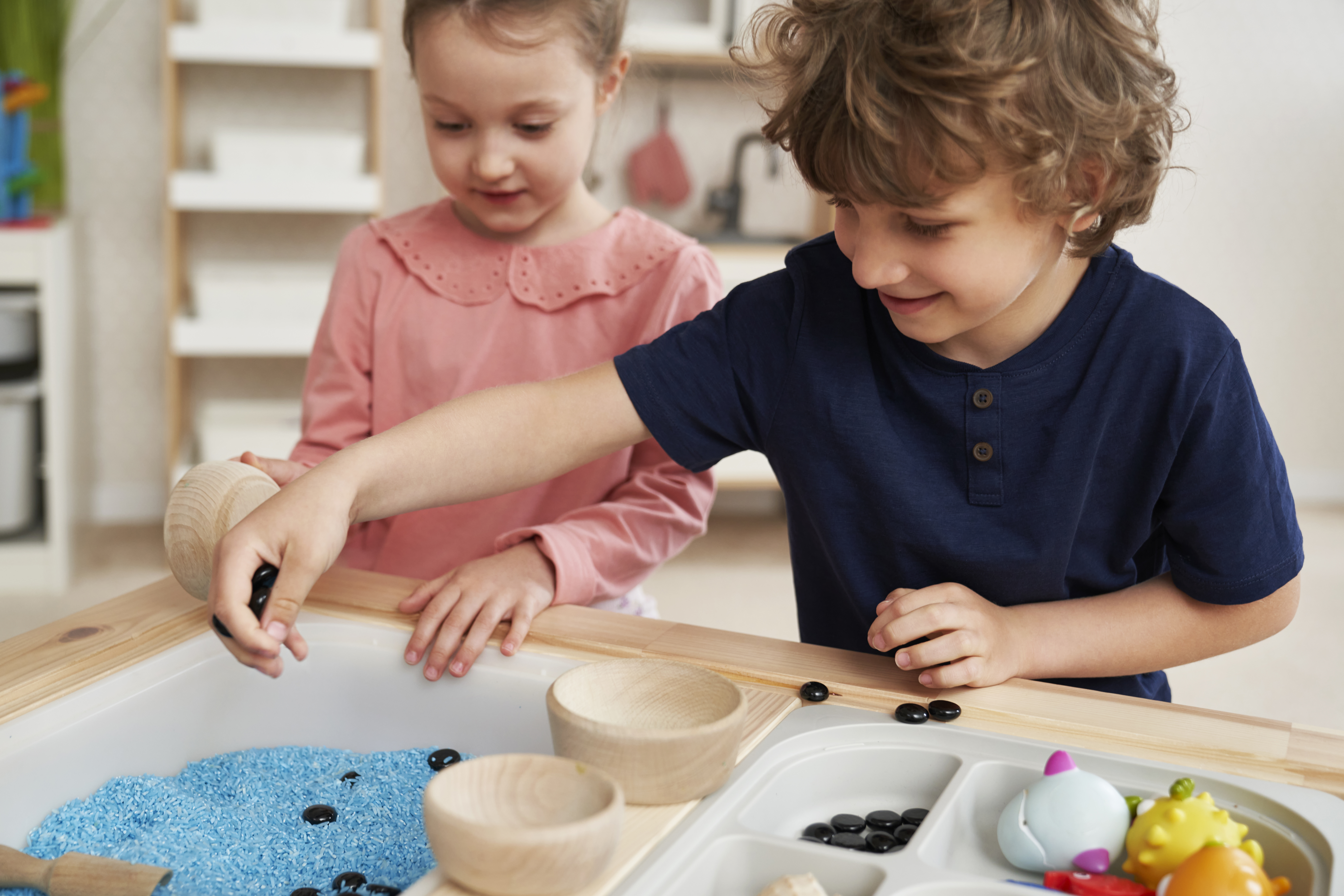
    • Playing with kinetic sand or play dough

    • Swinging

    • Pushing against a wall

    • Deep pressure activities (like a “sandwich hug” with pillows)

    These aren’t just nice activities, they’re regulatory tools that help your child’s nervous system reset. Here are some of the products we use at home: https://lovingpiecesbooks.com/authors-picks/

    The Headphones That Changed Everything

    Can I share something vulnerable? I resisted getting my kids noise-canceling headphones for way too long because I worried about what other people would think. Would it make him stand out? Would people judge?

    But you know what? The first time he wore them to his cousins play at her school he actually enjoyed the play instead of melting down, I realized my own discomfort was standing in the way of his comfort.

    If noise is a trigger for your child, invest in good noise-canceling headphones. Let them wear them whenever they need to. This is accommodation, not avoidance. Here are some choices: https://lovingpiecesbooks.com/ear-defenders-ear-plugs/

    Work With, Not Against

    Here’s where I see parents (including myself, in my work) struggle: we try to “fix” sensory sensitivities instead of working with them.

    Your child may never love loud environments. They may always prefer certain textures. And that’s okay.

    Instead of forcing them to “get used to” things that cause genuine distress, we can:

    • Prepare them for sensory challenges ahead of time

    • Offer choices and control where possible

    • Respect their “no” about sensory inputs

    • Celebrate their courage when they try something challenging

    Building a Village That Gets It

    One of the loneliest parts of parenting an autistic child can be feeling like you’re constantly explaining, defending, or justifying your child’s needs.

    Talk to the Teachers

    I know it’s hard to be an advocate when you’re exhausted. But educators genuinely want to help, they just need to understand what your child needs.

    Share specific information: For example: “Mia does better with flexible seating because sitting still at a hard desk is physically uncomfortable for her sensory system.” This is more helpful than “She can’t sit still.”

    Ask about simple accommodations:

    • Can your child use a wobble cushion or standing desk?

    • Is there a quiet space they can use when overwhelmed?

    • Can they have a fidget toy during instruction time?

    Many teachers are willing to make these adjustments, they just need to understand why they matter.

    Educate Your Circle

    I’ll be honest: some people won’t get it. They’ll think you’re “making excuses” or “being too soft.”

    But many people like grandparents, friends, babysitters, genuinely want to understand and support your child. They just don’t have the language or knowledge.

    Share articles (like this one!). Explain specific triggers. Give them concrete ways to help.

    When my friend explained to her mother-in-law that her grandson’s refusal to hug wasn’t personal, it was sensory, their relationship transformed. Grandma started asking, “Would you like a high-five or a wave?” instead of forcing hugs. And you know what? Eventually, he started initiating hugs on his terms.

    Empathy and Autism Parenting

    What I Wish Someone Had Told Me

    You don’t have to get this perfect. You’re going to have days where you forget the headphones, or you push too hard, or you’re so exhausted you can’t muster the patience you wish you had.

    That doesn’t make you a bad parent. It makes you human.

    What matters is that you’re here, reading this, trying to understand. That you’re committed to seeing your child’s sensory needs as real and valid. That you’re willing to make your home, your routines, and your expectations more flexible to accommodate their nervous system.

    That’s love in action.

    Small Steps, Big Impact

    If you’re feeling overwhelmed right now, here’s what I want you to do:

    Pick just one thing from this article. Maybe it’s creating a calm corner. Maybe it’s buying those noise-canceling headphones you’ve been considering. Maybe it’s just noticing your child’s sensory patterns this week without trying to fix anything.

    Start there.

    Because here’s the beautiful truth: when we make space for our children’s sensory needs, we’re not just reducing meltdowns (though that’s a nice side effect). We’re sending them a powerful message:

    Your experience of the world is valid. Your needs matter. You don’t have to change who you are to deserve support.

    Resources for Your Journey

    Understanding sensory processing differences is just the beginning. If you’re looking for more support, I’ve gathered resources that have genuinely helped the families I learned with:

    📚 Autism: Calming the Chaos by us Loving Pieces Books is the book that can open your eyes to sensory processing. It’s comprehensive yet accessible, perfect for kids to visually understand what sensory overload may look like and even though it’s a children’s book, parents can benefit from it specially if you are just starting to understand these differences.

    And of course, I’ve created FREE sensory strategy guides and printables on Loving Pieces Books that you can download today, visual schedules, sensory break ideas, and accommodation request templates.

    Your child’s sensory world may be different from yours, but it’s not wrong. It’s not something to fix or overcome. It’s simply how they experience life, and when we honor that, we create space for them to thrive as their authentic selves.

    You’re doing an amazing job navigating this journey. Keep going. Keep learning. Keep advocating.

    And remember: you’re not alone in this.

    With hope and solidarity,
    Dalisse
    Loving Pieces Books

    💙 What sensory strategy has been most helpful for your family? I’d love to hear your story, share in the comments below or connect with our community on Instagram @lovingpiecesbooks.

    Check out our books and FREE Resources