



When Your Child’s Invisible Backpack Gets Too Heavy to Carry
Five o’clock pickup. Every day.
I watch Adrián walk out of school, and I can see it, the weight he’s been carrying all day finally starting to show.
His shoulders are tense. His face is tight. His usual animated energy? Gone!
By the time we get to the car, he’s barely speaking. And by the time we get home? Full meltdown!
For years, I thought I was doing something wrong. Why does he hold it together at school but fall apart at home? Why is he so exhausted after a “normal” day?
We came up with a concept that changed everything: the invisible backpack…
Every autistic child carries one. And most of us… parents, teachers, even the kids themselves, don’t realize how heavy it gets.
What IS the Invisible Backpack?
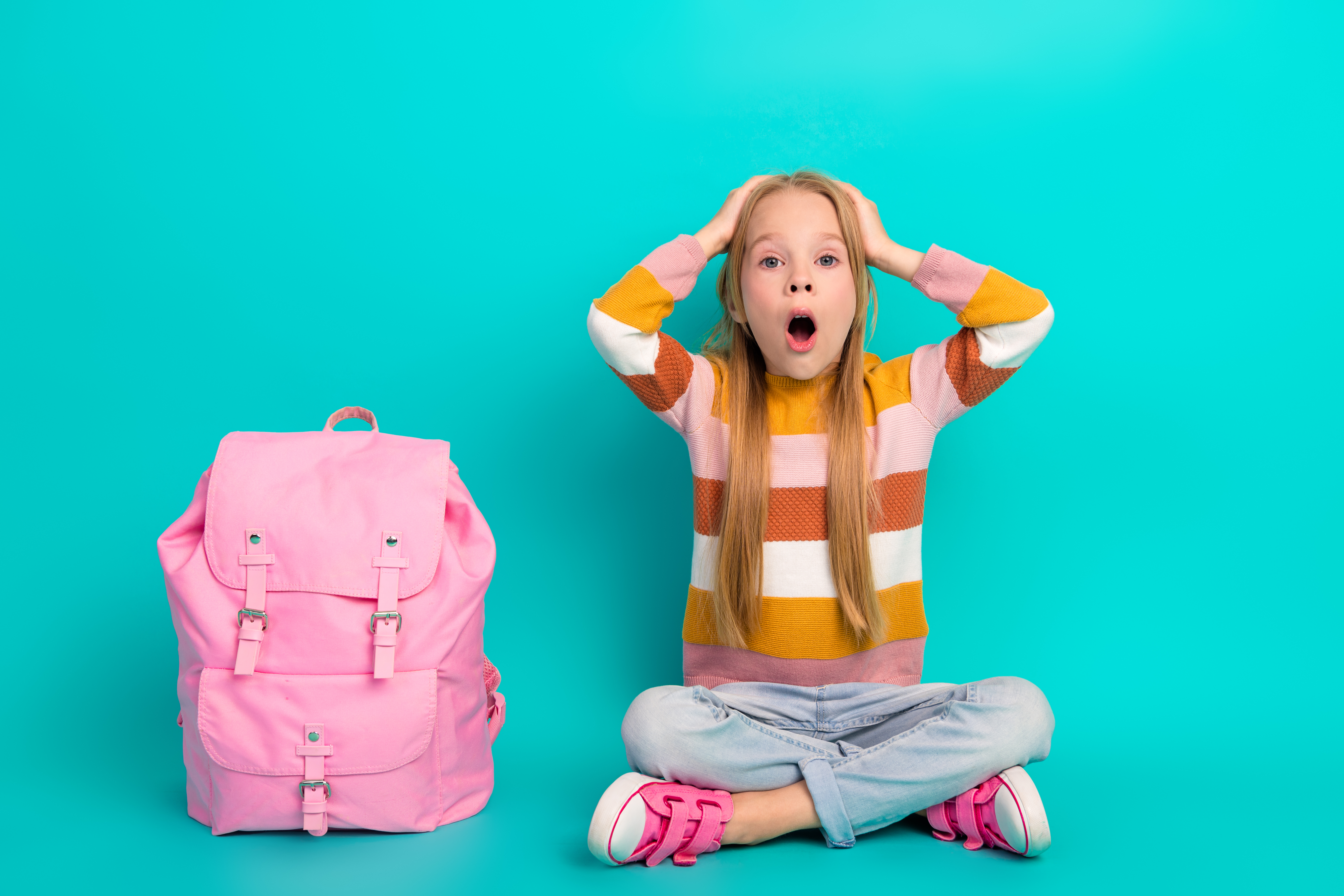
Imagine starting your day with an empty backpack.
But every sensory input… every fluorescent light buzz, every unexpected loud noise, every texture that feels wrong, every social interaction that requires masking+adds a stone to that backpack.
By lunchtime, it’s getting heavy!
By afternoon, it’s almost unbearable.
By the time your child gets home, their safe place, that backpack is so full, so heavy, that it all comes tumbling out…
That’s what I was seeing with Adrián.
He wasn’t “fine all day and then acting out at home.” He was holding it together where he had to, then finally releasing the weight where he felt safe enough to let go.
Understanding this changed how I saw those after-school meltdowns. They weren’t behavior problems. They were evidence of how hard he’d been working all day just to keep it together.
The Signs I Wish I’d Recognized Sooner
Looking back, Adrián was showing me his backpack was getting heavy. I just didn’t know what I was looking at.
The Quiet Withdrawal
SOme days when Adrián comes home from school, he used to immediately go to his room. No hello. No “how was your day?” Just… retreat……
I thought he was being rude or antisocial. But he was seeking the quiet, the solitude, the sensory reduction he desperately needed after hours of holding it together.
Now I understand: That withdrawal isn’t rejection. It’s self-preservation.
The Delayed Meltdowns
Adrián would have a great day at school, his teacher would tell me so. Then he’d come home and have a massive meltdown over something tiny, or something that happened ages ago.
I couldn’t understand the disconnect. If school was good, why the meltdown?
Because the backpack doesn’t empty instantly. Just because he made it through the day doesn’t mean the emotional and sensory load disappears. It needs to be unpacked, and sometimes that unpacking is messy.
The Exhaustion
On weekends, Adrián would sleep late, move slowly, resist any plans or outings.
I worried he was depressed or lazy. But he was exhausted. Carrying that invisible backpack all week is genuinely, physically draining…
Now I know: He needs that recovery time. It’s not optional…
For Guillermo (My 5-Year-Old)
Guille’s backpack signs look different:
-
Increased stimming – More hand-flapping, more spinning, more vocal sounds
-
Regression in skills – Losing words he had earlier, needing more help with things he usually does independently
-
Physical symptoms – Headaches, tummy aches, difficulty sleeping
-
Clinginess – Not wanting to separate from me or Luis, even for short periods…
The backpack fills differently for every child. But it always fills.……
What Goes IN the Invisible Backpack?
Let me walk you through a typical school day for a child, and show you how the backpack could get filled up:
7:00 AM – Morning routine
Stones added: Rushing, loud noises from breakfast, bright bathroom lights, uncomfortable school clothes with tags. Nervousness of getting late to school because unexpected traffic or something else.
8:30 AM – Arrival at school
Stones added: Crowded hallway, multiple conversations at once, fluorescent lights, unexpected schedule change announced.
9:00 AM – Classroom
Stones added: Sitting still for long periods, maintaining “appropriate” body language, suppressing stims, making eye contact when called on…
12:00 PM – Lunch
Stones added: Loud cafeteria, overwhelming smells, navigating social interactions, someone sitting too close, unexpected fire drill…
3:00 PM – End of day
Stones added: Transition to dismissal, crowded hallway again, loud buses, holding everything in “just a little longer”…
By the time he gets home? That backpack is FULL!!!!!
And as parents we tend to add MORE by immediately asking questions, making demands, expecting him to transition right into homework or chores…
No wonder this can escalate to a meltdown……This is why it´s so important to unpack with Care
How We Help Adrián and Guillermo Unpack their Backpacks
Once I understood what was heavy, Luis and I completely changed our after-school routine.
Step 1: Quiet Arrival
Before: “Hi! How was your day? What did you learn? Did you have fun? What’s for snack? When’s homework?”……
Now: “Hi, love. We missed you all day.” Then… silence. Space. No demands……
Car ride home in silence. Adrián goes straight to his room for 20-30 minutes. No questions asked… And Guillermo audits the house to make sure we did not change his toys.
Step 2: Sensory Reset
In his room, Adrián has:
-
Dim lighting (a Salt Lamp does the trick for him and Guillermo)
-
His favorite comfort items (currently TV with his favorite Youtube train channels)
-
Permission to stim freely, no one’s watching, no one’s judging…
This isn’t avoidance. This is regulation...
Step 3: Gradual Reentry
After his alone time, Adrián emerges when he’s ready. Sometimes it’s 20 minutes. Sometimes it’s an hour. We follow his lead…
When he does come out, we offer:
-
A preferred snack (he chooses)
-
Quiet activity options (Playing with his books, or train sets or just any game at the playroom)
-
Casual presence (we’re available if he wants to talk, but we don’t push), he usually leads the talks specially with his ecolalias and infodumping.
Step 4: Delayed Conversations
We used to have “the talk” about his day immediately. Now? We wait…
After dinner, when he’s regulated and comfortable, we might ask gentle questions:
-
“Want to tell me about your day?”
-
“Anything you’re proud of from today?”
-
“Anything that was hard?”……
He can say “not right now” and that’s okay. Sometimes we don’t process the day until the next morning…
For Guillermo
At 5, Guille can’t articulate his backpack yet. So we read his body:
-
If he’s clingy: Extra physical closeness, weighted lap pad while he watches his show
-
If he’s overstimulated: Dim lights, quiet environment, maybe a bath with gentle music
-
If he’s about to have a meltdown: Safe space to let it out, minimal talking, just presence…
We’re teaching him language for his feelings, but right now, our job is mainly to recognize the signs and provide the support…
Building Emotional Vocabulary (Without Adding Pressure)
Here’s something that helped Adrián understand his own backpack: giving him language for what he was experiencing…
We use a “backpack check-in” now. It’s simple:
“How full is your backpack right now?”
-
Empty
-
A little full
-
Medium full
-
Pretty full
-
Overflowing…
Adrián can point to a visual chart or just say the words. This gives him a way to communicate his internal state without having to explain everything.
We also practice naming emotions when he’s calm:
-
“Remember yesterday when you felt overwhelmed? Your backpack was pretty full.”
-
“Today you seemed more relaxed. Your backpack wasn’t as heavy.”
This isn’t therapy homework. It’s just giving him tools to understand himself.
What About School? (Creating Mask-Free Zones There Too)

I’ve had honest conversations with Adrián’s teachers about the invisible backpack… our school has a lot of experience with special needs students so this has giving us more peace of mind.
Some things that have helped Adrián and Guillermo that they practice at school:
✓ Sensory breaks built into the day – Not as a reward or punishment, just regular breaks where Adrián and Guillermo can regulate
✓ A quiet space option – A corner of the library or resource room where he can go if his backpack is getting too full. They have one in the classroom, all the kids use it.
✓ Reduced expectations for eye contact and “looking interested” – Letting him stim, letting him look away while listening, trusting that he’s still engaged
✓ Heads up about changes – Advance notice when possible about schedule changes, substitute teachers, fire drills
✓ Understanding after-school needs – His teacher doesn’t pile on homework or expect lengthy parent communications at pickup. She gets it…
Not all teachers understand this immediately. But starting the conversation, explaining the invisible backpack metaphor, has opened doors to many parents……
The Guilt I Had to Let Go Of
For years, I felt guilty about those after-school meltdowns.
What am I doing wrong? Why can’t I make coming home easier? Other kids don’t do this..
But here’s what I finally understood: Adrián having a meltdown at home isn’t a sign of failure. It’s a sign of trust.
He feels safe enough with us to let down his mask, to release the weight, to be vulnerable… same with Guillermo.
That’s not something to fix. That’s something to honor.
My job isn’t to prevent them from ever having a full backpack. My job is to help my sons unpack their own backpacks safely.
For Guille’s Future
At 5, Guille is just beginning to navigate the world with his invisible backpack.
We’re starting early with:
-
Creating mask-free zones at home where he never has to hide who he is
-
Teaching him words for his feelings as they emerge
-
Modeling unpacking our own “backpacks” (yes, I have one too as an autistic adult)
-
Building in regulation time as part of the routine, not as a response to crisis……
The goal isn’t to eliminate the backpack. The world will always add stones to it. That’s reality.
The goal is teaching him to recognize when it’s getting heavy and giving him tools to unpack it before it overflows.
Resources That Have Helped Us
If you’re realizing your child has been carrying an invisible backpack and you want to support them better, here’s what has genuinely helped our family:
📚 Autism: My Invisible Backpack – This is the book Luis and I wrote specifically about this concept. It explains masking, emotional overload, hyper-empathy, and the invisible load autistic kids carry, told through Adrián and Guillermo’s perspective……
📚 Autism: Calming the Chaos – Helps kids and parents understand what happens when the backpack gets too full and overflows into a meltdown……
And we’ve created FREE downloadable resources including:
-
Invisible Backpack visual chart
-
Emotion identification cards
-
After-school routine templates
-
Mask-free zone planning guide…
That 5:00 PM pickup doesn’t scare me anymore……
I no longer worry when Adrián walks out of school looking exhausted. I no longer panic when he immediately retreats to his room. I no longer feel guilty about the evening meltdowns.
Because I understand what his invisible backpack is carrying. And I know how to help him unpack it.
Your child is carrying weight you can’t see. But once you understand it’s there, everything changes.
You stop seeing behavior problems and start seeing a child who needs support.
You stop feeling like you’re failing and start feeling like you’re finally seeing clearly.
And your child? They feel less alone carrying that weight.
With understanding and solidarity,
Dalisse (& Luis)
Loving Pieces Books
💙 Does your child carry an invisible backpack? What signs do you see? Share with our community, we’re all learning together. Find us on Instagram @lovingpiecesbooks or explore more resources at lovingpiecesbooks.com.