children’s literature

  • The Power of Storytelling: Building Confidence Through Real Autistic Experiences

    You have probably noticed it, too. How the shelves of children’s books are filled with stories that feel… distant. I remember sitting on the floor of the library with a young Adrián, my heart sinking as I flipped through book after book. There were stories about “being kind to everyone,” which is beautiful, but none where he could truly “see” himself. None where the character got overwhelmed by the hum of the lights, or communicated joy with their whole body, or saw the world in patterns as breathtaking and complex as he does.

    That relentless search, that ache for a story that felt like a reflection and not a lesson, is where this all began. Storytelling, the right kind of storytelling, isn’t just a bedtime routine in our house. It’s a lifeline. It’s how we build confidence from the inside out, by showing my boys that their experiences are valid, real, and worthy of being the center of a great adventure. You can read more about our mission behind this in our post.

    The Quiet Magic of Seeing Yourself in a Story

    Let’s be real. For our kids, the world can feel like a place that constantly asks them to adjust, to mask, to explain. A story that mirrors their inner world does the opposite. It *comes to them*. It speaks their silent language.

    The Gift of Validation

    Imagine Guille, my five-year-old, pointing to a picture in a book of a boy covering his ears at a birthday party. His eyes get wide, and he looks at me, then back at the book, and pats his own chest. “Yes, mi amor,” I say. “He hears it too. It’s loud.” In that moment, he isn’t “too sensitive.” He is understood. By a character, by a story, and by me.

    That is the first, most profound power of authentic storytelling: validation. It tells my children, “You are not alone in this feeling. Your experience is real, and it is part of a story.” For Adrián, reading about a character who infodumps about dinosaurs and then feels awkward about it didn’t make him feel awkward. It made him feel seen. It gave his own passionate way of loving things a name and a home in a narrative. That is a building block of confidence you cannot create with just praise. It has to be felt.

    Finding a Roadmap in the Pages

    Confidence isn’t just about feeling good. It’s about believing you can handle things. This is where relatable characters become gentle guides.

    I remember when Adrián was dreading a school field trip to a crowded museum. We read a story about a character who used a “secret mission” checklist (first floor, find the blue whale, then find the quiet corner for five minutes) to navigate a busy place. It was a story, just a fun tale. But the next week, he asked if he could make a checklist for the museum. The story didn’t lecture him about coping strategies. It showed him a hero using one. It gave him a roadmap, disguised as an adventure. He felt in control, not because I told him he would be okay, but because a character he trusted had shown him how.

    More Than a Book: A Tool for Connection

    In our house, the right book is less about literature and more about a toolkit for understanding, for my boys, for me, and for their world.

    Building the Language for Feelings

    Before stories, frustration was a tornado in our house. Guille would cry, Adrián would shut down, and I would be left guessing. Stories gave us a common language. We read about a character who felt like a “soda bottle shaken up.” Now, when Adrián feels that bubbling overwhelm, he can sometimes say, “I’m a soda bottle, Mom.” That is huge. That is self-awareness, born from a metaphor in a picture book. It turns a confusing internal storm into something we can name and, therefore, something we can begin to manage together. Even Social stories hand-drawn work!

    Creating Bridges to Their World

    This is perhaps the most hopeful part. These stories aren’t just for my kids. They are for their peers, their teachers, their extended family. When I share our Loving Pieces Books with Adrián’s class, I’m not asking the kids to be nice. I’m inviting them into a fascinating, different perspective. I’m showing them why Guille might need to jump to feel calm, or how Adrián’s detailed memory works like a super skill.

    It transforms “that weird thing he does” into “oh, that’s how he works.” It builds empathy not from obligation, but from understanding. It helps create a supportive community around them, one curious reader at a time.

    This Is Why I Do What I Do

    I am not a children’s author by trade. I am a mom and along with my husband got tired of not finding the stories our sons deserved. We wrote the books needed in those lonely library aisles. I personally wrote them for the moms and dads who are searching for that mirror. I wrote them for the teachers who want to connect but need a doorway in. Most of all, I wrote them for the Adrian’s and Guille’s, to whisper through the pages: You are the main character of this story. Your way of being is not a side plot. It is the magic itself.

    If this resonates with you, if you are also searching for that authentic reflection for your child, I invite you to explore our book series, It’s a collection of stories and guides born from our real, messy, beautiful life a place to start when you’re ready to see your child’s story celebrated.

    Remember, the most powerful story you will ever help write is the one your child believes about themselves. Let’s make it a good one.

  • The Story Behind ‘Calming the Chaos’: A Personal Journey

    The Story Behind ‘Autism: Calming the Chaos’: A Personal Journey

    The first time Adrián had a public meltdown, I felt like the entire world was watching me fail as a mother.

    We were at a park, should have been joyful, playful. Instead, I was sitting on a bench with my 3-year-old son, both of us crying, while nobody could help us.

    I didn’t understand what was happening. I didn’t know how to help him. And I felt so utterly, completely alone.

    That park moment? That’s where “Autism: Calming the Chaos” was born……

    Not in that exact moment, obviously. But that feeling, of being lost in the chaos, desperate for understanding, needing someone to tell me “this is what’s happening and here’s how to help”, that’s what drove Luis and me to write this book……

    This week, as a thank you to our community, we’re offering the Kindle eBook version completely FREE (December 2-6). Because if even one family can skip that park moment I had, if even one parent can understand their child’s meltdowns sooner than I did… it’s worth it!

    Get your FREE copy here (available Dec 2-6 only)

    A Mother’s Love and Honest Struggles

    Let me be real with you about something: I love my boys more than anything in this world……

    Adrián, who’s 11 now, with his intense passion for history and trains. Guillermo, my 5-year-old, who sees the world through the most beautifully unique lens……

    But loving them fiercely doesn’t mean parenting them has been easy……

    There have been days when I’ve sat in my car after dropping Adrián at school, just crying. Days when the meltdowns felt relentless and I questioned everything I was doing. Days when I felt like I was failing them……

    The hardest part? Watching them struggle and not knowing how to help……

    Seeing Adrián cover his ears in pain at sounds I barely noticed……

    Watching Guillermo become completely overwhelmed by changes to his routine that seemed minor to me……

    Holding them through meltdowns, feeling helpless, wondering what I was doing wrong……

    That’s the love that propelled me to write this book……

    Not a sanitized, Instagram-perfect version of autism parenting. But the real, messy, beautiful, challenging truth of it……

    Because I wanted other parents to know: you’re not alone in those hard moments. You’re not failing. Your child isn’t broken. And there ARE things that can help……

    The Daily Moments That Became Our Guide

    “Autism: Calming the Chaos” isn’t based on research studies or clinical observations (though those informed it)……

    It’s based on our actual life……

    Like the time Adrián had a meltdown at the grocery store because the fluorescent lights were buzzing at a frequency I couldn’t even hear. I thought he was “overreacting.” But he was in genuine pain……

    Like the morning Guillermo melted down for 45 minutes because we took a different route to preschool. Not because he was being “difficult,” but because the unexpected change felt destabilizing to his entire nervous system……

    Like the birthday party where Adrián (in his own party) retreated to a quiet room for 30 minutes, and instead of forcing him to “participate,” we let him regulate, and he came back ready to engage on his terms……

    These real moments taught us what actually works……

    Not theories. Not “shoulds.” But practical strategies born from trial, error, tears, and eventual understanding……

    Every strategy in this book? We’ve lived it……

    The calm-down corner we describe? That’s in our house. Adrián and Guillermo uses it regularly……

    The sensory regulation tools? Those are in Guillermo’s backpack right now……

    The scripts for talking to kids about meltdowns? Those are the exact words we use with our boys……

    This book is our family’s lived experience, offered to yours 💙

    Understanding What’s Actually Happening

    Here’s what I wish someone had told me years ago: meltdowns are not behavior problems. They’re neurological responses to overwhelm……

    When Adrián has a meltdown, it’s not because he’s trying to manipulate me or get his way. It’s because his nervous system has hit overload and the thinking, rational part of his brain has gone offline……

    Understanding that changed everything for us……

    Recognizing the Signs (Before It’s Too Late)

    Over the years, Luis and I have learned to read the early warning signs:……

    For Adrián:

    • He gets quieter than usual

    • His stimming increases (hand-flapping, pacing)

    • He starts avoiding eye contact even more than usual

    • His responses become shorter, more clipped

    For Guillermo:

    • He starts covering his ears

    • His speech becomes more echolalic (repeating phrases)

    • He seeks out tight spaces

    • His movements become more frantic

    When we catch these signs early, we can often prevent a full meltdown by:

    • Moving to a quieter space

    • Reducing demands

    • Offering sensory tools

    • Just… giving them space and time……

    This is what we teach in the book—not just how to manage meltdowns once they happen, but how to recognize and respond to the signs before things escalate……

    The Self-Management Strategies We Actually Use

    Here’s the truth: you can’t stop all meltdowns. Sometimes the world is just too much, and that’s okay……

    But you CAN give your child tools to manage their nervous system……

    For Adrián, we’ve taught him:

    • To recognize when he’s getting overwhelmed (using a “feelings thermometer”)

    • To ask for breaks before he hits his limit

    • To use his calm-down corner when he needs it

    • To identify which sensory tools help him most (noise-canceling headphones, weighted blanket, dim lighting)

    For Guillermo, we’re working on:

    • Visual emotion cards to help him identify feelings

    • Simple phrases like “too loud” or “need quiet”

    • Using his comfort items when overwhelmed

    • Understanding that big feelings are okay

    The book walks through these strategies step-by-step, from Adrián’s perspective as a 10-year-old autistic boy, so kids can understand what’s happening in THEIR bodies and what they can do about it……

    Why Adrián’s Voice Matters

    One of the things that makes “Autism: Calming the Chaos” different is that it’s told from Adrián’s perspective……

    With the help of my perspective as a autistic parent myself observing from the outside……

    But mainly from a 10-year-old autistic boy explaining what a meltdown actually FEELS like from the inside……

    Why does this matter?

    Because when autistic kids read this book, they see themselves. They understand “Oh, that’s what’s happening to ME. I’m not weird. I’m not bad. This is just how my brain works.”……

    And when parents, teachers, siblings, and grandparents read it, they finally understand: “Oh, THIS is what my child/student/grandchild is experiencing. No wonder they respond this way.”……

    Adrián helped us write this book. His insights, his experiences, his voice (even for the time when he was non-verbal), it’s all woven throughout……

    That’s what makes it authentic……

    Building Understanding Through Our Story

    When we decided to write this book, we made a choice: we would be honest. Even about the messy, hard parts……

    We don’t sugarcoat meltdowns in this book. We don’t pretend they’re easy to navigate. We don’t offer miracle cures……

    What we DO offer: ✨ Real understanding of what meltdowns are (and aren’t) ✨ Practical strategies that have actually worked for our family ✨ Compassionate guidance for supporting your child before, during, and after overwhelm ✨ A perspective that treats autistic traits with respect, not as problems to fix ✨ Hope, because understanding changes everything……

    For the Kids Reading This Book

    When autistic children read “Autism: Calming the Chaos,” they learn:

    • What’s happening in their body during a meltdown

    • That meltdowns don’t make them “bad”

    • Practical strategies they can use themselves

    • That they’re not alone, other kids experience this too

    • That their feelings and experiences are valid……

    Several parents have told us their kids return to this book again and again, especially after a hard day. It validates them. It helps them understand themselves……

    For the Adults Reading This Book

    When parents, teachers, and caregivers read it, they learn:

    • The difference between meltdowns and tantrums (game-changer!)

    • Common triggers and how to identify YOUR child’s specific triggers

    • What to do (and what NOT to do) during a meltdown

    • How to support recovery after overwhelm

    • How to build prevention strategies into daily routines……

    Plus, there’s an entire section specifically for parents with guidance, tips, and strategies for supporting your child’s emotional regulation journey……

    This Week Only: Our Gift to You

    Luis and I believe every family deserves access to understanding……

    That’s why this week (December 2-6), we’re offering the Kindle eBook version of “Autism: Calming the Chaos” completely FREE……

    Download your free copy here – Available Dec 2-6 only

    (You don’t need a Kindle device, the free Kindle app works on any phone, tablet, or computer!)……

    This is our thank you to this incredible community that has supported us, shared our books, and trusted us with their stories……

    If cost has been a barrier, now’s your chance. Download it. Share it with your child’s teacher. Send it to grandparents. Pass it along to anyone who needs to understand meltdowns better……

    Let’s spread understanding together.

    Beyond This One Book: Our Complete Journey

    “Autism: Calming the Chaos” is just one part of our family’s story……

    We’ve written an entire series based on Adrián and Guillermo’s real experiences, each book addressing different challenges we’ve navigated:……

    📚 Autism: Calming the Chaos – Understanding and supporting meltdowns (FREE this week!)

    📚 Autism: Confidence Starts Here – Building self-esteem and celebrating differences

    📚 Autism: A New School Year – Managing transitions and back-to-school anxiety

    📚 Autism: My Invisible Backpack – Understanding masking and emotional overload

    📚 Party Time for Adrián – Navigating social events with confidence

    Each book includes: ✓ Stories based on our real family experiences ✓ Beautiful hand-drawn illustrations ✓ Practical strategies you can use immediately ✓ Bonus sections for parents and educators ✓ Downloadable resources and tools……

    FREE Resources for Your Family

    Beyond our books, we’ve created tons of FREE downloadable resources to support your family:……

    Access all our free resources here

    You’ll find:

    • Meltdown prevention checklists

    • Visual calm-down strategy cards

    • Emotion identification tools

    • Social stories templates

    • Sensory regulation guides

    • And so much more, all completely free……

    Because we believe support should be accessible to everyone……

    The Community That’s Walked This Journey With Us

    Writing “Autism: Calming the Chaos” wasn’t just about our family’s story……

    It was inspired by every parent who’s messaged us saying “I thought I was alone.”……

    Every teacher who’s asked “How do I help this student?”……

    Every grandparent who’s said “I want to understand my grandchild better.”……

    Every autistic adult who’s shared “I wish someone had explained this to me when I was young.”……

    You’ve all shaped this book.

    Your questions. Your struggles. Your victories. Your wisdom……

    This community of families, educators, therapists, and autistic individuals navigating this journey together, that’s what gives this book its heart……

    What Parents Are Saying

    “This book is super helpful to any parent with an autistic child… beautifully illustrated, makes it more interesting to read and absorb the information.” — Phil_AE

    “My daughter recognizes Adrian in the illustrations already! It has allowed me to not only use the techniques ourselves as a family during a meltdown but to also understand other kids when they have one.” — Andre Cassis

    “A lifesaver for understanding my grandson’s autism… The practical tips for handling emotional crises have given me the confidence to know what to do if a meltdown occurs at home, park, school everywhere.” — Gloria (Spain)

    “Well-written book, well-illustrated, easy to read, and as someone with a neuroscience degree, I appreciated their understanding that it’s not the fault of the kid… very empathetic.” — Yair Aizenman……

    These reviews mean everything to us because they tell us: this is helping families. And that’s why we do this work……

    From Our Family to Yours

    That park floor moment I told you about at the beginning? It doesn’t haunt me anymore……

    Because now I understand what was happening. Now I know how to help. Now I have tools, and so does Adrián and Guillermo……

    Writing “Autism: Calming the Chaos” was our way of making sure other families don’t have to feel as lost as we once did……

    Every strategy in this book is something we’ve lived. Every insight comes from real experience. Every word is written with love for our boys and hope for your family……

    This week, it’s free. Not because we’re running a promotion, but because we genuinely believe every family deserves access to understanding……

    Download your free copy here (Dec 2-6 only)

    Share it. Use it. Let it help you the way writing it helped us……

    And if it makes a difference for your family? That’s all the thanks we need 💙

    With love, understanding, and solidarity,
    Dalisse & Luis
    Loving Pieces Books

    📧 Stay Connected:

    💙 Have you read Calming the Chaos? What resonated most with your family? Share your story with our community, we’re all learning together.

  • The Transformative Power of Authentic Autism Representation in Children’s Literature

    The Book That Made My Friend’s Daughter Cry (In the Best Way)

    Last month, my friend Zara texted me a photo that stopped me in my tracks.

    It was her nine-year-old autistic daughter, Maria, clutching one of our books to her chest with tears streaming down her face. Before I could panic, Zara’s next message came through:

    “She just finished reading Autism: Calming the Chaos and noticed Adrián stims like she does. She looked up at me and said, ‘Mama, he’s like me. I’m not the only one.'”

    I immediately showed Luis the text, and we both just sat there with our own eyes getting misty, because we knew exactly what that moment meant.

    For the first time, Maria had seen herself, truly seen herself, in a story. And it changed something fundamental in how she saw herself in the world.

    This is why authentic autism representation in children’s literature matters so much. It’s not about political correctness or checking boxes. It’s about kids like Maria, like our son Adri and Guille, finally finding themselves on the page and realizing they’re not alone.

    The Invisible Message We Send

    Here’s something I’ve learned from connecting with families in our community: when children never see themselves reflected in the stories they read, they internalize a quiet message.

    “My experience doesn’t matter.”
    “I’m too different to be a main character.”
    “My story isn’t worth telling.”

    And listen, I know that sounds dramatic. But think about it from a child’s perspective. Every book they encounter has characters who make eye contact easily, who don’t get overwhelmed by loud noises, who naturally understand social cues, who never need to stim or retreat to decompress.

    What does that tell an autistic child about their place in the world?

    One mom, while we were chatting in the therapy waiting room for our kids, long before Luis and I even started to write our series… told me her son once asked, “Why are there no kids like me in stories?”

    She didn’t have a good answer that day.

    But it lit a fire in me. I couldn’t stop thinking about it. I went home and told Luis, and we started searching desperately for books that included kids like her son, like Adri, like so many children we knew who deserved to see themselves as heroes in stories.

    That conversation changed everything for us. It became the seed that eventually grew into Loving Pieces Books.
    When Stories Become Mirrors

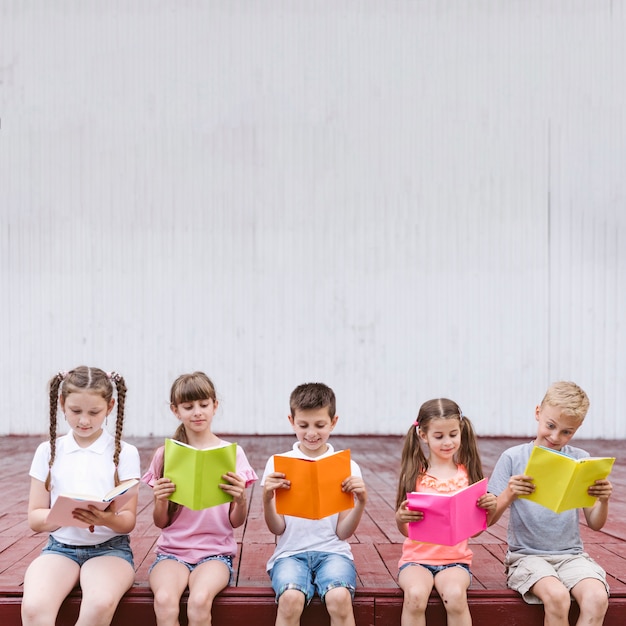
    There’s this concept in children’s literature about books being “mirrors and windows” and I think it’s one of the most beautiful ways to understand why representation matters.

    When children read about characters who share similar experiences, they learn to see the world through different eyes. For autistic children, this means finding characters who think, feel, and interact like they do. These stories help them feel less alone and more understood.

    When neurotypical peers read these tales, they start to grasp the unique perspectives of their autistic friends. This empathy doesn’t just benefit autistic children, it enriches the entire classroom environment, the entire family dynamic, the entire world.

    Most people think stories are just entertainment, but they are tools for building empathy and understanding.

    Mirrors: Seeing Yourself Reflected

    For autistic children, finding a character who thinks, processes, and experiences the world like they do is profound.

    I’ve heard from parents reading our books whose kids:

    Finally had language to explain their sensory experiences because Adrián, the main character in our books, described it first

    Felt less “weird” about needing alone time after seeing their favorite character do the same

    Gained confidence in their stimming behaviors after reading about characters who stim proudly

    Understood that meltdowns don’t make them “bad” when they read about characters navigating big feelings

    These aren’t small things. This is identity formation. This is self-acceptance. This is a child learning that their neurotype doesn’t make them less worthy of being a protagonist in their own life.

    That’s what the characters in our books, Adrián and Guillermo,do. They show kids that being autistic is just one part of who they are, not something to hide or fix.
    Windows: Building Understanding

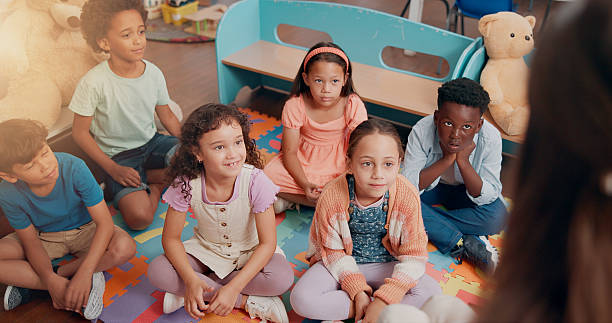
    But here’s what’s equally important, the books we’re creating with our series are windows for everyone else.

    When neurotypical kids read about autistic characters, they:

    Learn that different doesn’t mean wrong
    Develop empathy for experiences unlike their own
    Become better friends, classmates, and future colleagues
    Challenge their own assumptions about what “normal” means

    I remember talking to one of Adrián’s friends from school after I’d given her a copy of our book. She came up to Adri and asked, “Oh! Is that why you wear headphones sometimes? That makes so much sense now.”

    That simple moment of understanding, facilitated by a story that Luis and I created together, helped bridge connections. It built inclusive friendship and educated about autism without it feeling like a lesson.

    It’s important not only to incorporate these books at home but also in education. Teachers who use diverse stories like these give students tools to appreciate differences. They help autistic children feel included in classroom discussions.

    From what we know, inclusive education benefits everyone, it breaks down barriers and fosters a more understanding community. By embracing these stories, schools aren’t just teaching literacy; they’re teaching acceptance and empathy, setting the stage for a more inclusive world.

    What “Authentic” Actually Means

    Okay, so we know representation matters. But not all representation is created equal.

    I’ve seen well-meaning books that technically include autistic characters but miss the mark entirely. You know the ones, where autism is either the character’s entire personality or just a quirky trait that’s magically “overcome” by the end.

    Authentic representation means, and this is what Luis and I tried to include visually in our children’s books:

    ✓ Autistic characters (Adrián and Guillermo) who are fully realized people with interests, friendships, conflicts, and growth, not just walking stereotypes

    ✓ Stories that show diverse autism experiences based on our real life, because autism is a spectrum, and one character can’t represent everyone. So we try to focus on what we actually experience ourselves with our boys.

    ✓ Books that respect autistic traits rather than framing them as problems to be fixed

    ✓ Stories written or informed by actually autistic people, me, the late-diagnosed autistic mother of two autistic kids, and my husband Luis, who is our biggest support and our rock! Together, we understand the lived experience of autism from the inside.

    Here’s the thing, and I learned this from my own experience as a late-diagnosed autistic mom, and from listening to autistic adults in our community, autistic people are the experts on autism. When we center our voices in the stories we share, we get closer to truth.

    The Books That Changed Our Perspective

    Can I share some real talk? When Luis and I first started thinking about autism books for our kids, I thought any book that mentioned autism was helpful.

    I was wrong.

    I’m not saying all of them are bad, there are wonderful books out there that do help. But some of the most popular “autism books” were actually pretty harmful. They portrayed autism as a tragedy, focused entirely on how hard it was for other people to deal with, or suggested that with enough therapy, autistic kids could become “normal.”

    Yikes.

    So I started listening, really listening, to autistic adults and parents of autistic kids who had already walked this path before us. Luis and I paid attention to which stories made kids like Maria feel seen versus which ones made them feel like something to be fixed.

    The difference is everything.

    What Our Books Teach

    Of course, as the creators of Loving Pieces Books, our series holds a special place in our hearts. But we didn’t just write books, Luis and I poured our family’s lived experience into every page.

    📚 Autism: Calming the Chaos follows Adrián as he navigates sensory overwhelm and learns strategies to find calm. This book was born directly from watching our Adri develop his own tools for managing meltdowns. It shows kids that having big feelings is okay, and that there are ways to help yourself feel better. Each Book talks about different Social Emotional Learning.

    📚 Autism: Confidence Starts Here

    📚 Autism: My Invisible Backpack

    📚 Autism: A New School Year

    📚 Autism: This is How I party

    Each book in our series features our boys’ real experiences, hand- drawn illustrated beautifully to show stimming, sensory accommodations, and authentic autistic joy, not just challenges.

    While we’re passionate about our own series, we’ve also found other books that beautifully represent autistic experiences, books that don’t just help autistic kids. They help siblings understand their brother or sister better. They give parents language to talk about neurodiversity. They transform classrooms into more accepting spaces.

    Stories as Mirrors and Windows

    For me and my autistic children, seeing ourselves in stories is crucial. These books act as mirrors, reflecting our daily experiences and validating our feelings. This validation is a powerful tool for building self-esteem and confidence.

    On the flip side, these stories are windows for neurotypical children and adults, offering a glimpse into the lives of their autistic peers. This dual role fosters mutual respect and understanding, crucial for reducing stigma and promoting inclusion.

    Luis often says that writing these books changed him too. As a neurotypical dad, creating these stories helped him understand our boys on an even deeper level. He could see through their eyes in a new way.

    What I’m Learning from Our Community

    One of the best parts of building Loving Pieces Books has been connecting with other parents, educators, and autistic advocates who are on this journey too.

    This community has taught me so much, way more than I could ever teach anyone else.

    Like the mom who shared how her autistic son finally explained his sensory sensitivities to his grandparents using examples from a book character. Or the teacher who told me about a student who found the courage to advocate for herself after reading about Adri in our books, who did the same.

    Or the autistic adult who messaged me saying, “I wish I’d had these books as a kid. It would have saved me years of thinking something was wrong with me.”

    These stories fuel our passion for this work.

    Because every time someone shares how a book created understanding, built a bridge, or helped a child feel less alone, Luis and I are reminded why authentic representation isn’t just nice to have. It’s essential.

    For the Educators Reading This

    If you’re a teacher wondering how to make your classroom library more inclusive, I see you. And I want you to know that what you’re doing matters enormously.

    Here’s what I’ve learned from educators in our community who are doing this well:

    Start with one book. You don’t need to overhaul your entire library overnight. Pick one authentic autism-inclusive story and use it as a read-aloud. Notice what conversations it opens up.

    Create space for discussion. After reading, ask questions like “How might someone experience the world differently than you?” or “What do you think this character needs from their friends?”

    Follow the child’s lead. Some autistic students might want to share their own experiences; others might prefer to listen. Both are okay.

    Use these stories year-round. Autism representation shouldn’t be reserved for Autism Awareness Month. Make it a regular part of your curriculum.

    Connect with autistic voices. Follow actually autistic educators and advocates. They’ll guide you toward the most helpful, authentic resources.

    One teacher told me she keeps a basket of autism-inclusive books, including our Loving Pieces series, in her classroom’s calm corner. Kids can read them anytime, and both her autistic and neurotypical students gravitate toward them. She said it’s created a culture of understanding she never could have achieved through a one-time lesson.

    The Ripple Effect

    Sometimes I think about Maria, the little girl from the beginning of this post, and how one book created such a profound shift in how she saw herself.

    But then I think about all the other kids in her class who read that same book.

    They learned that their autistic classmate’s way of being in the world is valid. They developed empathy. They became better humans.

    This is how we change the world, one story at a time.

    When we fill our homes, classrooms, and libraries with books that authentically represent autistic experiences, we’re not just helping autistic children feel seen. We’re teaching the next generation that neurodiversity is part of the beautiful tapestry of human experience.

    We’re raising kids who will grow up to be more understanding coworkers, more empathetic partners, more inclusive leaders.

    That starts with the stories we choose to tell, and the voices we choose to amplify.

    Every child deserves to see themselves as the main character of a story. Every child deserves to know their experience matters, their perspective is valuable, and their way of being in the world is worthy of celebration.

    Our book series, Loving Pieces Books, matters. The stories we tell matter. The voices we amplify matter.

    Let’s make sure the next generation of children, autistic and neurotypical alike, grows up in a world where everyone’s story is honored.

    Your Next Step

    If you’re feeling inspired to bring more autism-inclusive stories into your home or classroom, I’ve curated our complete series along with other beloved books from our community:

    Our Loving Pieces Books Series:

    📚 Autism: Calming the Chaos

    📚 Autism: Confidence Starts Here

    📚 Autism: My Invisible Backpack

    📚 Autism: A New School Year

    📚 Autism: This is How I party

    And I’ve created a FREE downloadable resource guide with even more book recommendations, discussion questions, and tips for using these stories to build understanding, whether you’re a parent, teacher, or caregiver.

    With love and hope,
    Dalisse (& Luis!)
    Loving Pieces Books

    💙 What book helped you or a child you love feel seen? Share your story with our community, we’re all learning together. Find us on Instagram @lovingpiecesbooks or explore more resources at lovingpiecesbooks.com.