



I used to think I was failing as a parent.
Every time Adrián had what I called a “tantrum” in public, I felt the weight of judgmental stares. The whispers. The head shakes. The well-meaning advice: “You just need to be firmer with him.”
And honestly? Part of me believed them. Maybe I wasn’t being firm enough. Maybe I was “giving in” too easily. Maybe I was doing something wrong.
Then one day, our therapist said something that changed everything:
“Dalisse, that’s not a tantrum. That’s a meltdown. And the difference matters more than you realize.”
I sat there in her office, tears streaming down my face, because suddenly, finally…things started to make sense.
Understanding the difference between meltdowns and tantrums literally transformed how Luis and I parent. It changed how we respond, how we prepare, how we feel about ourselves as parents.
If you’ve been confusing the two, if you’ve been treating meltdowns like behavior problems, I want you to know: you’re not alone. And understanding this difference? It changes everything.
The Day It All Clicked

Let me tell you about the grocery store incident that finally made it all make sense.
Adrián was 5. We were shopping for dinner, just a quick trip we did not plan and he had a long at school. Within minutes, he was on the floor, hands over his ears, screaming. People stared. Someone muttered “something something” An older woman actually came up to me and said, “Pick him up.”
I picked him up, abandoned our cart, and carried him…still screaming to the car.
I drove home feeling like the worst mother in the world. Why can’t I control my own child? What am I doing wrong?
But here’s what I didn’t understand then: Adrián wasn’t trying to do anything. He wasn’t manipulating. He wasn’t being difficult. He wasn’t throwing a tantrum to get his way.
His nervous system had hit complete overload.
The fluorescent lights buzzing. The refrigerators humming. Five different food smells competing. A baby crying three aisles over. Shopping cart wheels squeaking. Strangers’ conversations bouncing off tile floors. I will never forget this how I felt, how I imagined my son felt … ufff
For his autistic brain, it all added up until there was nowhere for the sensory input to go except OUT, in the form of what looked like a “tantrum” but was actually a meltdown.
What’s the Actual Difference? (And Why It Matters So Much)
We explain this visually to Adri and Guille nos with our book Autism: Calming the Chaos it’s even easier.
Okay, let’s break this down in a way that finally made sense to me.
Tantrums: Goal-Oriented
What they are: A child’s strategy to get something they want or … avoid something they don’t want.
What they look like:
- Crying, whining, arguing
- Stopping when they get what they want (or realize they won’t)
- Awareness of their surroundings (watching to see if it’s “working”)
- Some level of control over their behavior
Example: Guillermo sees a toy at the store. I say no. He cries, begs, throws himself on the ground. When I stay firm and we walk away, he eventually stops and moves on.
That’s a tantrum. He had a goal (get the toy), used a strategy (crying/begging), and when it didn’t work, he regulated and moved on.
Meltdowns: Nervous System Overload
What they are: An involuntary response to complete overwhelm, sensory, emotional, or cognitive.
What they look like:
- Total loss of control
- Continuing even after getting what they “wanted”
- No awareness of surroundings (they’re in survival mode)
- Can’t stop even if they want to
Example: Adrián at that grocery store. Even after we left (removing him from the situation), he couldn’t stop. In the car, he was still crying, still covering his ears, still completely overwhelmed. It took 20 minutes in a quiet, dark space for him to even begin to regulate.
That was a meltdown. His nervous system hit overload. The thinking, rational part of his brain went offline. He wasn’t choosing anything, he was drowning.
Why I Was Getting It So Wrong
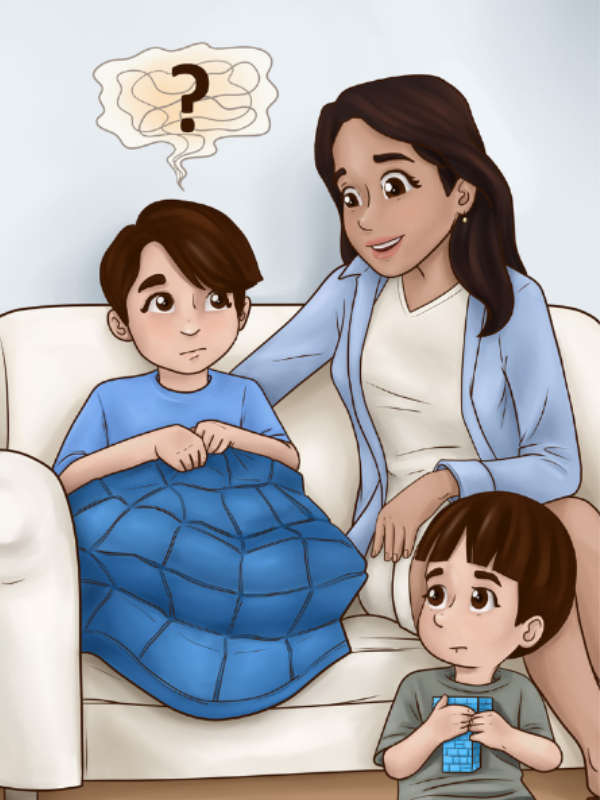
Here’s what was happening before I understood the difference:
When Adrián had a meltdown, I would:
- Try to reason with him (“Calm down, we’re leaving!”)
- Feel frustrated that “nothing worked”
- Worry I was being “too soft” by not punishing him
- Feel embarrassed by the public spectacle
- Question my parenting constantly
All of that made everything worse.
Because you can’t reason with someone in a meltdown. Their brain literally cannot process language when they’re in that state.
You can’t punish someone out of a meltdown. That’s like punishing someone for having a panic attack, it doesn’t work and it’s not fair.
And the embarrassment? That was coming from a fundamental misunderstanding of what was happening.
What Changed When I Finally Got It
Once Luis and I understood that meltdowns were neurological, not behavioral, everything shifted.
We Stopped Trying to “Fix” the Behavior
Before: “Adrián, you need to calm down right now. This is not acceptable.”
After: “You’re safe. I’m here. Take your time.”
We Started Preventing Instead of Punishing
Before: Consequences after meltdowns, hoping it would “teach” him.
After: Identifying triggers, avoiding overload when possible, building in breaks before meltdowns happened.
We Changed Our Own Emotional Response
Before: Frustration, embarrassment, feeling like failures.
After: Compassion, understanding, knowing we were supporting our son through something really hard.
The Triggers I Wish I’d Recognized Sooner
Looking back, Adrián’s meltdowns almost always had clear triggers. I just didn’t know what to look for.
Sensory Overload (The Big One)
This was behind probably 70% of his meltdowns:
- Loud or unpredictable noises
- Bright or flickering lights
- Strong smells
- Crowds and chaos
- Certain textures (tags in clothing, sticky hands)
- Too much visual input
The grocery store? Sensory overload central.
Changes in Routine
Autistic kids often thrive on predictability. When routines change unexpectedly—even small changes, it can trigger anxiety that builds into a meltdown.
Taking a different route home. A substitute teacher. Dad leaving for work at a different time. Plans changing last minute.
For Adrián, these felt destabilizing in a way I didn’t initially understand.
Communication Frustration
Imagine knowing exactly what you need but being unable to express it. Or expressing it repeatedly and no one understanding you.
That frustration builds. And builds. And eventually explodes into a meltdown.
Emotional Overwhelm
Sometimes the emotion itself is the overwhelm, even positive emotions like excitement.
Adrián has had meltdowns on Christmas morning. At birthday parties. During celebrations. Not because he was unhappy, but because the emotion was too BIG for his system to process.
The “Accumulation Effect”
This one took me forever to understand: sometimes the meltdown happens after the overwhelming thing.
Adrián would hold it together all day at school, managing all the sensory input, social demands, and schedule changes. Then he’d come home and completely fall apart.
I used to think, “Why is home the place he loses it?” But a therapist explained: home is his SAFE place. He held it together where he had to, then released it where he felt secure enough to let go.
That’s not a problem. That’s actually healthy.
What Actually Helps During a Meltdown
Okay, this is the practical part. What do you actually DO when your child is in a meltdown?
Priority #1: Safety
Make sure they can’t hurt themselves or others. That’s it. That’s the first job.
Move sharp objects. Block stairs. Stay close enough to intervene if needed. But don’t crowd them unless they want physical comfort.
Lower the Sensory Input
If you can:
- Move to a quieter space
- Dim the lights
- Reduce noise
- Remove crowds
- Offer headphones or a weighted blanket
Even if you can’t change the environment, removing your child from it can help.
Minimize Talking
I know your instinct is to explain, reassure, problem-solve. Mine too.
But during a meltdown, their brain can’t process language. Too many words = more overwhelm.
Keep it simple:
- “You’re safe.”
- “I’m here.”
- “Take your time.”
That’s it.
Give Space (But Stay Present)
Some kids need physical comfort during meltdowns, Luis can hug Guillermo and it helps him calm.
But Adrián needs space. If we touch him during a meltdown, it makes it worse.
Learn what YOUR child needs. And respect it, even if it’s not what you want to give.
Remember: This Will Pass
In the moment, meltdowns feel endless. But they do end. Your job isn’t to stop it, your job is to keep them safe while their nervous system resets.
What Comes After: The Recovery Phase
Once the meltdown is over, your child will be exhausted. Think about it, they just had the neurological equivalent of running a marathon.
What helps:
- Quiet time with no demands
- Comfort (if they want it)
- Maybe a preferred activity
- Definitely no lectures or “talks about what happened”
There’s a time for reflection and learning, but it’s NOT immediately after a meltdown.
Luis and I wait until Adrián is fully regulated, usually hours later, sometimes the next day, before we gently discuss what happened and what might help next time.
The Guilt I Had to Let Go Of
Here’s something nobody talks about: the guilt.
I felt guilty every time Adrián had a meltdown. Like I should have prevented it. Like I should have known better. Like I was failing him.
But here’s what I’ve learned: you can’t prevent all meltdowns.
Even with the best preparation, best strategies, best understanding, sometimes the world is just too much. And that’s not your fault. It’s not your child’s fault. It’s just… reality.
What you CAN do:
- Recognize triggers and minimize them when possible
- Build in preventive breaks
- Create safe spaces for regulation
- Respond with compassion instead of punishment
- Learn and adjust as you go
That’s not failing. That’s parenting an autistic child with love and wisdom.
For the Tantrums (Yes, Autistic Kids Have Those Too)
Let me be clear: autistic kids can have tantrums AND meltdowns. They’re not immune to typical childhood behavior.
Guillermo absolutely throws tantrums when he doesn’t get his way. And we handle those differently than meltdowns.
For tantrums:
- Stay calm but firm
- Set clear boundaries
- Don’t give in to the behavior
- Offer choices when appropriate
- Follow through with consequences if needed
The key: During a tantrum, they’re still in control. They’re testing boundaries, expressing frustration, trying to influence the outcome.
During a meltdown, they’re NOT in control. They’re drowning.
Different situations require different responses.
What I Wish Every Parent Knew
If you take nothing else from this post, please hear this:
Meltdowns are not bad behavior. They’re communication.
They’re your child’s nervous system saying, “I’ve hit my limit. I need help.”
When you respond with understanding instead of punishment, with compassion instead of frustration, everything changes.
Not just for them, for you too.
Because parenting from a place of understanding feels so different than parenting from a place of shame and confusion.
Resources That Actually Helped Us
If you’re looking for more support in understanding meltdowns and how to respond, here’s what genuinely helped our family:
📚 Autism: Calming the Chaos – This is the book Luis and I wrote specifically about meltdowns. It’s told from Adrián’s perspective and includes strategies that have actually worked for our family.
And we’ve created FREE downloadable resources including:
- Meltdown vs. Tantrum comparison chart
- Trigger identification worksheet
- Early warning signs checklist
- Calm-down strategies cards
That grocery store meltdown I told you about? It doesn’t haunt me anymore.
Because now I understand what was really happening. Now I know Adrián wasn’t being difficult… he was struggling. And now I know how to help.
You can get there too. Understanding is the first step. Compassion is the second. And practical strategies? Those come with time and practice.
You’re not failing. You’re learning. And that’s exactly what your child needs you to do.
With understanding and solidarity,
Dalisse (& Luis)
Loving Pieces Books
💙 Have you had a moment when understanding meltdowns vs. tantrums changed how you parent? What was your “aha” moment? Share with our community—we’re all learning together. Find us on Instagram @lovingpiecesbooks or explore more resources at lovingpiecesbooks.com.