
Autism

  • Your Pre-Thanksgiving Pep Talk: Managing Your Anxiety to Help Your Child

    The Night Before our family gathering When I Couldn’t Sleep

    It’s 2 AM the night before our family gathering, and I’m lying awake running through worst-case scenarios in my head.

    What if Adrián or Guillermo has a meltdown in front of everyone?
    What if someone makes another comment about our parenting?
    What if I can’t keep it together and end up crying in the bathroom like last year?
    What if Guillermo refuses to eat anything?

    My chest feels tight. My mind is racing. And I know … I know… that if I show up, already frazzled and anxious, my boys will absorb that energy like sponges.

    Sound familiar?

    Here’s what I’ve learned the hard way: I cannot pour from an empty cup. And I definitely cannot create calm for my kids when I’m drowning in my own anxiety.

    This isn’t another blog post telling you to “just relax” or “enjoy the holidays!” (As if we hadn’t thought of that.) This is your permission slip to acknowledge that any family gathering …Thanksgiving, Christmas, Easter… is legitimately hard when you’re parenting autistic kids here is a practical guide to managing your anxiety so you can actually show up for them.

    Because here’s the truth: your nervous system regulation is the foundation for theirs.

    Why Thanksgiving Anxiety Hits Different for Autism Parents

    Thanksgiving is around the corner so let’s talk about this family gathering.

    Let’s talk about what we’re actually dealing with.

    It’s not just “holiday stress.” It’s:

    The hypervigilance. You’re constantly scanning the environment, anticipating triggers, watching for early signs of overwhelm in your child. It’s exhausting.

    The judgment. Real or perceived, you feel eyes on you every time your child does something “different.” You brace for comments, questions, unsolicited advice.

    The guilt. You feel guilty for dreading a holiday. Guilty for not being able to give your child a “normal” Thanksgiving. Guilty for feeling relieved when it’s over.

    The isolation. Even surrounded by family and friends, you can feel completely alone because nobody seems to truly get what you’re managing.

    The weight of responsibility. You’re not just attending Thanksgiving, or a family gathering you’re orchestrating an entire support system to make it possible for your child to participate.

    Past years, I spent so much energy trying to make everything work that I didn’t actually enjoy a single moment of our gatherings. I was a tightly wound ball of anxiety from the moment we woke up until we finally got home and I could collapse.

    And you know who noticed? Luis, my husband. He later told me, “You seemed really stressed. That made me more stressed.”

    Ouch. But also, that’s when I realized something had to change.

    The Connection Between Your Anxiety and Theirs

    Here’s what I wish I’d understood sooner: autistic children are often highly attuned to other people’s emotions.

    Adrián and Guillermo can sense when I’m anxious, even when I think I’m hiding it well. My tension becomes their tension. My worry becomes their worry.

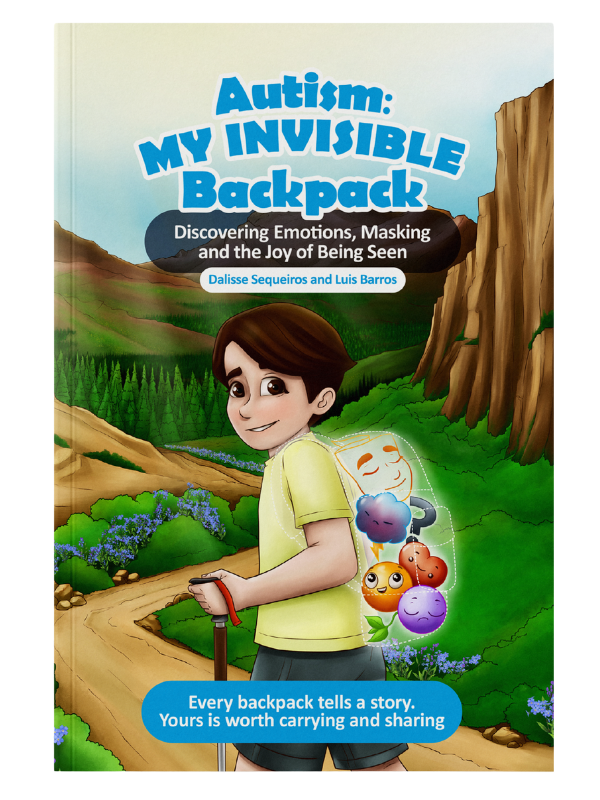
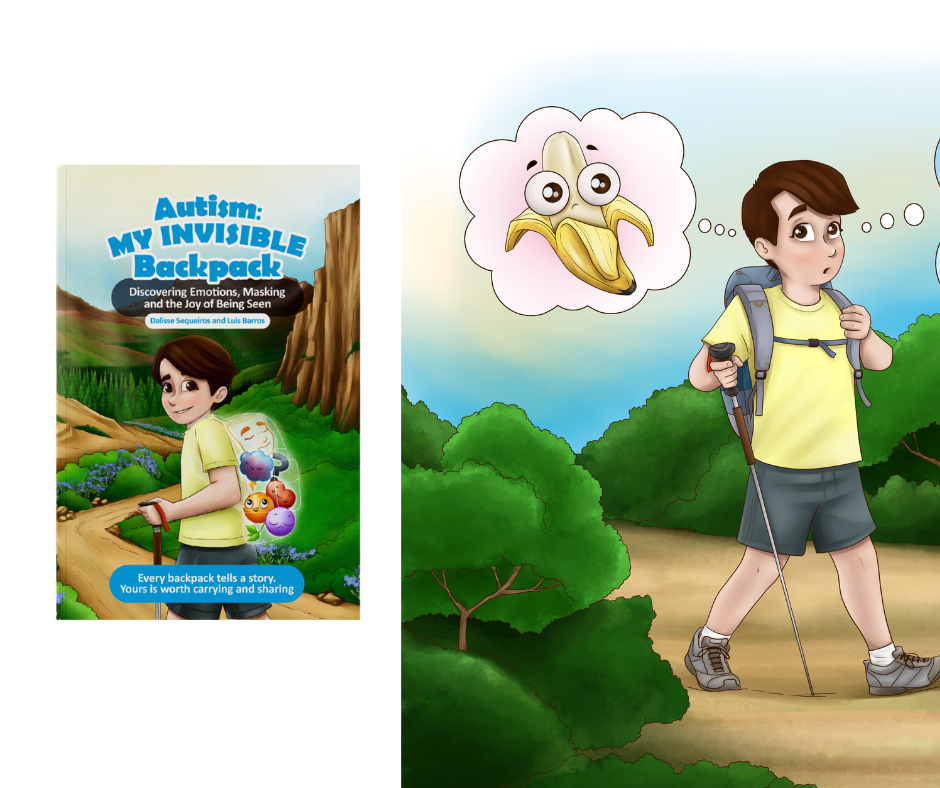
    It’s not their fault. Many autistic people experience hyper-empathy, they absorb the emotions around them like emotional sponges. (We actually wrote about this in our book Autism: My Invisible Backpack.)

    So when I’m anxious about Thanksgiving, Adrián and Guillermo picks up on that anxiety, even if they weren’t anxious to begin with. It compounds their own nervous system stress.

    This isn’t about being a perfect, never-stressed parent. (That doesn’t exist.)

    It’s about recognizing that managing my own regulation isn’t selfish… it’s one of the most important things I can do to support my kids.

    What My Anxiety Actually Looks Like (And Maybe Yours Too)

    Let me get vulnerable for a second, because I think we need to normalize what parental anxiety actually looks like during the holidays:

    Physical symptoms:

    • Tightness in my chest

    • Trouble sleeping the nights leading up to gatherings

    • Stomach issues (stress does a number on my digestion)

    • Tension headaches

    • Feeling jittery or on edge

    Mental patterns:

    • Catastrophizing (imagining every possible thing that could go wrong)

    • Replaying past difficult Thanksgivings on a loop

    • Obsessively planning and re-planning to try to control outcomes

    • Difficulty being present because I’m always three steps ahead

    Behavioral signs:

    • Snapping at Luis or the kids over small things

    • Over-explaining or over-justifying our kids’ needs to family

    • Avoiding making eye contact because I might cry

    • Wanting to cancel everything and stay home (even though that’s not always possible)

    If you’re reading this list thinking “Yes, that’s me” … you’re not alone. And you’re not failing. You’re a parent managing a genuinely challenging situation.

    The Strategies That Actually Help Me Regulate

    I’m not going to tell you to take a bubble bath or do yoga (though if those work for you, great!). These are the practical strategies that have actually helped me manage my anxiety during the holidays:

    1. The “20-Minute Morning Reset”

    Let’s take for example the gathering: Thanksgiving. That morning, before anyone else wakes up, I give myself 20 minutes.

    Sometimes it’s sitting with coffee in silence. Sometimes it’s journaling. Sometimes it’s literally just sitting on the bathroom floor doing deep breathing because that’s the only place I have privacy.

    The breathing technique that works for me:

    • Breathe in for 4 counts

    • Hold for 4 counts

    • Breathe out for 6 counts

    • Repeat 5 times

    That exhale being longer than the inhale tells your nervous system it’s safe to calm down.

    Those 20 minutes set the tone for my entire day. It’s the difference between starting from a place of depletion versus starting with at least some reserves. If 20 min sounds too long take what you can and feels right for you.

    2. The “Worst-Case Scenario” Reality Check

    When my anxiety spirals, Luis does this exercise with me:

    Him: “What’s the worst that could happen?”
    Me: “Adrián has a massive meltdown in front of everyone.”
    Him: “Okay. And if that happens, what will we do?”
    Me: “We’ll use our exit strategy. We’ll leave.”
    Him: “And then what?”
    Me: “We’ll go home. Adrián will regulate. We’ll eat leftovers. Everyone will survive.”
    Him: “Exactly. It’ll be uncomfortable, but manageable. You’ve handled worse.”

    Just walking through the actual worst-case scenario, not the catastrophized version in my head, but the real one, helps me see that even the worst outcome is survivable.

    3. The “Control What You Can” List

    Anxiety loves uncertainty. So I make a list of what I can control:

    Things I CAN control:

    ✓ What time we arrive
    ✓ What we bring for the boys to eat
    ✓ Our sensory survival kit
    ✓ How long we stay
    ✓ Having an exit strategy
    ✓ My responses to comments
    ✓ Whether I take breaks when I need them

    Things I CANNOT control:

    ✗ How relatives react
    ✗ Whether Adrián or Guillermo has a great day or a hard day
    ✗ What other people think
    ✗ The noise level or chaos
    ✗ Whether people “get it”

    Seeing it written out helps me redirect my mental energy to the things that are actually within my power.

    4. The “Permission Slip Practice”

    I literally write myself permission slips. It sounds silly, but it works.

    “I give myself permission to leave early if needed.”
    “I give myself permission to not explain or defend my parenting choices.”
    “I give myself permission to feel however I feel about this day.”
    “I give myself permission to prioritize my kids’ well-being over others’ expectations.”

    Reading these before we leave helps me remember that I’m allowed to set boundaries, even on holidays.

    5. The “Co-Regulation Buddy System”

    Luis and I have a system. If one of us is getting overwhelmed, we have code words:

    “I need a minute” = I’m reaching my limit, can you take over for a bit?
    “Temperature check?” = How are we all doing? Should we think about wrapping up?
    “I need backup” = Someone’s making comments and I need you to intervene

    Just knowing I’m not handling this alone makes such a difference.

    Because guess what?! I´m Autistic too so I’m like the sum of my own sensory things and also parenting! – Luckily Luis helps us in so many ways!

    Creating a Calm Environment (For You AND Your Kids)

    Here’s what I’ve learned about creating calm: it starts with me being calm. Or at least, calmer.

    Lower Your Expectations

    This was the hardest thing for me to accept: Thanksgiving doesn’t have to be perfect, magical, or even particularly fun.

    The goal is: everyone gets through the day without complete overwhelm.

    That’s it. That’s the bar.

    If we manage that? Success.

    If someone actually enjoys parts of it? Bonus.

    Simplify Everything

    We used to try to do it all: multiple gatherings, elaborate dishes, staying for hours.

    Now? We do less. Way less.

    • We attend one gathering

    • We bring simple foods we know work

    • We arrive late and leave early

    • We skip traditions that don’t serve our family

    And you know what? The holidays got so much better when we stopped trying to do them the “right” way.

    Build in Breaks (For Everyone)

    Every hour, we check in as a family. Sometimes just Luis and I step outside for three minutes of fresh air. Sometimes Adrián retreats to the quiet room. Sometimes Guille needs to run around outside. Sometimes me and the boys go and just sit together, (I have to “check” the kids)

    These breaks aren’t failures, they’re maintenance. They’re how we make it through.

    What to Do When Relatives Don’t Understand

    Chatting with my fellow Autism Moms I realized, that I am lucky that our closest family members and Friends are very interested in learning about Autism but for many families this is not the case. And this is the part that can trigger so much of my anxiety: dealing with family members who don’t get it.

    The Comments That Sting

    “He seems fine to me. Are you sure he’s really autistic?”
    “You just need to be more firm with him.”
    “Back in my day, we didn’t have all these labels.”
    “Maybe if you didn’t cater to him so much…”

    Some of these has been said to me. And every single one made me want to scream, cry, or leave immediately.

    The Responses That Work

    I used to over-explain, trying to educate everyone. Now I keep it simple:

    “We’ve got this handled, thanks.”
    “His doctors and therapists are really happy with his progress.”
    “We appreciate your concern, but we’re following professional guidance.”
    “This isn’t up for discussion.”

    Said warmly but firmly. Then change the subject or walk away.

    You don’t owe anyone an explanation. You don’t have to justify your parenting. You don’t have to convince them.

    When to Use Your Exit Strategy

    If someone is repeatedly:

    • Criticizing your parenting

    • Making your child uncomfortable

    • Ignoring boundaries you’ve set

    • Creating more stress than the visit is worth

    Leave. You have permission to leave.

    Protecting your family’s wellbeing is more important than avoiding awkwardness.

    Taking Care of Yourself After Thanksgiving

    Here’s something nobody talks about: the aftermath.

    Even if Thanksgiving goes okay, you’re probably exhausted. Depleted. Running on fumes.

    What helps me recover:

    The day after, we have NOTHING scheduled. Nothing. We stay in pajamas, eat leftovers, watch movies. It’s sacred recovery time.

    I check in with Luis. “How are you doing? What do you need?” Because he’s usually depleted too.

    I don’t process everything immediately. There’s time later to debrief what worked and what didn’t. Right after? I just rest.

    I’m gentle with myself. If I didn’t handle something perfectly, if I got snappy or emotional—that’s okay. I’m human. I was doing my best in a hard situation.

    A Pep Talk for Right Now

    If you’re reading this in the lead-up to Thanksgiving, feeling that familiar dread building:

    You are not overreacting. This is genuinely hard. Anyone who says otherwise hasn’t walked in your shoes.

    You are doing an incredible job. The fact that you’re here, reading this, trying to prepare—that shows how much you care.

    Your anxiety is understandable. You’re not broken. You’re responding normally to a challenging situation.

    Your kids are lucky to have you. Someone who advocates for them, prepares for their needs, and manages their own regulation so they can show up.

    It’s okay if it’s not perfect. Actually, it’s okay if it’s kind of a mess. What matters is that you tried, you cared, and you kept your family safe.

    You can do hard things. You’ve done them before. You’ll do them again. And you don’t have to do them alone.

    Resources for Your Journey

    If you’re looking for more support managing holiday stress and anxiety, here’s what has genuinely helped our family:

    📚 Autism: My Invisible Backpack – This book explores emotional overload and hyper-empathy, understanding how our kids absorb our emotions helped me see why managing my anxiety matters so much.

    📚 Autism: Calming the Chaos – The regulation strategies in this book work for kids AND adults. Many parents have told us they use these techniques themselves.

    And we’ve created FREE downloadable resources.

    Take care of yourself. Not because you’re selfish, but because your wellbeing matters, both for you and for the people you love.

    You’ve got this. And on the days when you don’t feel like you’ve got this? That’s okay too. We’re all just doing our best.

    With solidarity and understanding,
    Dalisse (& Luis)
    Loving Pieces Books

    💙 How do you manage your own anxiety during the holidays? What helps you stay regulated when things get overwhelming? Share with our community—we’re all learning together. Find us on Instagram @lovingpiecesbooks or explore more resources at lovingpiecesbooks.com.

    With anxiety under control, you can now focus on practical ways to make your family gatherings more enjoyable and supportive.

  • Beyond the Sales: Investing in Resources That Truly Support Your Family

    The Black Friday Buys That Actually Made a Difference (And the Ones That Just Collected Dust)

    Three years ago, I went absolutely wild on Black Friday.

    Weighted blanket? Added to cart. Sensory swing? Click. Fidget spinner set made with lights and sounds? Sure! Light-up sensory ball that bounces on its own? Why not! By the time I finished, I’d spent over $300 on “autism tools” that promised to help Adrián and Guillermo.

    You know how many of those purchases we actually still use regularly?

    Ten. Out of maybe twenty items.

    The rest? They’re collecting dust in a closet, unused and forgotten. Some never even made it out of the packaging because my boys had zero interest in them.

    That was an expensive lesson about the difference between impulse buying during a sale and investing in tools that actually support your family.

    So this Black Friday, I want to save you from my mistakes. Let’s talk about what’s actually worth buying, the tools, toys, and resources that have genuinely made our lives easier and our boys more comfortable.

    Because yes, Black Friday can be an amazing opportunity to stock up on autism-supportive tools at lower prices. But only if you’re strategic about it.

    Why I’m Finally Okay With “Impulse” Black Friday Shopping (Sort Of)

    Here’s the thing: I used to feel guilty about Black Friday shopping. It felt consumerist, unnecessary, indulgent.

    But then I realized sensory tools, communication aids, and regulation resources add up FAST. When you’re spending $30 on noise-canceling headphones that might get lost or broken, or $45 on a weighted blanket for a kid who’s still growing, those costs multiply quickly.

    So if I can get quality tools at 30-40% off during Black Friday? That’s not frivolous, that’s smart budgeting for ongoing needs.

    The key is knowing what to buy and what to skip.

    What We Actually Use (And Will Stock Up On This Year)

    Let me walk you through the categories of items that have genuinely supported our boys, keep in mind all kids are different and their interests and needs vary. I will share our experience and you take what you need. This Black-friday I’ll be watching for deals on:

    Sensory Regulation Tools (The Non-Negotiables)

    Noise-Canceling Headphones

    This is hands-down our most-used tool. Adrián does not wear this so much but Guillermo does, he wears his to school assemblies, plays, crowded-places, family gatherings, anywhere that might be loud.

    We’ve gone through three pairs in two years (kids lose things, headphones break). So when I see deals on quality noise-canceling headphones, I buy backups. Amazon link to the one in the image: https://amzn.to/49JFr5D

    What to look for:

    • Over-ear design (more comfortable for extended wear)

    • Adjustable headband (they’re growing!)

    • Good padding (cheaper ones can hurt after a while)

    • Wired option for younger kids (batteries die at the worst times)

    Our recommendation: Look for brands with good reviews specifically mentioning autism/sensory needs. Check our curated sensory products list for specific recommendations.

    Weighted Blankets

    Guille, at 4 years old, loves his weighted blanket for bedtime. It helps him settle and sleep better, and helps when going thru a meltdown

    But here’s what I learned the hard way: get the right weight. General rule is 10% of body weight. Too heavy is uncomfortable; too light doesn’t provide the deep pressure they need.

    Black Friday tip: If you see a good deal on a weighted blanket, consider buying the next size up too. Your child will grow into it, and these things are expensive at full price. Here are some weighted blankets we love.

    Fidget Tools

    Not all fidget toys are created equal. The cheap multi-packs often break within days.

    What actually works for us:

    We keep fidget tools in multiple locations: school, backpack, car, quiet room at home. So buying multiples during sales makes sense.

    Visual Supports and Communication Tools

    Visual Timers

    Game. Changer.

    Adrián and Guillermo both struggle with time perception. “Five more minutes” means nothing to him. But a visual timer he can actually see counting down? That works.

    We use them for:

    • Transitions (“In 10 minutes, we’re leaving for school”)

    • Activity time limits (“You can have 15 minutes of screen time”)

    • Waiting (“The cookies will be done in 12 minutes”)

    • Potty Training – Sand ones where the best for Guillermo

    Tip: Look for timers with both visual AND auditory options, so you can adjust based on the situation.

    Here are the ones we love the most.

    Dry Erase Boards and Markers

    We use these constantly for:

    • Quick visual schedules

    • Drawing out social scenarios

    • Letting the boys communicate when words are hard

    • Making lists and plans together

    The magnetic ones are great because you can add pictures or written cards.

    Black Friday strategy: Stock up on dry erase markers. We go through these like crazy, and they’re often on sale. These Expo ones are very good quality.

    Learning and Development Tools

    Building Toys (LEGO, Magna-Tiles, etc.)

    Both our boys LOVE building. It’s how they play, how they process, how they calm down.

    These toys are expensive, but they last forever and grow with your child. Black Friday is when we stock up on sets.

    Why they’re worth it:

    • Fine motor development

    • Problem-solving skills

    • Independent play (giving you a break!)

    • Parallel play opportunities with peers

    Look for: Sets that align with your child’s interests. Adrián loves historical buildings; Guille is all about construction vehicles.

    Sensory Play Materials

    • Kinetic sand (less messy than regular sand, oddly satisfying)

    • Play-Doh (we go through SO much of this) Keep inside bottle after use they dry up with air.

    • Water beads (under supervision, I repeat Under Supervision only, these are amazing)

    • Sensory bins supplies (rice, beans, small toys)

    Black Friday tip: These consumables go on sale often. Buy in bulk and store them for future sensory activities.

    Books That Actually Get Read

    Okay, I’m obviously biased here, but: books are some of the best investments you can make for autistic kids.

    Not just any books, books that help them understand themselves, navigate challenges, and feel seen.

    Our boys return to certain books over and over:

    These aren’t books we read once and shelve. They’re tools we use again and again.

    Black Friday book strategy:

    • Buy books your child will reference repeatedly (not just read once)

    • Consider getting multiples of favorites (one for home, one for grandparents, one for school)

    • Look for books written by actually autistic authors or autism families, they’re more authentic

    Check our complete Loving Pieces Books series if you’re looking for autism-affirming stories that actually resonate with kids.

    What I’m NOT Buying This Year (Lessons Learned)

    Let me save you some money by sharing what didn’t work for us:

    ❌ The “Latest Trend” Sensory Toys

    Every year there’s a new “miracle” sensory toy that goes viral. Most of them are gimmicks.

    What didn’t work for us:

    • Pop-its (fun for 2 days, then forgotten)

    • Light-up spinning toys (overstimulating, not calming)

    • Complicated sensory bottles (looked pretty, never used them)

    • Slime kits (fun to make once, then… meh)

    The lesson: Just because something is trending doesn’t mean YOUR child will use it.

    ❌ Tools That Don’t Fit Your Child’s Actual Sensory Profile

    I bought a sensory swing because I read it was “essential” for autistic kids.

    Guillermo hated it. The movement made him anxious, not calm. But we got lucky because Adrián Loves it!

    If Adrián wouldnt saved the day it would have been money wasted because I bought based on general advice, not HIS (Guillermo) specific needs.

    The lesson: Know whether your child is sensory-seeking or sensory-avoiding in different areas. A sensory-seeking kid might love a swing; a sensory-avoiding kid might hate it.

    ❌ Cheap Versions of Things That Need to Be Quality

    I learned this the hard way with headphones. I bought a $10 pair during Black Friday because “it’s such a good deal!”

    They broke in three weeks. I ended up buying better ones at full price anyway.

    The lesson: Some things are worth spending more on. Quality noise-canceling headphones, weighted blankets, and sturdy building toys fall into this category.

    ❌ Things I Think They Should Like vs. What They Actually Use

    I bought Adrián a whole set of social skills card games because I thought they’d be helpful.

    He never wanted to play them. They felt like work, not fun.

    The lesson: If your child doesn’t naturally gravitate toward something, it probably won’t get used, no matter how educational it is.

    The Smart Black Friday Shopping Strategy

    Okay, so how do you actually approach Black Friday shopping for autism tools without overspending or buying things that’ll collect dust?

    1. Start With an Actual Needs Assessment

    Before you browse sales, sit down and honestly assess:

    What does my child actually use regularly?
    (These are the things to stock up on)

    What are we running low on or about to outgrow?
    (Weighted blankets they’re growing out of, fidgets that are wearing out)

    What challenges are we facing that we don’t have tools for yet?
    (New sensory needs, upcoming transitions, communication gaps)

    Make a list. Be specific.

    2. Set a Budget (And Stick to It)

    It’s SO easy to go overboard when everything is “on sale.”

    Luis and I set a Black Friday autism-tools budget: $200 this year.

    That’s it. When we hit that number, we stop.

    3. Prioritize Consumables and Backups

    Consumables (things you’ll need to replace anyway):

    • Fidget tools that wear out

    • Sensory play materials

    • Art supplies

    • Books (yes, books are consumables, you’ll want more!)

    Backups (things that might get lost or broken):

    • Extra noise-canceling headphones

    • Backup fidgets for school/car/home

    • Duplicate comfort items if possible

    These are the smartest Black Friday purchases because you’ll need them eventually anyway.

    4. Watch for Quality, Not Just Discounts

    A 50% discount on something cheap and poorly made is still a waste of money.

    Questions to ask:

    • Do other autism families recommend this brand?

    • Are there reviews specifically from parents of autistic kids?

    • Will this last, or is it designed to break?

    I’d rather pay $40 for quality headphones on sale than $15 for junk that breaks.

    5. Consider Next Year Too

    If you see an amazing deal on something your child will need in 6-12 months (like a larger weighted blanket, or books for an upcoming milestone), it might be worth buying now.

    We bought Adrián’s school backpack during last year’s Black Friday. We saved 40%.

    The Investments That Go Beyond “Stuff”

    Here’s what I’ve learned after years of trying to support my boys: the best investments aren’t always physical products.

    Invest in Understanding

    Books that help YOU understand autism better are just as important as books for your kids.

    Resources that explain sensory processing, emotional regulation, and neurodiversity have changed how we parent, and that’s priceless.

    Invest in Connection

    Tools that facilitate connection, building toys for parallel play, books you can read together, games that work for your child’s needs, these create opportunities for bonding.

    That’s worth more than any fidget spinner.

    Invest in Self-Advocacy

    Books and tools that help your child understand themselves and communicate their needs? Those are investments in their future independence.

    When Adrián can explain “I need a sensory break” or “This is too loud for me,” he’s learning to advocate for himself. That’s the real goal.

    For more ideas on supportive toys, visit our curated picks

    My Actual Black Friday Cart This Year

    Want to know what I’m actually planning to buy? Here’s my list:

    Definite purchases:

    • Backup noise-canceling headphones (we need spares)

    • More building sets (both boys are obsessed)

    • Kinetic sand (we’re almost out)

    • Therapy putty (goes through this fast)

    Considering:

    • Visual timer for Guille’s room (he’s getting old enough)

    • Books about emotions and feelings (he’s working on this in therapy)

    • Sensory-friendly clothing (if I find good deals)

    Not buying:

    • Trendy toys I saw on Instagram

    • Complicated systems I won’t actually implement

    • Anything that doesn’t solve a specific, current need

    Total estimated cost: about $180 (under our $200 budget!)

    Your Action Plan for This Week

    If you’re planning to shop Black Friday for autism tools, here’s your game plan:

    Before Black Friday:

    1. Make your needs assessment list (15 minutes)

    2. Set your budget

    3. Research quality brands for your must-haves

    4. Sign up for email alerts from stores you trust

    During Black Friday:

    1. Shop your list first, THEN browse

    2. Check reviews before adding to cart

    3. Ask yourself: “Will we actually use this in the next 3 months?”

    4. Stop when you hit your budget

    After Black Friday:

    1. Put everything away properly (don’t just let it pile up)

    2. Show your kids new tools and how to use them

    3. Return anything that doesn’t work (no shame in that!)

    So yes, shop Black Friday. Take advantage of deals. Stock up on tools that genuinely support your family.

    But don’t fall into the trap of thinking more stuff equals better support.

    The best investment you can make? Understanding your child’s unique needs and choosing tools that actually fit them.

    Happy (strategic) shopping!

    With love and hard-won wisdom,
    Dalisse (& Luis)
    Loving Pieces Books

    💙 What autism tools have been game-changers for your family? What purchases did you regret? Share your wisdom with our community, we’re all learning together. Find us on Instagram @lovingpiecesbooks or explore more resources at lovingpiecesbooks.com.

  • Creating a Sensory Safe Zone at Your Thanksgiving Gathering

    I want to tell you something that took me years to admit out loud.
    Most of the meltdowns my kids had at family gatherings were not random. They weren’t “behavior.” They weren’t disrespect. They were a nervous system screaming, “I can’t handle this anymore.”

    And I didn’t know how to help them.
    Or honestly, how to help myself.

    If you’ve ever sat in someone else’s living room during a holiday dinner, feeling your child unravel, I just want you to know this.

    You are not the only one.
    You are not imagining the overwhelm.
    And you are not failing.

    There is something you can do that actually helps.
    It is simple.
    It is powerful.
    And it changes the entire day.

    It is creating a sensory safe zone wherever you celebrate Thanksgiving.

    Let me walk you through exactly how to do it, step by step, so you are not figuring it out in real time while a turkey timer goes off and ten people try to hug your child at once.

    What a Sensory Safe Zone Actually Is

    Think of it as a tiny island of predictability inside a loud, unpredictable day.

    A little space where your child can breathe without being watched, judged, or overstimulated.

    For my family, it has become essential.
    It keeps the day steady.
    It keeps us regulated.
    And honestly, it lets us enjoy the holiday instead of surviving it.

    Try to Choose the Quietest Possible Spot

    At your own home, you probably know the best place already.
    At a relative’s house, you might need to get creative.

    Here are the places that usually work:

    • A guest bedroom
    • An office
    • A playroom with the door partly closed
    • Even a large walk-in closet if that is truly the calmest space

    When we go to my In-laws house, the quietest place is the bedroom where we stay at.
    It has a bed, our toys we brought from home, wifi works perfect and its cozy.

    But it is away from clanging dishes and endless conversation, and that makes all the difference.

    If you are not staying there like we do and if you are comfortable, tell your host:
    “Hey, can we use one room as a quiet space just in case the kids need a break?”
    Most people say yes immediately because it is such a small request.

    My friend Monica is the best in this she always reminds us about our quiet place even before asking her (Luv u).

    This is non-negotiable … Pack a “Sensory Kit” You Can Grab Quickly

    I used to overthink this.
    Now I keep it simple.
    I put everything in one tote bag that lives by the front door during the holidays.

    Here is what I bring:

    Noise cancelling headphones (you never know when you might need them!)
    A small weighted lap pad or a favorite blanket
    Chewy Aids
    A small fidget bag
    • A familiar book or activity
    • A tablet with downloaded shows and a rechargeable phone battery
    • Calming lotion or a scented (lavender) hand wipe
    A water bottle (spill-free)

    If you do nothing else, bring headphones and something familiar to touch.
    Those two items alone have saved so many gatherings for us.

    Set Up the Space Before the Chaos Starts

    Do this the moment you arrive.
    Not after you notice the signs of overwhelm.
    By then, it is too late.

    I walk straight to the room we’re using and do this:

    • I dim the lights or turn on a lamp instead of overhead lighting
    • I put the weighted blanket on a chair or bed
    • I place the headphones where my kids can see them
    • I set out one or two familiar items
    • I keep the bag accessible but not spread out everywhere

    This takes less than five minutes, but it tells my kids, “This space is ready for you whenever you need it.”

    You are giving them permission to take a break without asking you in front of everyone.

    That is dignity.
    That is safety.
    That is regulation.

    Explain the Space in Simple, Clear Language

    I usually kneel down to my kids and say something like:

    “If you need a quiet break today, this room is for you. You can come here any time. You do not have to ask. I’ll check on you, and you can stay until your body feels calm again.”

    This is important.
    Kids need to know what their options are before they become overwhelmed.

    When we skip this step, we’re basically asking them to navigate a sensory storm without a map.

    Use the Safe Zone as Many Times as Needed

    Let me be honest.
    There were years when we used it once or twice.
    And there were years when we used it every thirty minutes.

    Both are okay.

    This is not about toughness.
    This is not about making your child adapt to a noisy holiday.
    This is about helping their nervous system cycle back down so they can handle the next part of the day.

    Every break is actually a regulation tool.
    Every quiet moment prevents a meltdown later.

    And if your child ends up spending most of Thanksgiving in the quiet room, please hear this:
    That still counts as being part of the holiday.
    Your child showed up.
    Your child tried.
    Your child protected their peace.

    And you did too.

    Create a Signal for Check-ins

    We use very simple phrases like:

    “Do you want company or quiet?”
    “Do you want to stay or go back out?”

    This prevents guessing and keeps the space from becoming another source of stress.

    Some kids want you nearby.
    Some want to be alone.
    Some need a few minutes to decompress without talking.

    All of these are normal.

    Before You Go

    If Thanksgiving makes you anxious because you never know how the day will unfold, please know this.

    You can do this.
    You can create a safe, calm space anywhere you go.
    You can protect your child’s nervous system and make the holiday easier for both of you.

    And you do not have to apologize for doing what your family needs.

    With so much care,
    Dalisse

  • The 2-Hour Prep That Saved Our Friends-Giving (And Can Save Yours Too)

    Our first Friends-Giving was a disaster.
    We hosted. We thought we were “ready enough.”
    We were not.

    Within an hour, Adrián was hiding in his room with tears in his eyes, Guille had not been born yet, and Luis and I were exchanging those silent parent glances that say, Abort mission. This is not working.

    We were hosting our friends… in our own home… and still drowning.

    That night, after everyone left, we sat on the couch in complete silence and made a promise to ourselves:

    Never again will we walk into a big gathering, especially one we’re hosting, without preparing Adrián.

    We decided to give it another try, many years later and Guillermo now was in the mix.

    But this time … we changed everything.

    And the wild part: it only took about two hours of prep, spread out over a couple of days. No full-project production. No crafts. No “special-needs mom over the top” energy. Just clear, practical steps that protected our kids and saved the entire event.

    If you’re hosting a holiday, birthday, Friends-Giving, Thanksgiving Dinners or any gathering where your autistic kids will be surrounded by adults, noise, food, expectations, and unpredictability…

    this is the system that finally worked for us.

    Why Hosting Friends-Giving Is Actually Harder Than Attending

    People assume it’s easier when the gathering is in your own home.

    False.

    Hosting means:

    • Your kids’ safe space becomes the social space.

    • Their predictable environment becomes unpredictable.

    • People roam every room unless you control it.

    • Smells, sounds, and conversations multiply.

    • You’re trying to attend to guests and your kids simultaneously.

    • No easy exit option when things go sideways.

    But, guess what? We as a family love to host!!! For Adri, hosting Friends-Giving felt like an invasion of everything familiar.
    For Guille, it was too many people in too many places doing too many things.

    So our entire mindset shifted:

    Instead of forcing our kids to adjust to the event, we adjusted the event to our kids, and it was the best think we could plan to do.

    Here’s the exact breakdown of what we did. Copy it, adapt it, or steal it completely. It worked (for us).

    The first thing we did was to Create the “Friends-Giving Map” (30 minutes)

    Because we were hosting, we made a visual map of exactly what Friends-Giving would look like in our own home. This predictable sequence was a life-saver. It was a simple PPT we did nothing fancy or hyper-realistic…

    Ours included photos of:

    • The kitchen (“People will be cooking and talking here.”)

    • The living room (“Our friends will sit here.”)

    • The dining table (“We will eat together here.”)

    • Adri’s room (“You can take breaks here anytime.”)

    • Guille’s room (“You can play here if you need space.”)

    • The payroom (“where all the kids will play together.”)

    • The backyard (“We might step outside if it gets loud.”)

    We walked the boys through it every night for three nights.

    No fancy program. We downloaded it on my phone.

    Key detail:
    We explicitly included the rule:
    “You can leave the busy space whenever you want, your safe space will be your room.”

    Just knowing they had an escape made them willing to stay longer. And Adrián was excited he loves when his friends come over.

    Now continue by Prep the Sensory Zones (20 minutes)

    Yes, zones, plural. Hosting requires more than a backpack.

    We set up three predictable sensory stations:

    1. The Quiet Room (Adri’s or Guille’s bedroom)

    • TV breaks

    • Weighted blanket

    • Fidgets

    • Tablet with downloaded shows

    • They are allowed to close the door if needed (They cant lock themselves in the rooms have no locks)

    2. Guille’s Comfort Corner

    In the playroom we have a tent and it fit one so this becomes his little nook we usually set it behind the sofa with:

    • His squishy toys

    • Chewy bracelet

    • Pillows

    • Play-Dough

    Sensory Products we love: Click here

    3. The Kitchen Helper Station- Guille loves this

    Because both kids like purpose, not chaos:

    • A bowl they could help mix

    • A “safe job” they could do if they wanted to engage

    • Zero pressure to participate

    • Guille has a little Stool like this one Click here, and he senses it like his fort. Plus he is very good at cooking.

    Each zone was ready before anyone arrived.

    Next up: Solve the Food Pressure Before It Starts (40 minutes)

    Hosting means your food becomes the center of attention, and so does what your kids eat or don’t eat. I love cooking, I could be all day in the kitchen, I hyper-focus and create a good plate. But my kids don’t even try my food some days … It’s ok, I have learned not to take it personally.

    SO what we did with food is we eliminated that problem with one uncompromising rule:

    We serve regular Friends-Giving food for guests.
    We serve safe food for the kids.
    Zero apologies.

    We told our friends ahead of time:
    “Adri and Guille will have their safe foods available, so they may not eat the Friends-Giving meal. Just ignore their plates, we’ve got it covered.”

    People appreciated the clarity.

    Our boys’ plates included:

    • Plain pasta

    • Plain chicken

    • Their preferred crackers

    • Fruit slices

    • Familiar dessert from home

    They ate what worked for them.
    Everyone else ate turkey and sides.
    No tension. No commentary. No guilt. And guess what many of the other kids preferred the safe-food so it felt very normal, I loved that!

    This one is harder … Establish Guest Rules (15 minutes)

    This was new for us, and a game changer.
    Because hosting means you need to protect your kids from well-meaning adults.

    We sent one clear message in our group chat:

    “Please know that Adri and Guille might need some alone time so they will go up their rooms and come back down when they are ready.
    We’ll guide them as needed. Thanks for helping us make this day comfortable for them.”

    Did it feel awkward to send? Not really, they were our closest friends, they know us and know our kids it more a reminder than a “rule”.

    We also:

    • Blocked off the kids’ bedrooms.

    • Asked guests not to force hugs or kisses.

    • Let everyone know we’d be doing “quiet breaks” throughout the day.

    When you set expectations early, guests adapt.

    We also Practice Micro Scripts (15 minutes)

    Five minutes a night, three nights in a row.

    We practiced:

    • How to say hello

    • How to decline hugs

    • How to ask for breaks

    • How to tell us when they were done

    • How to answer basic questions with one-sentence replies

    We practiced exactly these phrases:

    “I’m not ready to talk right now.”
    “No thank you, I don’t want a hug.”
    “I need a break in my room.”
    “I’ll play later.”

    This tiny rehearsal gave them huge confidence on the actual day.

    Day-Of Strategies That Actually Worked

    Even with prep, the day requires strategy. Here’s what made the difference:

    1. This one happened without planning

    Friends came in waves, not all at once.
    This prevented that “sudden invasion” feeling for the kids.

    2. We Protected the Quiet Room

    No adults in there.
    No kids wandering in.
    Zero exceptions.

    3. We Scheduled Breaks

    Every hour, we quietly checked in with each boy:
    “Do you need break time?”

    Sometimes yes.
    Sometimes no.
    But the check-in prevented overwhelm.

    4. We Abandoned the “host perfection” mindset

    We hosted a comfortable gathering, not a performance.

    If the kids needed to disappear for an hour, that was success. If they needed the tablet we let them be.
    If they checked in but didn’t stay long, also success.

    5. We Ended the Day Without Guilt

    When Adri gave us the signal… “I’m done”, we gently wrapped up Friends-Giving.
    We didn’t push.
    We didn’t negotiate.
    We ended on a good note. He went to his room and that was it. We kept enjoying our friends and family.

    What Success Looked Like For Our Family

    Both boys:

    • Ate their safe foods

    • Took multiple breaks

    • Spent time with guests in short bursts

    • Avoided meltdowns

    • Ended the day regulated instead of exhausted

    And we got to enjoy our friends without constantly managing crises.

    That is success.
    Not picture-perfect.
    Not neurotypical-looking.
    Just peaceful, predictable, and human. And I want to host as many dinners I can it’s something that we like doing, and my kids are also social they feel happy when they see their friends coming into their homes and lives, and that makes us whole.

    For Anyone Hosting With Autistic Kids

    Here’s the blunt truth:
    You cannot host a big gathering successfully unless you prepare your kids AND your guests.

    Not preparing is what creates the chaos.
    Not communication.
    Not autism.

    When you control the environment, set boundaries, and make the day predictable, your kids thrive and your guests actually enjoy being with you.

    And you?
    You finally get to enjoy your own Friends-Giving instead of surviving it.

    With care, clarity, and compassion,
    Dalisse

  • The Grocery Store Meltdown That Changed Everything

    I’ll never forget the day I truly understood what a meltdown felt like for Adrián.

    We were at the grocery store, just a quick trip to grab dinner ingredients. Within minutes, my then-three-year-old son was on the floor, hands over his ears, tears streaming down his face. People stared. Someone whispered “tantrum.” An older woman shook her head disapprovingly.

    But Luis and I knew better. This wasn’t defiance. This wasn’t manipulation. This was our son’s nervous system screaming, “I can’t handle this anymore.”

    That moment, sitting on that grocery store floor with Adri while strangers judged us, became a turning point. Not because we magically figured everything out that day, but because we finally stopped asking “Why is he doing this?” and started asking “What is he experiencing?”

    If you’re reading this because your child has meltdowns and you feel lost, overwhelmed, or misunderstood, I see you. And I want you to know: understanding changes everything.

    Recognizing Autistic Meltdowns

    What Actually Happens During a Meltdown

    Thankfully we always have our therapists who help us along the way. Here’s what my therapist told me years ago: meltdowns aren’t behavioral problems. They’re neurological responses to overwhelm.

    Think about the last time you were completely overwhelmed, maybe during a stressful work deadline, or when too many things went wrong at once. Remember that feeling of your brain just… shutting down? Of being unable to think clearly or control your emotions?

    Now multiply that by ten. Add sensory input that feels physically painful. Remove the adult coping mechanisms you’ve built over decades. That’s closer to what an autistic meltdown feels like. And at the time Adrián was non-verbal so he couldn’t tell me with words what was going on.

    The Science (In Plain Language)

    When an autistic child experiences sensory overload, emotional distress, or too much cognitive demand, their nervous system goes into fight-flight-freeze mode. The logical, thinking part of their brain essentially goes offline. They’re not choosing to have a meltdown they’ve been pushed past their capacity to cope.

    Research shows that around 40% of autistic individuals experience meltdowns regularly. But here’s what the research doesn’t always capture: the shame autistic kids carry afterward, the exhaustion parents feel, the isolation of being judged by people who just don’t understand.

    Meltdowns vs. Tantrums: Why the Difference Matters

    I can’t count how many times someone has told me, “You just need to be firmer with him. Don’t give in to tantrums.”

    And every time, I’ve had to take a deep breath and explain: This isn’t a tantrum.

    Here’s the difference:

    Tantrums are about getting something. They:

    • Have a clear goal (I want that toy, I don’t want to leave)

    • Stop when the child gets what they want or loses interest

    • Are somewhat within the child’s control

    • Respond to consequences or ignoring

    Meltdowns are about being completely overwhelmed. They:

    • Have no goal, the child isn’t trying to get anything

    • Continue even after getting what they “wanted”

    • Are NOT within the child’s control

    • Get worse if you try to ignore or punish them

    When Adrián or Guillermo has a meltdown, he’s not trying to manipulate us. His nervous system has hit overload, and he needs support to regulate, not discipline.

    Understanding this difference literally transformed how Luis and I respond. Instead of feeling like we were “giving in,” we realized we were providing the support our son desperately needed. And when Guillermo started experiencing his meltdowns since we already had the knowledge and experience with Adrián this helped us as parents help him. Im not saying its easy no, but it surely helps to know what a meltdown is.

    What Triggers Meltdowns (And Why They’re Different for Everyone)

    After years of keeping mental notes (and eventually a journal), we started recognizing Adri’s patterns, and later on with Guillermo. Your child’s triggers might be different, but here are the most common ones we’ve learned from our family and our community:

    Sensory Overload

    This was Adri’s biggest trigger. The grocery store that day? The fluorescent lights were buzzing, the refrigerators hummed constantly, there were at least five different smells competing for attention, and a toddler was screaming three aisles over.

    For Adri, it all added up until his sensory cup overflowed.

    Other common sensory triggers:

    • Certain textures (clothing tags, sticky hands, unexpected touch)

    • Loud or unpredictable noises

    • Strong smells

    • Bright or flickering lights

    • Crowded spaces

    Changes in Routine

    Autistic children often thrive on predictability because it helps them feel safe. When routines change unexpectedly, even small changes, it can trigger anxiety that builds into a meltdown.

    For Guille, this is huge. If we take a different route home from school without warning him, he becomes visibly distressed.

    Communication Frustration

    Imagine knowing exactly what you need but being unable to express it. Or worse, expressing it repeatedly and no one understanding you.

    This frustration builds and builds until it explodes into a meltdown.

    Emotional Overwhelm

    Autistic children often experience emotions more intensely than neurotypical peers. When emotions get too big even positive ones like excitement, they can trigger a meltdown.

    Hidden Triggers

    Sometimes the meltdown happens after the overwhelming experience. Adri might hold it together all day at school, only to completely fall apart the moment he gets home.

    That’s not about home being a bad place, it’s about home being the safe place where he can finally release all that built-up stress.

    What We’ve Learned About Responding (The Hard Way)

    I’m not going to pretend we handled every meltdown perfectly. We made mistakes. Lots of them. But here’s what Luis and I have learned works:

    During the Meltdown

    Priority one: Safety. Make sure your child can’t hurt themselves or others. Move sharp objects, block stairs, stay close enough to intervene if needed.

    Lower the sensory input. If possible:

    • Dim the lights or move to a darker space

    • Reduce noise (turn off music, close windows, speak softly or not at all)

    • Remove crowds if you can

    • Offer noise-canceling headphones or a weighted blanket

    Give space, but stay present. Some kids need physical comfort during meltdowns; others need you nearby but not touching them. Learn what your child needs, and respect it.

    Don’t talk too much. When Adri’s in a meltdown, my instinct is to explain, reassure, problem-solve. But his brain can’t process language when he’s overwhelmed. Short, simple phrases work better: “You’re safe.” “I’m here.” “Take your time.”

    Remember: This will pass. In the moment, meltdowns feel endless. But they do end. Your job isn’t to stop it, it’s to help your child feel safe while their nervous system resets.

    What We Wish We’d Known Sooner: Prevention Strategies

    Here’s the truth: you can’t prevent all meltdowns. But you can often reduce their frequency and intensity.

    Know Your Child’s Early Warning Signs

    Before a full meltdown, there are usually signs that your child is getting overwhelmed:

    • Increased stimming

    • Becoming quieter or more withdrawn

    • Getting sillier or more hyperactive

    • Covering ears or eyes

    • Saying “I’m fine” repeatedly when they’re clearly not

    Learn these signs, and you can sometimes intervene before they hit full overload.

    Build in Sensory Breaks

    We used to push through activities, thinking we needed to help Adri “get used to” overwhelming environments.

    Big mistake.

    Now we build in regular breaks. Even just five minutes in a quiet space can help reset his sensory system before it hits overload.

    Use Visual Supports

    Visual schedules help both our boys know what’s coming next. Fewer surprises = less anxiety = fewer meltdowns.

    We also use a “feelings thermometer” where Adri can point to show how close he is to overwhelm, even when he doesn’t have the words.

    Teach Regulation Skills (When They’re Calm)

    You can’t teach coping strategies in the middle of a meltdown. But during calm times, you can practice:

    • Deep breathing exercises

    • Using a calm-down corner

    • Asking for breaks

    • Identifying feelings before they get too big

    Our book Autism: Calming the Chaos actually walks kids through these strategies in a way they can understand and practice. Adri reads it regularly, and it’s helped him recognize his own warning signs.

    Create a “Yes Space”

    Every child needs a place where they can completely let go and be themselves. For Adri, it’s his room with dim lighting, his weighted blanket, and his favorite sensory toys.

    When he feels overwhelmed, he knows he can retreat there. No questions, no shame… just safety.

    What This Journey Has Taught Us

    That day on the grocery store floor, I felt like the worst parent in the world. I was convinced everyone thought my child was “out of control” and that I’d failed as a mother.

    Now? I see that moment differently.

    That wasn’t failure. That was me learning to see the world through my son’s eyes. That was the beginning of understanding that love sometimes looks like sitting on a dirty grocery store floor, blocking your child from strangers’ stares, and just being present while his nervous system finds its way back to calm.

    Meltdowns aren’t bad behavior. They’re communication.

    They’re your child’s nervous system saying, “I’ve hit my limit. I need help.”

    And once you understand that … once you stop seeing meltdowns as something to punish or prevent at all costs, and start seeing them as information … everything changes.

    You stop feeling like you’re fighting your child, and you start feeling like you’re supporting them.

    You stop worrying so much about what other people think, and you start trusting your own understanding of what your child needs.

    You stop feeling guilty for not “fixing” them, and you start celebrating the tiny victories: the meltdown that was five minutes shorter, the time they used their words before completely melting down, the day they recovered faster because you knew exactly what they needed.

    Resources for Your Journey

    Understanding meltdowns is just the beginning. If you’re looking for more support, here’s what has genuinely helped our family:

    📚 Autism: Calming the Chaos – This is the book Luis and I wrote specifically to help kids understand what’s happening in their bodies before, during, and after meltdowns. It includes strategies that Adri himself uses, told through his character’s experiences.

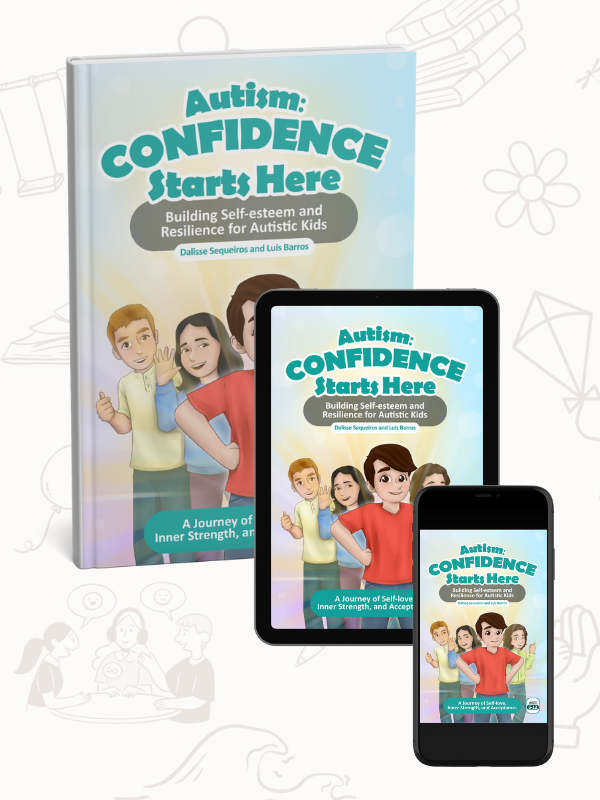
    📚 Autism: Confidence Starts Here – Because building self-esteem can actually reduce meltdowns. When kids feel confident in who they are, they’re less likely to become overwhelmed by social situations or self-doubt.

    And we’ve created FREE downloadable resources including:

    • Meltdowns & Autism: A Parent’s Guide to Calming the Chaos

    • Visual supports for identifying feelings

    • Printable calm-down strategies cards

    You’re not alone in this. Every parent in our community has sat on a metaphorical (or literal) grocery store floor at some point.

    What matters isn’t that meltdowns happen… they’re going to happen. What matters is that when they do, your child knows you’re there, you understand, and you’re not going anywhere.

    That’s not just parenting. That’s love.

    With understanding and solidarity,
    Dalisse (& Luis)
    Loving Pieces Books

    💙 Has your understanding of meltdowns shifted over time? What’s been your biggest “aha” moment? Share with our community—we’re all learning together. Find us on Instagram @lovingpiecesbooks or explore more resources at lovingpiecesbooks.com.

  • The Transformative Power of Authentic Autism Representation in Children’s Literature

    The Book That Made My Friend’s Daughter Cry (In the Best Way)

    Last month, my friend Zara texted me a photo that stopped me in my tracks.

    It was her nine-year-old autistic daughter, Maria, clutching one of our books to her chest with tears streaming down her face. Before I could panic, Zara’s next message came through:

    “She just finished reading Autism: Calming the Chaos and noticed Adrián stims like she does. She looked up at me and said, ‘Mama, he’s like me. I’m not the only one.'”

    I immediately showed Luis the text, and we both just sat there with our own eyes getting misty, because we knew exactly what that moment meant.

    For the first time, Maria had seen herself, truly seen herself, in a story. And it changed something fundamental in how she saw herself in the world.

    This is why authentic autism representation in children’s literature matters so much. It’s not about political correctness or checking boxes. It’s about kids like Maria, like our son Adri and Guille, finally finding themselves on the page and realizing they’re not alone.

    The Invisible Message We Send

    Here’s something I’ve learned from connecting with families in our community: when children never see themselves reflected in the stories they read, they internalize a quiet message.

    “My experience doesn’t matter.”
    “I’m too different to be a main character.”
    “My story isn’t worth telling.”

    And listen, I know that sounds dramatic. But think about it from a child’s perspective. Every book they encounter has characters who make eye contact easily, who don’t get overwhelmed by loud noises, who naturally understand social cues, who never need to stim or retreat to decompress.

    What does that tell an autistic child about their place in the world?

    One mom, while we were chatting in the therapy waiting room for our kids, long before Luis and I even started to write our series… told me her son once asked, “Why are there no kids like me in stories?”

    She didn’t have a good answer that day.

    But it lit a fire in me. I couldn’t stop thinking about it. I went home and told Luis, and we started searching desperately for books that included kids like her son, like Adri, like so many children we knew who deserved to see themselves as heroes in stories.

    That conversation changed everything for us. It became the seed that eventually grew into Loving Pieces Books.

    When Stories Become Mirrors

    There’s this concept in children’s literature about books being “mirrors and windows” and I think it’s one of the most beautiful ways to understand why representation matters.

    When children read about characters who share similar experiences, they learn to see the world through different eyes. For autistic children, this means finding characters who think, feel, and interact like they do. These stories help them feel less alone and more understood.

    When neurotypical peers read these tales, they start to grasp the unique perspectives of their autistic friends. This empathy doesn’t just benefit autistic children, it enriches the entire classroom environment, the entire family dynamic, the entire world.

    Most people think stories are just entertainment, but they are tools for building empathy and understanding.

    Mirrors: Seeing Yourself Reflected

    For autistic children, finding a character who thinks, processes, and experiences the world like they do is profound.

    I’ve heard from parents reading our books whose kids:

    Finally had language to explain their sensory experiences because Adrián, the main character in our books, described it first

    Felt less “weird” about needing alone time after seeing their favorite character do the same

    Gained confidence in their stimming behaviors after reading about characters who stim proudly

    Understood that meltdowns don’t make them “bad” when they read about characters navigating big feelings

    These aren’t small things. This is identity formation. This is self-acceptance. This is a child learning that their neurotype doesn’t make them less worthy of being a protagonist in their own life.

    That’s what the characters in our books, Adrián and Guillermo,do. They show kids that being autistic is just one part of who they are, not something to hide or fix.

    Windows: Building Understanding

    But here’s what’s equally important, the books we’re creating with our series are windows for everyone else.

    When neurotypical kids read about autistic characters, they:

    Learn that different doesn’t mean wrong
    Develop empathy for experiences unlike their own
    Become better friends, classmates, and future colleagues
    Challenge their own assumptions about what “normal” means

    I remember talking to one of Adrián’s friends from school after I’d given her a copy of our book. She came up to Adri and asked, “Oh! Is that why you wear headphones sometimes? That makes so much sense now.”

    That simple moment of understanding, facilitated by a story that Luis and I created together, helped bridge connections. It built inclusive friendship and educated about autism without it feeling like a lesson.

    It’s important not only to incorporate these books at home but also in education. Teachers who use diverse stories like these give students tools to appreciate differences. They help autistic children feel included in classroom discussions.

    From what we know, inclusive education benefits everyone, it breaks down barriers and fosters a more understanding community. By embracing these stories, schools aren’t just teaching literacy; they’re teaching acceptance and empathy, setting the stage for a more inclusive world.

    What “Authentic” Actually Means

    Okay, so we know representation matters. But not all representation is created equal.

    I’ve seen well-meaning books that technically include autistic characters but miss the mark entirely. You know the ones, where autism is either the character’s entire personality or just a quirky trait that’s magically “overcome” by the end.

    Authentic representation means, and this is what Luis and I tried to include visually in our children’s books:

    ✓ Autistic characters (Adrián and Guillermo) who are fully realized people with interests, friendships, conflicts, and growth, not just walking stereotypes

    ✓ Stories that show diverse autism experiences based on our real life, because autism is a spectrum, and one character can’t represent everyone. So we try to focus on what we actually experience ourselves with our boys.

    ✓ Books that respect autistic traits rather than framing them as problems to be fixed

    ✓ Stories written or informed by actually autistic people, me, the late-diagnosed autistic mother of two autistic kids, and my husband Luis, who is our biggest support and our rock! Together, we understand the lived experience of autism from the inside.

    Here’s the thing, and I learned this from my own experience as a late-diagnosed autistic mom, and from listening to autistic adults in our community, autistic people are the experts on autism. When we center our voices in the stories we share, we get closer to truth.

    The Books That Changed Our Perspective

    Can I share some real talk? When Luis and I first started thinking about autism books for our kids, I thought any book that mentioned autism was helpful.

    I was wrong.

    I’m not saying all of them are bad, there are wonderful books out there that do help. But some of the most popular “autism books” were actually pretty harmful. They portrayed autism as a tragedy, focused entirely on how hard it was for other people to deal with, or suggested that with enough therapy, autistic kids could become “normal.”

    Yikes.

    So I started listening, really listening, to autistic adults and parents of autistic kids who had already walked this path before us. Luis and I paid attention to which stories made kids like Maria feel seen versus which ones made them feel like something to be fixed.

    The difference is everything.

    What Our Books Teach

    Of course, as the creators of Loving Pieces Books, our series holds a special place in our hearts. But we didn’t just write books, Luis and I poured our family’s lived experience into every page.

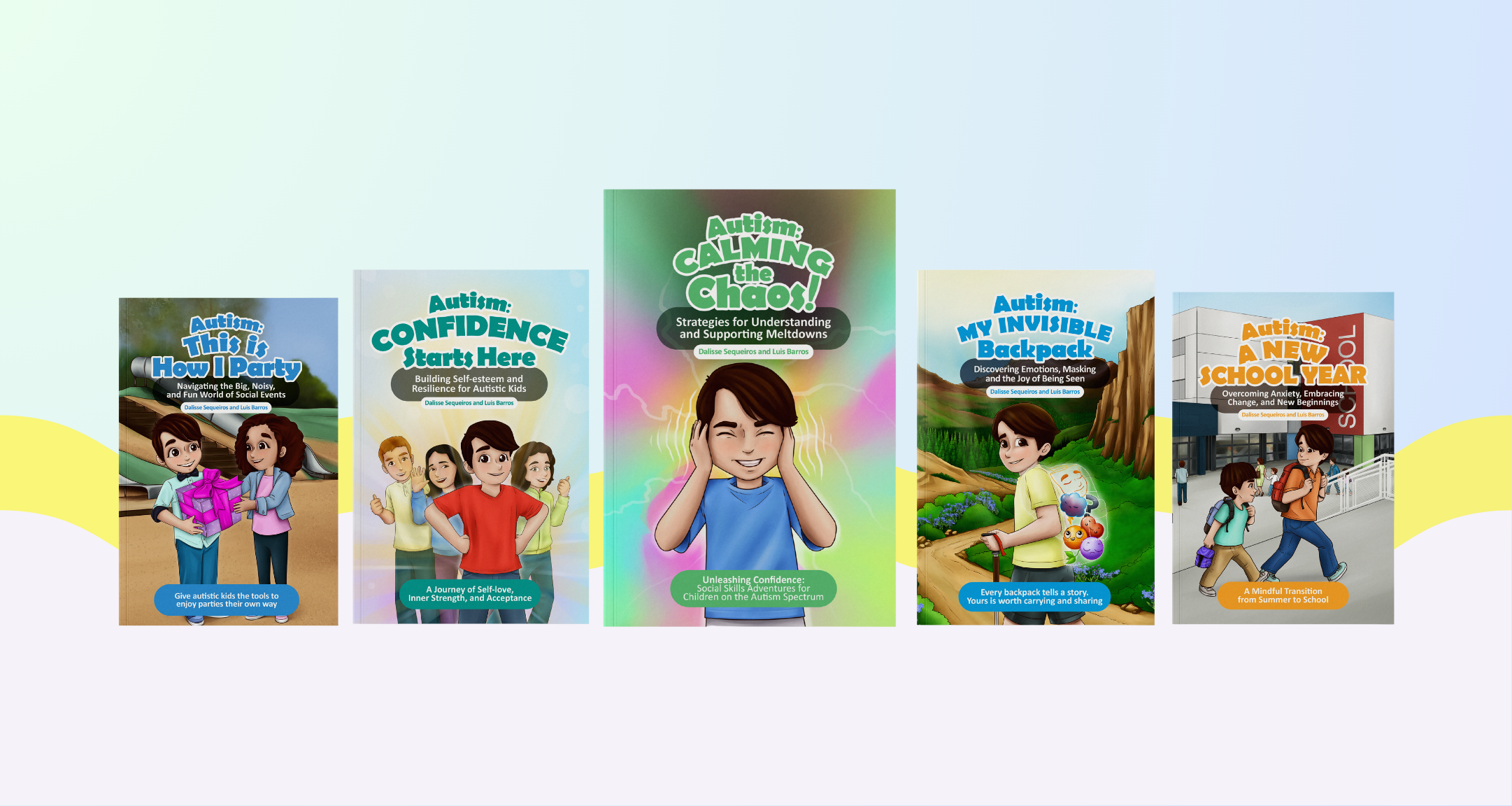
    📚 Autism: Calming the Chaos follows Adrián as he navigates sensory overwhelm and learns strategies to find calm. This book was born directly from watching our Adri develop his own tools for managing meltdowns. It shows kids that having big feelings is okay, and that there are ways to help yourself feel better. Each Book talks about different Social Emotional Learning.

    📚 Autism: Confidence Starts Here

    📚 Autism: My Invisible Backpack

    📚 Autism: A New School Year

    📚 Autism: This is How I party

    Each book in our series features our boys’ real experiences, hand- drawn illustrated beautifully to show stimming, sensory accommodations, and authentic autistic joy, not just challenges.

    While we’re passionate about our own series, we’ve also found other books that beautifully represent autistic experiences, books that don’t just help autistic kids. They help siblings understand their brother or sister better. They give parents language to talk about neurodiversity. They transform classrooms into more accepting spaces.

    Stories as Mirrors and Windows

    For me and my autistic children, seeing ourselves in stories is crucial. These books act as mirrors, reflecting our daily experiences and validating our feelings. This validation is a powerful tool for building self-esteem and confidence.

    On the flip side, these stories are windows for neurotypical children and adults, offering a glimpse into the lives of their autistic peers. This dual role fosters mutual respect and understanding, crucial for reducing stigma and promoting inclusion.

    Luis often says that writing these books changed him too. As a neurotypical dad, creating these stories helped him understand our boys on an even deeper level. He could see through their eyes in a new way.

    What I’m Learning from Our Community

    One of the best parts of building Loving Pieces Books has been connecting with other parents, educators, and autistic advocates who are on this journey too.

    This community has taught me so much, way more than I could ever teach anyone else.

    Like the mom who shared how her autistic son finally explained his sensory sensitivities to his grandparents using examples from a book character. Or the teacher who told me about a student who found the courage to advocate for herself after reading about Adri in our books, who did the same.

    Or the autistic adult who messaged me saying, “I wish I’d had these books as a kid. It would have saved me years of thinking something was wrong with me.”

    These stories fuel our passion for this work.

    Because every time someone shares how a book created understanding, built a bridge, or helped a child feel less alone, Luis and I are reminded why authentic representation isn’t just nice to have. It’s essential.

    For the Educators Reading This

    If you’re a teacher wondering how to make your classroom library more inclusive, I see you. And I want you to know that what you’re doing matters enormously.

    Here’s what I’ve learned from educators in our community who are doing this well:

    Start with one book. You don’t need to overhaul your entire library overnight. Pick one authentic autism-inclusive story and use it as a read-aloud. Notice what conversations it opens up.

    Create space for discussion. After reading, ask questions like “How might someone experience the world differently than you?” or “What do you think this character needs from their friends?”

    Follow the child’s lead. Some autistic students might want to share their own experiences; others might prefer to listen. Both are okay.

    Use these stories year-round. Autism representation shouldn’t be reserved for Autism Awareness Month. Make it a regular part of your curriculum.

    Connect with autistic voices. Follow actually autistic educators and advocates. They’ll guide you toward the most helpful, authentic resources.

    One teacher told me she keeps a basket of autism-inclusive books, including our Loving Pieces series, in her classroom’s calm corner. Kids can read them anytime, and both her autistic and neurotypical students gravitate toward them. She said it’s created a culture of understanding she never could have achieved through a one-time lesson.

    The Ripple Effect

    Sometimes I think about Maria, the little girl from the beginning of this post, and how one book created such a profound shift in how she saw herself.

    But then I think about all the other kids in her class who read that same book.

    They learned that their autistic classmate’s way of being in the world is valid. They developed empathy. They became better humans.

    This is how we change the world, one story at a time.

    When we fill our homes, classrooms, and libraries with books that authentically represent autistic experiences, we’re not just helping autistic children feel seen. We’re teaching the next generation that neurodiversity is part of the beautiful tapestry of human experience.

    We’re raising kids who will grow up to be more understanding coworkers, more empathetic partners, more inclusive leaders.

    That starts with the stories we choose to tell, and the voices we choose to amplify.

    Every child deserves to see themselves as the main character of a story. Every child deserves to know their experience matters, their perspective is valuable, and their way of being in the world is worthy of celebration.

    Our book series, Loving Pieces Books, matters. The stories we tell matter. The voices we amplify matter.

    Let’s make sure the next generation of children, autistic and neurotypical alike, grows up in a world where everyone’s story is honored.

    Your Next Step

    If you’re feeling inspired to bring more autism-inclusive stories into your home or classroom, I’ve curated our complete series along with other beloved books from our community:

    Our Loving Pieces Books Series:

    📚 Autism: Calming the Chaos

    📚 Autism: Confidence Starts Here

    📚 Autism: My Invisible Backpack

    📚 Autism: A New School Year

    📚 Autism: This is How I party

    And I’ve created a FREE downloadable resource guide with even more book recommendations, discussion questions, and tips for using these stories to build understanding, whether you’re a parent, teacher, or caregiver.

    With love and hope,
    Dalisse (& Luis!)
    Loving Pieces Books

    💙 What book helped you or a child you love feel seen? Share your story with our community, we’re all learning together. Find us on Instagram @lovingpiecesbooks or explore more resources at lovingpiecesbooks.com.

  • When the World Feels Too Loud: Understanding Sensory Processing Differences in Autism

    You know that feeling when you walk into a crowded mall during the holidays? The fluorescent lights buzzing overhead, a cacophony of voices bouncing off the walls, the overwhelming smell of cinnamon pretzels mixing with department store perfume?

    Now imagine feeling that way in a regular grocery store. Or your own kitchen. Or sitting in a classroom.

    This is the reality for many autistic children navigating sensory processing differences, and if you’re reading this, I’m guessing you’re searching for answers because someone you love is struggling with a world that just feels… too much.

    I see you. And I’m here to walk alongside you on this journey.

    The Day Everything Made Sense

    Let me tell you about Emma (not her real name), a little girl whose mom reached out to me last year, exhausted and confused. Emma would have complete meltdowns at birthday parties. She refused to wear anything but one specific pair of pajamas. And grocery shopping? Forget about it.

    “Everyone thinks I’m just a bad parent who can’t control her child,” her mom told me, tears in her eyes. “But I know something else is going on.”

    She was right. And once we started unpacking Emma’s sensory processing differences, everything shifted, not because Emma changed, but because the adults around her finally understood what she’d been trying to communicate all along.

    What’s Really Happening: Sensory Processing Decoded

    Here’s the thing about sensory processing, we all experience it, but for autistic children, the volume knob is turned way up (or sometimes way down) on one or more of their senses.

    Think of your brain as a filter. For most neurotypical people, that filter sorts through sensory information efficiently: “This is important. This can be ignored. This is background noise.” But for many autistic children, that filter works differently. Every sensation demands equal attention.

    Research from occupational therapy studies shows that 60-90% of autistic children experience some form of sensory processing difference. This isn’t just being “picky” or “difficult”, this is their neurological reality.

    What This Actually Looks Like

    When I talk to parents, I often hear:

    “She can’t stand the seams in her socks.”

    “He covers his ears every time the blender runs.”

    “Bright lights make her anxious and irritable.”

    “He won’t eat anything except three specific foods.”

    These aren’t behavioral issues, they’re sensory experiences that feel genuinely uncomfortable or even painful. Imagine wearing a wool sweater on bare skin all day, or listening to nails on a chalkboard during every conversation. That’s the level of distress some sensory inputs can cause.

    And here’s what breaks my heart: many of these children can’t articulate what’s wrong. They just know something feels bad, and their bodies react with meltdowns, shutdowns, or avoidance.

    The Grocery Store Story (And Why It Matters)

    Remember Emma? Her grocery store meltdowns made perfect sense once we understood her sensory world.

    The fluorescent lights flickered at a frequency most of us don’t consciously notice, but Emma did, and it felt like a strobe light. The refrigerator hum was painful to her ears. The smells from the bakery, seafood counter, and produce section all hit her at once. Strangers’ carts rattled. Someone’s perfume was overpowering.

    She wasn’t being “difficult.” She was drowning in sensory input while trying to hold it together.

    Once her mom understood this, they started shopping at opening time when it was quieter, Emma wore noise-canceling headphones, and they kept trips short with a clear plan. The meltdowns didn’t disappear overnight, but they became less frequent and less intense. Things that we have used with our son’s many times and we could share these strategies with Emma’s mom.
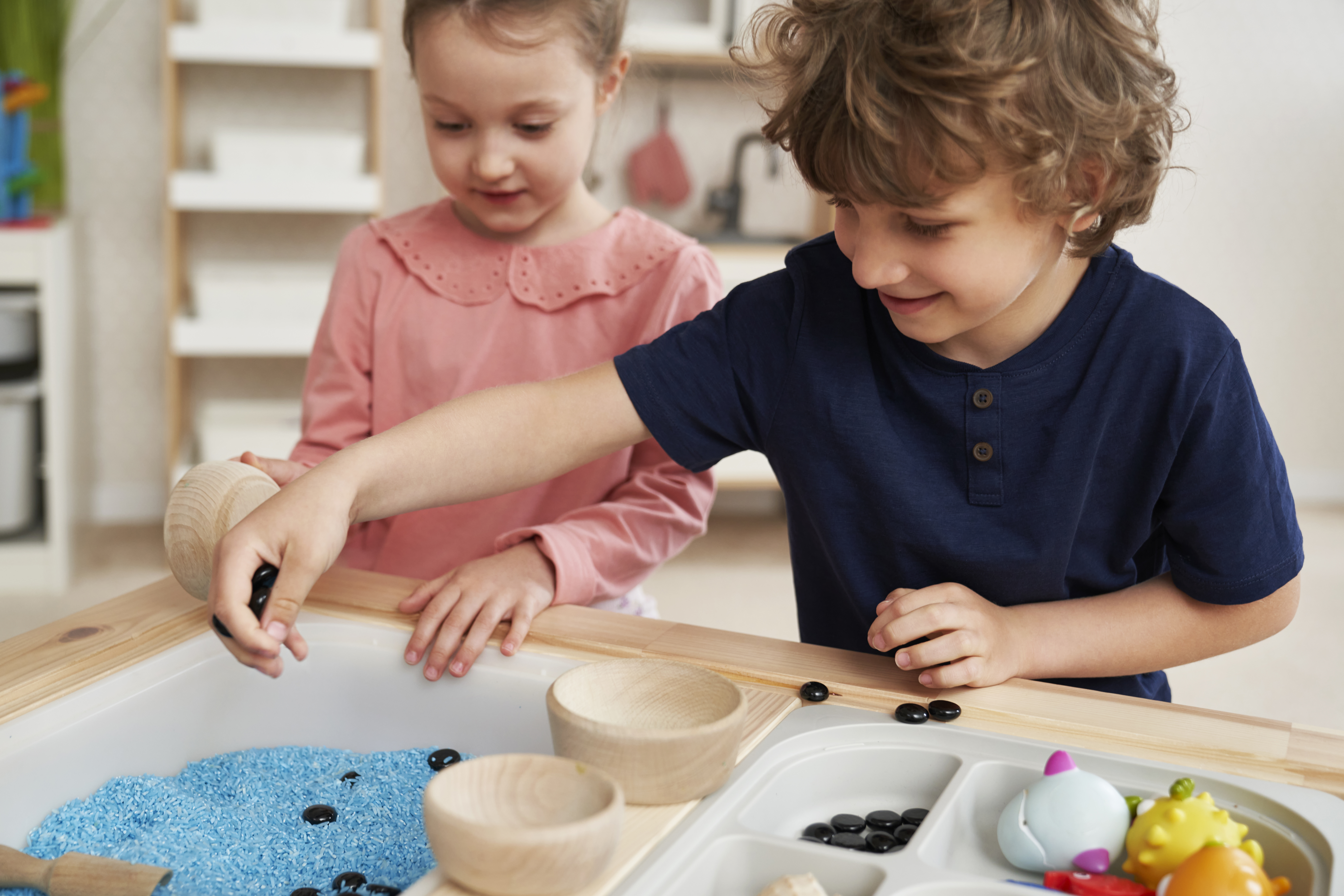
    Because understanding changed everything.

    Practical Strategies That Actually Help

    Okay, so now you understand the why. Let’s talk about the what now.

    Start With Detective Work

    You can’t support your child’s sensory needs until you understand what those needs are. I know … easier said than done when your child is pre-verbal or can’t explain what’s bothering them (My youngest Guillermo now is in this stage).

    Try keeping a simple sensory journal for a week. When does your child seem distressed? What’s happening in the environment? What do they gravitate toward when they need comfort?

    You might notice patterns: meltdowns always happen after noisy environments, or your child seeks out tight spaces when overwhelmed, or certain clothing textures are consistently rejected.

    Create a “Yes Space”

    This is my favorite strategy, and I’ve seen it work wonders. Designate one area in your home as a sensory-safe zone, I call it a “yes space” because everything in it is a YES for your child’s sensory system.

    For us, this meant:

    When our son felt overwhelmed, he knew he could retreat there. No questions asked. No punishment. Just safety. We have this set in our play area.

    Sensory Breaks Are Not Optional

    I know you’re busy. I know schedules are tight. But here’s the truth: sensory breaks aren’t a luxury, they’re a necessity.

    Think of it like this: if you were running a marathon, you wouldn’t skip water stations. Your child is running a sensory marathon every single day just existing in a world that’s not designed for their nervous system.

    Build in short sensory breaks throughout the day:

    • 10 minutes of jumping on a trampoline

    • Playing with kinetic sand or play dough

    • Swinging

    • Pushing against a wall

    • Deep pressure activities (like a “sandwich hug” with pillows)

    These aren’t just nice activities, they’re regulatory tools that help your child’s nervous system reset. Here are some of the products we use at home: https://lovingpiecesbooks.com/authors-picks/

    The Headphones That Changed Everything

    Can I share something vulnerable? I resisted getting my kids noise-canceling headphones for way too long because I worried about what other people would think. Would it make him stand out? Would people judge?

    But you know what? The first time he wore them to his cousins play at her school he actually enjoyed the play instead of melting down, I realized my own discomfort was standing in the way of his comfort.

    If noise is a trigger for your child, invest in good noise-canceling headphones. Let them wear them whenever they need to. This is accommodation, not avoidance. Here are some choices: https://lovingpiecesbooks.com/ear-defenders-ear-plugs/

    Work With, Not Against

    Here’s where I see parents (including myself, in my work) struggle: we try to “fix” sensory sensitivities instead of working with them.

    Your child may never love loud environments. They may always prefer certain textures. And that’s okay.

    Instead of forcing them to “get used to” things that cause genuine distress, we can:

    • Prepare them for sensory challenges ahead of time

    • Offer choices and control where possible

    • Respect their “no” about sensory inputs

    • Celebrate their courage when they try something challenging

    Building a Village That Gets It

    One of the loneliest parts of parenting an autistic child can be feeling like you’re constantly explaining, defending, or justifying your child’s needs.

    Talk to the Teachers

    I know it’s hard to be an advocate when you’re exhausted. But educators genuinely want to help, they just need to understand what your child needs.

    Share specific information: For example: “Mia does better with flexible seating because sitting still at a hard desk is physically uncomfortable for her sensory system.” This is more helpful than “She can’t sit still.”

    Ask about simple accommodations:

    • Can your child use a wobble cushion or standing desk?

    • Is there a quiet space they can use when overwhelmed?

    • Can they have a fidget toy during instruction time?

    Many teachers are willing to make these adjustments, they just need to understand why they matter.

    Educate Your Circle

    I’ll be honest: some people won’t get it. They’ll think you’re “making excuses” or “being too soft.”

    But many people like grandparents, friends, babysitters, genuinely want to understand and support your child. They just don’t have the language or knowledge.

    Share articles (like this one!). Explain specific triggers. Give them concrete ways to help.

    When my friend explained to her mother-in-law that her grandson’s refusal to hug wasn’t personal, it was sensory, their relationship transformed. Grandma started asking, “Would you like a high-five or a wave?” instead of forcing hugs. And you know what? Eventually, he started initiating hugs on his terms.

    Empathy and Autism Parenting
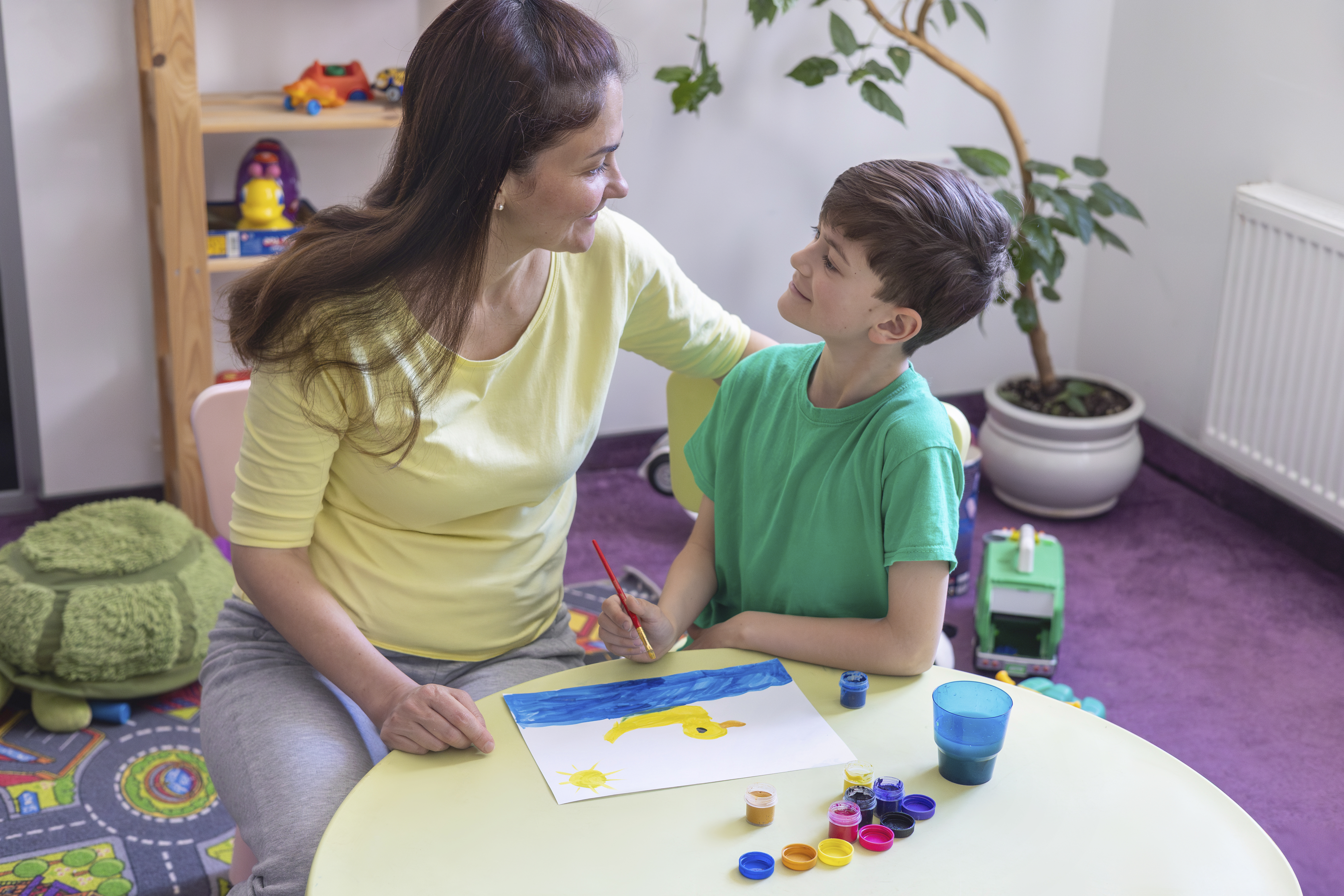
    What I Wish Someone Had Told Me

    You don’t have to get this perfect. You’re going to have days where you forget the headphones, or you push too hard, or you’re so exhausted you can’t muster the patience you wish you had.

    That doesn’t make you a bad parent. It makes you human.

    What matters is that you’re here, reading this, trying to understand. That you’re committed to seeing your child’s sensory needs as real and valid. That you’re willing to make your home, your routines, and your expectations more flexible to accommodate their nervous system.

    That’s love in action.

    Small Steps, Big Impact

    If you’re feeling overwhelmed right now, here’s what I want you to do:

    Pick just one thing from this article. Maybe it’s creating a calm corner. Maybe it’s buying those noise-canceling headphones you’ve been considering. Maybe it’s just noticing your child’s sensory patterns this week without trying to fix anything.

    Start there.

    Because here’s the beautiful truth: when we make space for our children’s sensory needs, we’re not just reducing meltdowns (though that’s a nice side effect). We’re sending them a powerful message:

    Your experience of the world is valid. Your needs matter. You don’t have to change who you are to deserve support.

    Resources for Your Journey

    Understanding sensory processing differences is just the beginning. If you’re looking for more support, I’ve gathered resources that have genuinely helped the families I learned with:

    📚 Autism: Calming the Chaos by us Loving Pieces Books is the book that can open your eyes to sensory processing. It’s comprehensive yet accessible, perfect for kids to visually understand what sensory overload may look like and even though it’s a children’s book, parents can benefit from it specially if you are just starting to understand these differences.

    And of course, I’ve created FREE sensory strategy guides and printables on Loving Pieces Books that you can download today, visual schedules, sensory break ideas, and accommodation request templates.

    Your child’s sensory world may be different from yours, but it’s not wrong. It’s not something to fix or overcome. It’s simply how they experience life, and when we honor that, we create space for them to thrive as their authentic selves.

    You’re doing an amazing job navigating this journey. Keep going. Keep learning. Keep advocating.

    And remember: you’re not alone in this.

    With hope and solidarity,
    Dalisse
    Loving Pieces Books

    💙 What sensory strategy has been most helpful for your family? I’d love to hear your story, share in the comments below or connect with our community on Instagram @lovingpiecesbooks.

    Check out our books and FREE Resources

  • Building Self-Confidence in Autistic Children Through Storytelling: A Journey of Empowerment

    I want to start with a moment I don’t usually talk about.

    A few years ago, I was sitting on the floor of my son’s bedroom, surrounded by books that were supposed to “help” him, the kind with perfectly behaved cartoon kids and neat, tidy resolutions. You know the type: the stories that feel nothing like real life.

    He was flipping through one of them, half-interested, half-checking out. And I remember thinking, “This isn’t him. This isn’t us. These stories don’t see him.”

    I felt that familiar ache, the one that whispers, You’re not doing enough.

    But then something shifted. I picked up a different book, one where the main character moved through the world the way he did. Literal. Sensitive. Observant. Beautifully unique.

    Halfway through the story, he did something incredibly small but incredibly meaningful: he scooted closer. No words. Just a tiny movement… but to me, it felt like a bridge had formed between us.

    That’s when it hit me:

    Confidence begins the moment a child feels genuinely seen. And stories have the power to do that in a way nothing else can.

    Why Stories Matter So Much for Autistic Children

    I’m not here to lecture you with a stack of research papers, but experts have long known that storytelling helps children understand emotions, develop identity, and build resilience.

    I’ve seen this in real life, too, both with my own kids and with countless families in our community.

    Stories don’t just teach lessons.
    They offer mirrors.
    They offer language.
    They offer belonging.

    Especially for autistic children, who often navigate a world that misunderstands their rhythms, interests, and sensitivities.

    Let’s break down the real magic behind storytelling, the kind that actually builds confidence from the inside out. The books that we pour our our love in creating for all Autistic Children not only ours.

    Seeing Their Strengths Reflected Back

    When you read stories that resonate, they become a mirror. They reflect the strengths within. For autistic children, tales that show characters like themselves can be transformative. These stories help them see their potential. Imagine a child reading about another who excels in areas they too find interesting. This connection is powerful. It reinforces what they are already good at. Here’s the key insight: seeing their strengths in stories can boost their confidence.

    But it’s more than just seeing strengths. It’s about understanding them. Autistic children often have unique interests. Stories that highlight these interests validate their passions. This validation is crucial. It tells them that what they love is important. It encourages them to pursue what they’re passionate about. This pursuit can lead to personal growth. And when growth happens, confidence follows.Have you ever watched your child light up when something finally “clicks” for them?

    That spark is everything.

    When autistic children see characters who think like they think, feel like they feel, and love what they love, they begin to understand something powerful:

    “My strengths matter. My interests matter. I matter.”

    So many autistic children have deep passions, for my kids they love trains, animals, space, history, weather patterns. When those passions show up in stories, something shifts. Their shoulders soften. Their eyes widen. There’s this quiet sigh of relief because, for once, the world matches them instead of the other way around.

    And if I’m honest, it’s a relief for us, too.
    It’s like, Okay, they see themselves.
    That alone builds confidence more than any motivational speech ever could.

    Resilience Through Relatable Characters

    Let me share a tiny scene from our home.

    One night, while reading a story about a boy who struggles with sensory overload, my son paused and whispered, “Like me.” Two words. That’s it. But those two words were the doorway to a conversation we had never been able to touch before.

    Stories can give our children the courage to face hard things, not because the character is perfect, but because the character keeps trying.

    They learn:

    • Everyone struggles
    • Struggles are normal
    • There are different ways to solve problems
    • They are not alone in what they feel

    That’s resilience… not the tough-it-out kind, but the deeply human kind that grows slowly and quietly.

    Embracing Identity Through Narratives

    Let’s be honest. Growing up autistic in a world designed for neurotypicals can chip away at a child’s self-worth. I’ve seen it. Maybe you’ve seen it too.

    That’s why it matters so much when stories celebrate neurodiversity instead of trying to “fix” it.

    When a child sees affirming stories, they learn:

    “My identity is not a problem. It’s a strength.”

    These stories give them the words to name their needs without shame. They teach them how to advocate. They help them understand their sensory world. They normalize differences instead of highlighting them as flaws.

    This is where confidence begins to root itself deeply, in identity, not performance.

    Safe Spaces for Expression

    I’ll be honest with you: my kids didn’t always have the language to express their emotions. And I didn’t always know how to help them find it.

    Stories changed that for us.

    Characters model how to name feelings, how to ask for help, how to say “I need a break.” And suddenly, those hard conversations become softer, easier, more accessible.

    Stories create the emotional safety net many autistic children need before they can step into self-confidence.

    And as parents, reading with them becomes its own version of therapy, one we get to share from the couch under a blanket.

    Books as Tools for Social-Emotional Learning

    This isn’t about “fixing” our kids. It’s about equipping them.

    Books naturally teach:

    • empathy
    • problem-solving
    • emotional regulation
    • communication skills
    • navigating friendships
    • understanding boundaries

    And when these lessons come through characters who feel familiar… they stick.

    Research backs this up, but honestly, our lived experiences say the same thing.

    The right story at the right time can change everything.

    Authentic Books for Neurodiversity

    Authentic books are more than stories. They are tools for inclusion and learning. They celebrate neurodiversity and teach valuable lessons.

    The Truth: You Don’t Need to Be a Perfect Parent to Build Confidence

    If you take nothing else from this blog, I hope it’s this:

    Confidence does not come from perfection. It comes from connection.

    Every time you read a story that feels like your child…
    Every time you help them see their strengths in a character…
    Every time you give them language for their inner world…
    You’re building confidence, brick by brick.

    Even on the days when you feel like you’re winging it.
    Especially on those days, actually.

    You’re already doing more than you realize.

    If You Want to Take This Journey Even Deeper…

    If something in this conversation resonated with you, if you felt a little spark of recognition or relief, I created something with you and your child in mind.

    Check out our book Autism: Confidence Starts Here

    It’s filled with the kind of stories I wish I’d had when I first started parenting autistic children stories that validate, empower, and help kids see the brilliance in who they are.

    Your child deserves to feel confident.
    You deserve tools that actually help.
    And you’re not alone in this.

    One story at a time, we can help our children stand a little taller in who they already are.

    Check out our books and FREE Resources

    With love and Kindness,

    Dalisse

  • When Words Mean Exactly What They Say: Understanding Literal Thinking in Autism

    As I watch my son Adrián navigate daily conversations, I’m often transported back to my own childhood. The confused expressions, the moments of pause when someone says something that doesn’t quite make sense, the way he process language so carefully and thoroughly it all feels so familiar because I lived it too.

    Being an autistic adult raising autistic children has given me a unique window into one of the most misunderstood aspects of autism: literal thinking. And let me tell you, it’s both beautiful and challenging in ways that neurotypical people might not fully grasp.

    What Is Literal Thinking?

    Literal thinking means taking words, phrases, and expressions at their exact face value. When someone tells my son to “break a leg” before his school presentation, he genuinely worries about injury. When I was his age and heard “it’s raining cats and dogs,” I remember looking up at the sky, genuinely puzzled about where all these animals were supposed to be falling from.

    This isn’t about being unable to learn, it’s about how our autistic brains process language differently. We hear precision where others hear flexibility. We seek clarity where others assume understanding.

    My Own Journey with Literal Thinking

    I remember being eight years old and my teacher saying, ” you have your head in the clouds” or “I need you to keep your eyes peeled.” I spent the entire day worried about what would happen to my eyes and why anyone would want to peel them. The anxiety was real, the confusion overwhelming, and the embarrassment when I finally asked what she meant was something that stayed with me for years.

    As an adult, I’ve learned to navigate figurative language, but it took time, patience, and a lot of gentle correction. The beautiful thing is that my literal thinking hasn’t disappeared, it’s evolved. It helps me be precise in my communication, thorough in my work, and incredibly detail-oriented in everything I do.

    Watching My Children Navigate This World

    When I see Adrián pause after someone uses an idiom, or asks for clarification on something that seems “obvious” to others, my heart both breaks and swells. It breaks because I remember that confusion, that feeling of being on the outside of some secret code everyone else seemed to know. But it swells because I see their minds working, processing, trying to understand, and that’s actually incredible.

    These moments take me right back to my own childhood:

    • The time someone said “hold your horses” and I looked around for horses
    • When my mom said dinner would be “in a jiffy” and I asked how long exactly a jiffy was
    • The confusion when someone said they were “pulling my leg” when their hands were nowhere near my legs

    The Beauty in Literal Thinking

    Here’s what many people don’t realize: literal thinking isn’t a deficit, it’s a different way of processing the world that comes with its own strengths. My children (and I) tend to be:

    • Incredibly honest and direct in communication
    • Precise and accurate when giving or following instructions
    • Detail-oriented in ways that catch things others miss
    • Consistent in how we interpret and respond to information

    How We Can Support Our Literal Thinkers

    As parents, educators, and community members, we can help our autistic children (and adults) by:

    Being patient with questions. When a child asks what seems like an obvious question, they’re not being difficult, they’re seeking genuine understanding.

    Explaining idioms and figurative language. Don’t assume they’ll “pick it up.” Take time to explain what expressions actually mean.

    Appreciating their precision. When they correct seemingly small details, they’re showing you how their minds work, and often they’re right about those details!

    Modeling clear communication. Say what you mean as directly as possible. It helps everyone understand better.

    A Resource for Families

    This journey of understanding literal thinking in autism, both from my own childhood memories and watching my children, inspired me to write “Autism: My Invisible Backpack.” This book is specifically designed for autistic children ages 6-14, helping them understand their own minds and giving parents insights into how their children process the world.

    In the book, we explore not just literal thinking, but all the unique ways autistic minds work. It’s written from the perspective of understanding and learning more about these differences, not trying to change them. Because the goal isn’t to make our children think like neurotypical people, it’s to help them understand themselves and help others understand them.

    Moving Forward with Understanding

    Every time I watch Adrián or Guillermo work through a confusing expression or ask for clarification on something, I’m reminded that their brains are doing exactly what they’re supposed to do. They’re processing, analyzing, and trying to understand with incredible thoroughness.

    As a community, when we understand and appreciate literal thinking, we create space for autistic individuals to thrive exactly as they are. We stop seeing their need for clarity as a problem to fix and start seeing it as a different, and often more precise, way of engaging with the world.

    My invisible backpack is lighter these days, filled with understanding instead of confusion, with acceptance instead of shame. And I’m working every day to ensure that my children’s backpacks are lighter than mine ever was.


    If you’re parenting an autistic child or supporting autistic individuals in your life, “Autism: My Invisible Backpack” offers insights, understanding, and practical guidance for ages 6-12. Get your copy here and join us in celebrating the beautiful, unique ways autistic minds work.

  • How to Prepare Your Classroom to Welcome an Autistic Student: Tips for Teachers at the Start of the School Year

    The start of the school year is an exciting time for everyone: new beginnings, brand new materials and endless new learning opportunities full of excitement. At the same time, for some children it can also be a period of anxiety, uncertainty, insecurity and confusion.


    I am a teacher and have been able to accompany, guide and support children of different ages and characteristics, including students diagnosed with autism spectrum disorder. I have worked both in Spain and in Switzerland, where I lived and worked for three years. There, I learned German, worked with a new school curriculum and learned new methodologies and resources in a totally immersive way. I am currently dedicated to the creation and comprehensive design of teaching materials, educational projects and personalized resources, always adapted to the unique characteristics and needs of each learner.
    This experience has shown me the importance of being present at every stage, especially at the beginning of the school year, when everything is new and challenging for many children.

    New beginnings may not be easy, but with preparation, empathy and specific strategies, we can make their transition to the classroom much more friendly and positive. Here are some tips:

    1.  Before the first day: lay the groundwork

    Learn about your student

    Establishing close and collaborative communication with parents or guardians is essential to getting to know the student in depth and being able to support them in a respectful and effective manner. Taking an interest in their life beyond the classroom will give you valuable insights into how to create a safer, more predictable and meaningful educational environment.

    You can ask questions that will help you better understand their personality, interests, needs and usual supports. Some suggestions:

    • What do they like or what motivates them?
    • What are their favorite activities or games?
    • Are there any specific topics that interest them? Are there any aspects of daily life that they find more appealing (mealtimes, reading time, etc.)?
    • Are there any topics that they dislike or find unsettling?
    • What situations tend to cause them anxiety/meltdowns?
    • Do they follow specific routines?
    • What supports or adaptations do they use at home or in therapy? When do they use these supports?
    • What strategies do you use at home for crisis situations?
    • Do they have any objects that bring them comfort?
    • Do they know/have any friends who will be with them in the classroom?
    • Do they have sensory hypersensitivity or hyposensitivity? Do they use any items or strategies (such as headphones, sunglasses, clothing with specific textures, etc.) to manage this?
    • Do they follow a specific eating routine or have sensitivities to certain foods (textures, tastes, smells)?
    • Do they have preferences or difficulties related to lighting, such as bright lights or open windows?
    • Do they participate in any activities outside of school hours (sports, music, etc.)?

    Also speak with the child’s previous teachers, not just about curricular adaptations but also to understand how the child develops in the classroom and what aspects promote their well-being, inclusion and enjoyment of learning.

    • What are their learning preferences?
    • In what areas do they need more support?
    • What are their timings? Attention span? Rest time?
    • Are there specific times of the day when they tend to feel more tired?
    • How have social interactions and emotions been worked on previously?
    • What resources have worked best for them and which ones did they enjoy the most?
    • Do they have any preferences regarding classroom layout?

    Don’t expect to have all the answers, but show your willingness to learn and collaborate; that attitude makes all the difference from the start.

    Invite the family for a classroom visit

    Invite families to visit the classroom a few days before the start of school. This experience allows students to explore the space in a calm environment, without the hustle and bustle of the first day, which promotes a more confident and positive adaptation. During the visit, they will be able to:

    • Find their desk and chair.
    • Familiarise themselves with the general layout of the classroom.
    • Identify where the different materials and resources are located: tablets, pencils, cardboard, paper, folders, dictionaries, calculators, etc.
    • Know where to leave their backpack and jacket.
    • Identify their designated spot in the classroom.
    • Know which classmates will be nearby and where their support teacher will sit.
    • Observe what the windows and lights are like and where they are turned on.
    • Locate the bathroom.
    • Discover the quiet corner.
    • Know where to line up and where their place in the line will be.
    • Learn the way to the classroom, the playground and other areas of the school.
    • Explore and play freely with some of the materials, games or resources they will use during the course.
    • Get to know you in a relaxed and unrushed setting.

    Use visual supports

    Prepare visual materials that you can send home:

    • A weekly visual timetable with pictograms that they can print out and take to school every day.
    • Include the materials they need to take to each class (books, pencil case, etc.) and clothing (e.g. wear a tracksuit on PE days).
    • A detailed visual timetable for the first and second days of class.
    • Warning of any changes to the timetable that will be followed throughout the course.
    • Including images or explanations of some of the games, materials or routines that will be used during those first two days.

    These aids not only facilitate understanding of what will happen, but also allow the child to arrive in the classroom with a sense of familiarity and confidence from the very beginning.

    2.  Prepare Adapted and Accessible Materials in Advance

    One of the most important steps we can take before the start of the course is to prepare teaching materials adapted to the characteristics and needs of our autistic student. This involves planning with intention, taking into account how that child best accesses information.

    Why are these materials essential?

    Students on the autism spectrum may process information differently. Having adapted materials facilitates their understanding, reduces anxiety and increases their autonomy, allowing them to participate in classroom activities meaningfully.

    Most importantly, these materials truly promote their holistic development and well-being, as well as their enjoyment of the learning process.

    Adapting materials and creating inclusive resources takes time and is not an easy task, but I can help you.

    https://clarasanchezdesigner.wixsite.com/clara-s/en

    I develop inclusive materials, resources and projects that are truly adapted to the needs and characteristics of our students, focusing on comprehensive development and creating a solid foundation that fosters their autonomy and integration into society.

    I work in collaboration with schools, teachers, families and other professionals. If you need support or are looking for personalized resources, please do not hesitate to contact me. I am here to accompany you on this journey.

    You can learn more about my work, my approach and view examples here: https://clarasanchezdesigner.wixsite.com/clara-s/en

    3.  Be Flexible and Cultivate an Inclusive Community

    There will be difficult days, adjustments along the way and many questions without immediate answers, but there will also be moments of deep connection, lots of learning and celebrations of small (or big) achievements.

    Teach empathy

    Without pointing fingers or labelling, you can introduce stories, activities and materials that encourage reflection on empathy and promote diversity from a respectful and inclusive perspective. Some key messages you can work on with the group are:

    • We all learn in different ways, and that’s okay.
    • There are many ways to communicate and express ourselves, and they are all valid.
    • No two people are alike: our differences enrich us and make growing together a valuable experience.
    • Respecting others and treating them as we would like to be treated is an essential basis for living together.

    Resources like LovingPiecesBooks are a great starting point for addressing these themes in a meaningful and accessible way.
    Conveying these values benefits not only autistic students, but the entire group: when we educate about diversity, we show respect, empathy and understanding. If we all thought the same, acted the same or saw the world in the same way… it would be tremendously boring!

    Set an example with your attitude

    The way you treat autistic students will be the most powerful guide for your pupils. If you listen to them, respect their pace and celebrate their progress, they will do the same.

    Conclusion

    We all need to feel heard, understood and valued, that’s where true inclusion begins. Don’t ignore or avoid, but adapt, connect and build bridges.

    It all starts with the first step, the one we take when we show interest in their characteristics and look for the best way to share knowledge, guide them in their development and find excitement and happiness in every step we take together.

    I wish you a great start to the school year! Warm regards,

    Clara

    Website: https://clarasanchezdesigner.wixsite.com/clara-s/en

    Email: clarasanchezdesigner@gmail.com