
Month: January 2026

  • A New Chapter of Celebration: Announcing Our Second Edition & a Free Gift!

    I have to tell you about a happy moment in our lives. It usually starts with a brightly colored invitation, held a little nervously by Adrián. “There’s a party,” he’ll say, his voice a mix of excitement and that familiar flutter of anxiety.

    I know that flutter so well. The questions swirling in his brilliant mind: What will it be like? Who will be there? How loud will it get? What if I need a break?
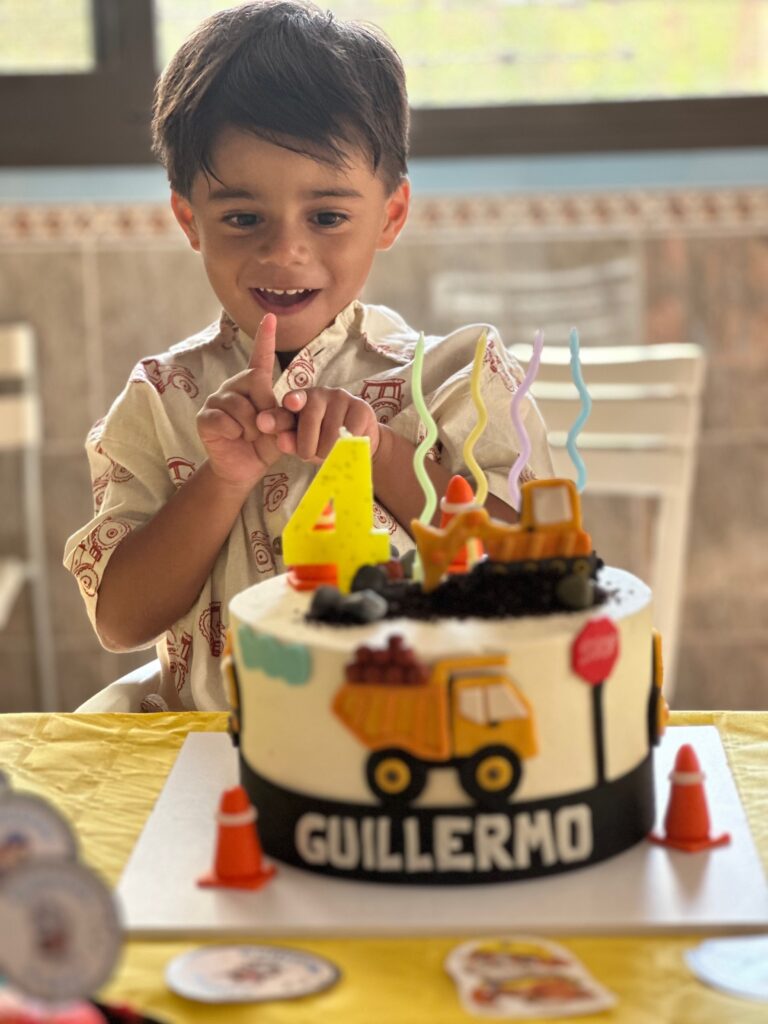
    For years, we navigated these questions together, building our own family “party plan” out of trial, error, and deep love. We poured everything we learned into our first book, Party Time for Adrián. It was our heart, printed on pages.

    And then, something beautiful happened. You read it. You used it. You wrote to us. You shared your own stories, your victories, your struggles, and your brilliant ideas for making it even better.

    That feedback was a gift. It showed us where our story could grow, where another illustration could ease a worry, where a clearer strategy could build more confidence. You showed us that this wasn’t just our story anymore; it was becoming a tool for a whole community.

    That’s why today, my heart is so full as I introduce you to the nurtured, expanded, second edition of that book, now titled:

    Autism: This is How I Party
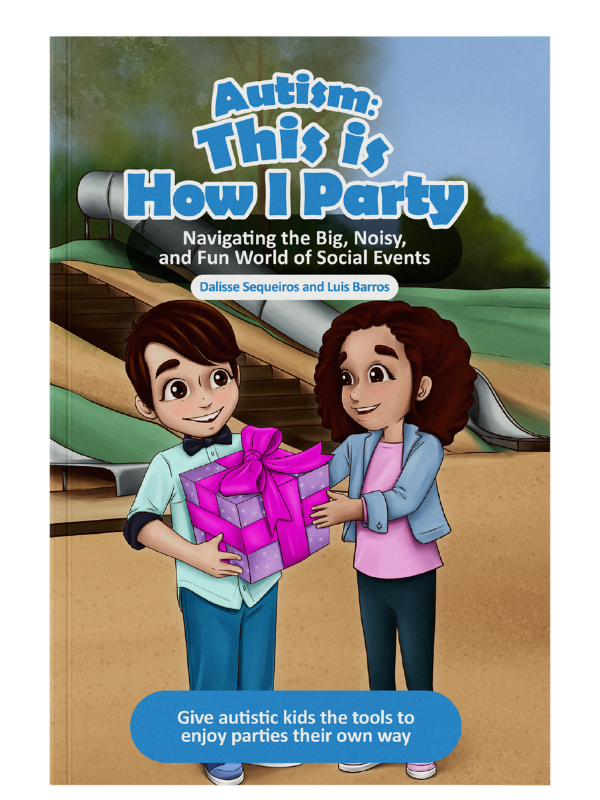
    We kept the warm, empowering core of Adrián’s journey, the character the birthday girl Amelia, the story that has helped so many kids visualize what a birthday party could look and even feel like. But we nurtured it, like tending a garden, to make it even more supportive.

    Here’s what’s new in this second edition:

    • Richer, new Illustrations: We’ve added more visual cues and scenes to help kids see each step of the party process, from getting ready to finding a quiet corner, making the social landscape easier to navigate.
    • An Even Clearer, Step-by-Step Framework: We refined the party plan, making the “Where, Who, What, and When” even more intuitive for kids to follow and for parents to implement.
    • A Direct Response to Your Voice: Every piece of thoughtful feedback from families, teachers, and therapists was listened to. This edition is shaped by real-life use, making it a more practical and powerful tool.

    But we didn’t stop there.

    Your Free Gift: The Ultimate Autism-Friendly Party Plan
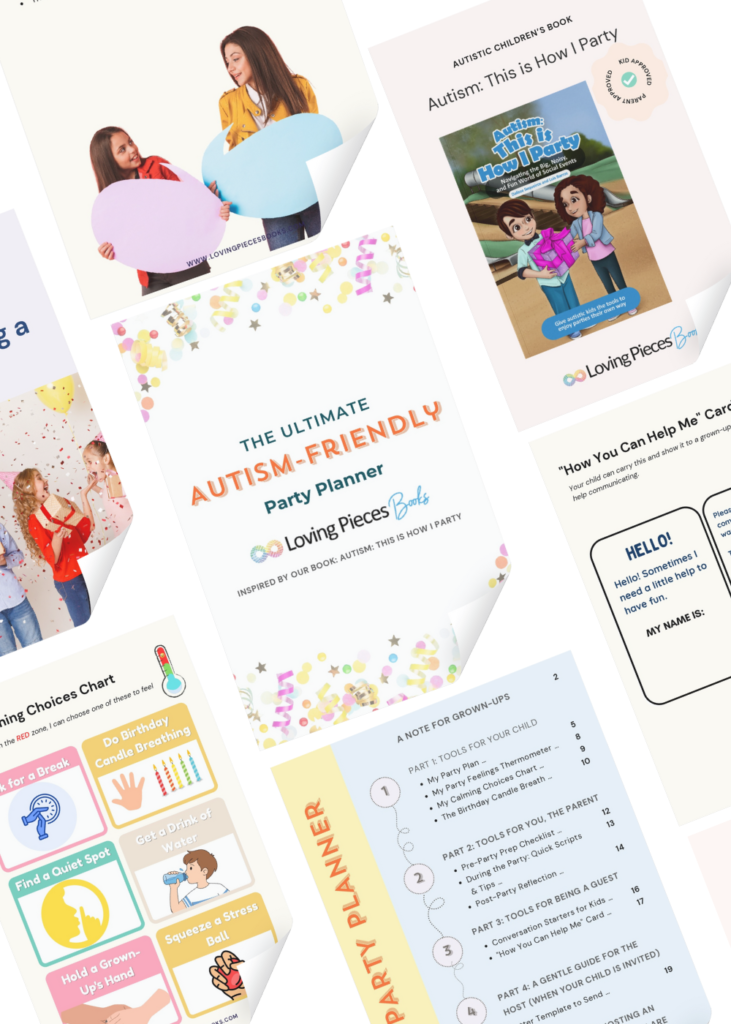
    The book gives kids their roadmap. Now, we want to give you, the amazing adult supporting them, a complete blueprint.

    As our heartfelt “thank you” for being part of this community, we’ve created a brand-new, FREE downloadable guide: “The Ultimate Autism-Friendly Party Plan.”

    This isn’t just a few tips. It’s a comprehensive, step-by-step checklist and strategy guide to:

    • Prepare: How to “preview” the party with your child days in advance.
    • Pack: What to put in your essential “Calm Down Kit” bag.
    • Partner: How to communicate with the host family to create a more inclusive environment for everyone.
    • Pivot: Clear strategies for recognizing overwhelm and executing a graceful break -or exit without shame.
    • Process: Helpful ways to decompress and celebrate the wins afterward.
    • Hosting: How you can be the host of your own party and how to communicate with guest about your child´s needs

    This guide takes the philosophy of the book and turns it into your actionable playbook for real life.

    Why This Book Exists: For Adrián, Guille, and Your Child

    Autism: This is How I Party was born from our lived reality. It’s not about forcing social compliance. It’s about empowering joyful participation. It’s about giving our kids:

    • Self-Awareness: To recognize their own mix of excitement and nerves.
    • Self-Management: With tools like the “Birthday Candle Breath” to find their calm.
    • Confidence: To know that needing a break is a smart strategy, not a social failure.

    This book is for the child who feels the flutter. It’s for the parent who wants to replace anxiety with anticipation. It’s for the teacher or therapist building social-emotional skills. It’s for the host family who wants their celebration to be welcoming for everyone.

    We are so grateful for the journey that led us to this new edition. This is more than a book update; it’s a testament to the power of community feedback and our shared commitment to seeing our children thrive.

    Ready to turn party anxiety into confident anticipation?

    Here’s to celebrating every child, exactly as they are, and giving them the tools to join the fun in their own wonderful way.

    With so much gratitude,

    Dalisse
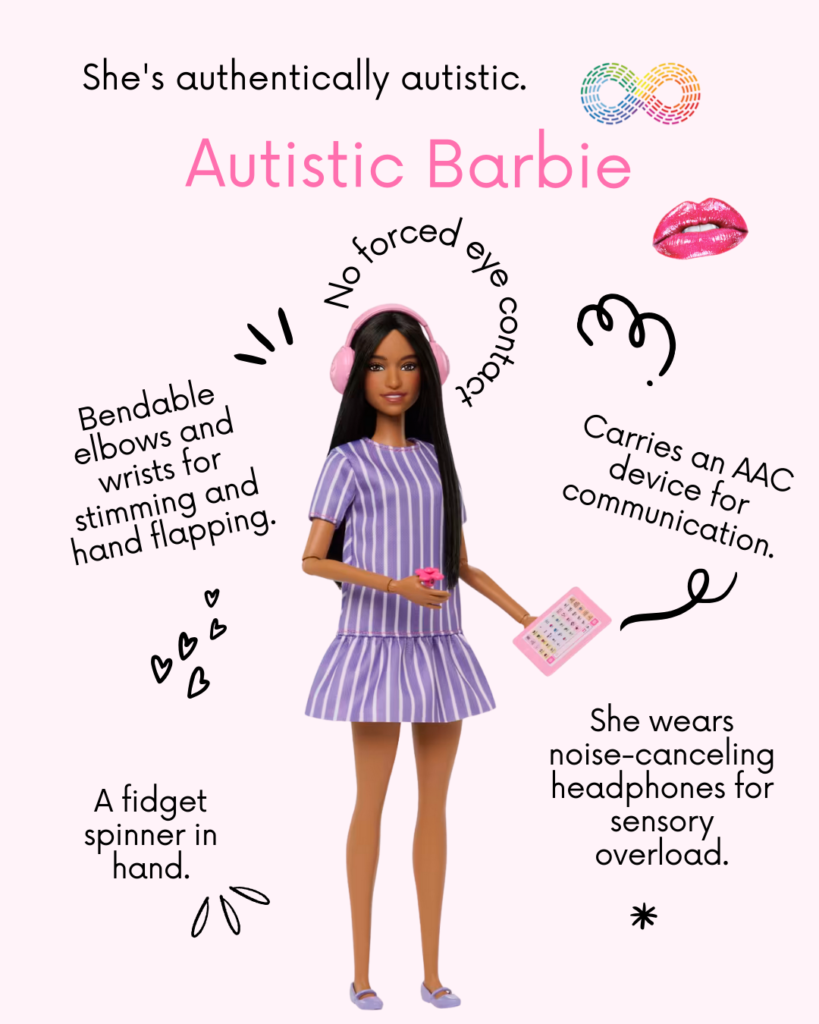
  • Seeing Myself in Barbie: Healing, Hope, and the Complicated Gift of Representation

    I have a confession. I was scrolling through Instagram last week, mindlessly passing by vacation photos and recipes, when my feed stopped me cold. There she was. The new Autism Barbie. I read the caption, zoomed in on the photos, and right there on my kitchen floor, I was so happy.

    A yeiii scream came out instantly out of my mouth. The kind that come from a place so deep inside you didn’t even know it was waiting to be vocalized.

    Let me back up. I grew up in the 90s, a dedicated Barbie girl. I spent hours playing with my sister and our dolls, orchestrating elaborate play scenarios, silent stories in my head. But in all those stories, I never saw an autistic barbie, I remember the astonaut, the teacher, the fashion barbie. Even growing up with the AI I even saw a couple memes of reiki barbie (which I loved). I am a late-diagnosed autistic woman, and for most of my life, that part of me felt invisible, even to myself. I guess when I was young playing with Barbie was an escape, but it was also a quiet reminder that I didn’t fit the mold of the shiny, smiling, chatty world she represented.

    Now, I’m a mom to two incredible autistic boys, Adrián and Guille. My life is about advocating for their right to be seen. But sitting there with my phone in my hand, something shifted. This wasn’t just about them. This was about me. The little girl I was, who stimmed (masked a lot!) and daydreamed and felt different, finally had a reflection.

    Why This Feels Like a Hug for My Inner Child

    The details are what undid me. This isn’t just a blonde, blue-eyed doll with a puzzle piece printed on her shirt (thank goodness). She’s a woman of color with a gentle, averted gaze. She’s wearing soft, comfortable clothes you could actually relax in. And she comes with tools that are lifelines in our home: noise-canceling headphones, a fidget ring, and an AAC tablet.

    Seeing these items packaged not as medical equipment, but as part of a beautiful, stylish doll’s world… it legitimizes them. It tells the little girl I was, and it tells my sons now, that these tools aren’t markers of being “less than.” They are smart, helpful accessories for navigating a loud world. They are part of the story.

    I’ve read so many comments from other autistic adults who feel the same way.

    There’s a shared sense of being seen, often for the first time, in a mainstream toy aisle. Many of us are saying the same thing: I wish I had this when I was a kid.

    The Grateful Heart and The Nuanced Mind

    Now, let me put my mom-and-advocate hat on for a second. My heart is full, but my mind is realistic. I am deeply grateful to see that Mattel consulted with the Autistic Self Advocacy Network (ASAN) and based the doll on a real, autistic girl. That matters. It moves this from inspiration to collaboration.

    But I also hear the valid concerns echoing in our community. And I feel them too.

    The Spectrum is So Much Wider Than One Doll
    The biggest, most important conversation is this: autism is a spectrum of billions of unique people. One doll, with one skin tone, one hair texture, and one set of accessories, cannot possibly represent everyone. There’s a real risk that for a non-autistic person, this could slip into a new stereotype: “This is what autism looks like.” We need more. We need different body types, different genders, different sensory tools, and different expressions of being autistic.

    I’ve seen a brilliant suggestion: what about an accessory pack? A set of headphones, AAC devices, and fidgets that could snap onto any Barbie or Ken? That would let a child customize a doll to look like them, or their sibling, or their friend. That feels powerfully inclusive.

    What This Means for Our Kids (And Their Classmates)

    Beyond my own healing, I keep thinking about what this means in practical terms for my boys and their peers.

    For Guille, who is largely nonverbal and has used an AAC device, seeing that tablet in a Barbie’s hand isn’t just a toy. It’s a mirror that says, “Your voice is valid.” For Adrián, who needs his headphones to survive loud noises, it normalizes his need for quiet as just another way to be.

    And for their neurotypical classmates? This is a gentle, powerful teaching tool. It introduces accommodations not as something strange, but as normal, helpful parts of life. It can spark questions and conversations that build empathy, not pity. When disability representation sits on the shelf next to the veterinarian Barbie and the president Barbie, it sends a message: this is part of our world. This belongs.

    Holding Space for Complicated Feelings

    The online discourse around this doll has been… intense. And as a community, we’re exhausted by storms. I’ve seen people dismiss the excitement with, “It’s just a kids’ toy.” But it’s never just a toy. Toys are the blueprints of our imaginations. They tell us who gets to be the hero, who gets to be beautiful, who gets to be seen.

    I also understand the distrust. It’s a corporation. It’s about profit. Can real representation and capitalism coexist? It’s a fair and painful question. We can be grateful for the step forward and still demand more steps, more variety, and more authentic inclusion in the future.

    A Step Forward on a Long Path

    So, here’s my take, as a late-diagnosed autistic woman and a mom.

    This Autism Barbie is not the entire answer. She is not a perfect representation of a wildly diverse spectrum. But she is a meaningful, heartfelt step. She is proof that advocacy is working. She is a signal to companies that authentic representation matters to consumers.

    This is why I write the books I do. At Loving Pieces Books, I create stories where autistic kids are the main character. I know that no single book, just like no single doll, can represent all autistic children. My Adrián and my Guille are proof of how different two experiences can be, even in the same family. But a story can be a starting point. It can be that first, vital mirror for one child, and a window of understanding for another. It can be the spark for a conversation between a parent and a teacher, or the reason a child feels a little less alone. That’s the power of representation; it’s not about capturing everything, but about honestly capturing something that opens a door.

    For me, this doll is a chance to heal a childhood wound I didn’t even know I had. To tell that little girl inside me: You were always here. And you were always beautiful.

    And for my sons, she is one more brick in the world I’m trying to build for them, a world where they see themselves reflected back, not as an afterthought, but as a main character. Worthy of being on the shelf, exactly as they are.

    What do you think? Does this doll feel like representation to you? Let’s have a kind, nuanced conversation about it.

    With Love,

    Dalisse

    Just in case you need it here is the link to Buy the Autistic Barbie: https://amzn.to/3NF5dyQ

  • Creating Inclusive Classrooms: Tools and Stories for Every Child

    I will be honest with you.

    I am not a teacher. I am a mom. I have navigated the overwhelm of therapies, the silence after a hard day at school, and the fierce hope that someone, somewhere in that classroom, truly sees my children for the brilliant, unique people they are.

    This comes from that place. The messy, loving, and sometimes lonely place of wanting your child to belong. It is built from my own desperate searches, heartbreaking setbacks, and the small, glorious victories that showed me what’s possible. So, from one parent to another, let us talk about real tools and stories that can help bridge that gap between hope and reality. You can read more about my heart behind this Blog.

    Tools That Actually Work in Real Life

    Creating a space where your child is understood means finding tools that speak their language and sharing them with the people in their world. This is not about fancy programs. It is about practical, tangible things that make daily life feel safer and more joyful.

    What You Can Share with Their Educators

    I remember walking into meetings feeling small, armed with a folder full of worries. What helped me find my voice was shifting from just explaining diagnoses to sharing what works for my kids at home, I have to say my kids teachers have really helped us.

    For Adrián, visual aids are everything. His anxiety melts when he knows what is coming next. I started making simple visual schedules for our home routines. I printed one out for his teacher, it was not a demand. It was an offering. “This helps him at home. Maybe it could help here, too?” That simple sheet of pictures became his anchor in the classroom chaos. And to my surprise they have been using them at school too! This is why it is so important to have an open communication with School.

    Then there are sensory tools. For Guille, it is a specific textured fidget. I bought an extra one, just for school. I told his aide, “This is not a toy. This is his steering wheel. It helps him navigate the day.” Framing it that way changed everything. It became a tool for success, not a distraction.

    My biggest piece of advice? Offer these not as criticism, but as collaboration. You are the expert on your child. You hold the missing pieces to the puzzle. You can be a super team with School Teachers and support staff.

    Resources for Your Own Toolkit (and Sanity)

    Parenting is relentless. You need resources that support you, not exhaust you.

    Start with story. I looked everywhere for books where my boys could see themselves. Not as a lesson, but as a hero. That search, and that gap, is why I eventually created Loving Pieces Books I needed stories that showed the world through their eyes, to give them that mirror and to give their peers and teachers a window.

    But you cannot pour from an empty cup. My most vital resource has been community. Finding other parents who get it, who do not need the backstory, who just say, “Yep, me too.” It is a lifeline. For tracking progress and making sense of it all, a simple app or even a dedicated notebook can help you see patterns and celebrate wins you might otherwise miss.

    Stories That Build Understanding, Not Just Awareness

    Concepts do not change hearts. Stories do. Here are a few from our own life that made a difference.

    A Small Victory That Changed Everything

    In first grade, Adrián was struggling during group reading time. The noise, the closeness, it was all too much. His wonderful teacher, Ms. Carmen, called me. Instead of listing problems, she asked, “What does he love? What makes him light up?” I told her about his obsession with space facts.

    The next week, she gave him a special job: to be the “Train Fact Captain.” During transitions, he could share one cool fact. It gave him a structured, celebrated way to participate. His peers did not see a kid struggling to cope. They saw an expert. They started asking him questions. It was a tiny shift that changed his entire social standing. It showed me that inclusion is not about forcing a square peg into a round hole. It is about reshaping the hole.

    What My Sons Have Taught Me

    Guille, my five year old, is largely nonverbal. For a long time, I equated his silence with not understanding. One day, he was upset, and I ran through my usual list of questions. “Hurt? Hungry? Tired?” Nothing. In my frustration, I just sat down on the floor next to him and sighed, “I just wish I knew what you needed, my love.”

    He stopped crying, crawled into my lap, and put his hand over my heart. Then he took my hand and put it over his own. He was not just telling me he loved me. He was telling me he felt my love, and he was giving his back. He taught me that communication is so much bigger than words. My job is not to make him talk. My job is to listen in every way he knows how to speak.

    Weaving Connection Into Everyday Life

    Social emotional learning is not a class. It is the fabric of how we connect. Here is how I try to weave it into our world.

    Fostering Empathy with Peers and Siblings

    This starts at home. With Adrián and Guille, we practice “feeling faces” in the mirror. We name emotions in movies. I explain Adrián’s need for quiet to his brother in simple terms: “Guille, Adrián’s ears are feeling too full right now. Let’s use our quiet voices.”

    For peers, stories are my number one tool. When I volunteer in class, I might read a book that features a character with sensory sensitivities. After, I simply ask, “Has anything ever felt too loud or too bright for you?” Kids always say yes. That shared moment of understanding builds a bridge. It makes my son’s experience relatable, not strange.

    Why I Wrote Books for This Very Moment

    This is the heart behind Loving Pieces Books I wrote the stories I needed but could not find. Stories where the autistic character is not a puzzle to be solved, but a friend to be made, a hero on a journey. I use them with my own boys, and I share them with their schools.

    They are conversation starters. They are peace offerings. They are a way to say to a teacher or a classmate, “This is his world. Let me show you how beautiful it can be.” The goal is to build a culture where differences are not just accepted, but embraced as part of the rich tapestry of the classroom.

    Remember, you are not just advocating for a seat at the table. You are showing them how your child makes the table better. Some days you will be a fierce warrior. Other days, you will be a tired human who just gets through. I have been both.

    If you are looking for a place to start, I invite you to explore our FREE Resources. It is a collection of simple tools and guides I made from our own journey, for the moments when you need a little backup. You are the best thing your child has. And you are not alone.

  • The Power of Storytelling: Building Confidence Through Real Autistic Experiences

    You have probably noticed it, too. How the shelves of children’s books are filled with stories that feel… distant. I remember sitting on the floor of the library with a young Adrián, my heart sinking as I flipped through book after book. There were stories about “being kind to everyone,” which is beautiful, but none where he could truly “see” himself. None where the character got overwhelmed by the hum of the lights, or communicated joy with their whole body, or saw the world in patterns as breathtaking and complex as he does.

    That relentless search, that ache for a story that felt like a reflection and not a lesson, is where this all began. Storytelling, the right kind of storytelling, isn’t just a bedtime routine in our house. It’s a lifeline. It’s how we build confidence from the inside out, by showing my boys that their experiences are valid, real, and worthy of being the center of a great adventure. You can read more about our mission behind this in our post.

    The Quiet Magic of Seeing Yourself in a Story

    Let’s be real. For our kids, the world can feel like a place that constantly asks them to adjust, to mask, to explain. A story that mirrors their inner world does the opposite. It *comes to them*. It speaks their silent language.

    The Gift of Validation

    Imagine Guille, my five-year-old, pointing to a picture in a book of a boy covering his ears at a birthday party. His eyes get wide, and he looks at me, then back at the book, and pats his own chest. “Yes, mi amor,” I say. “He hears it too. It’s loud.” In that moment, he isn’t “too sensitive.” He is understood. By a character, by a story, and by me.

    That is the first, most profound power of authentic storytelling: validation. It tells my children, “You are not alone in this feeling. Your experience is real, and it is part of a story.” For Adrián, reading about a character who infodumps about dinosaurs and then feels awkward about it didn’t make him feel awkward. It made him feel seen. It gave his own passionate way of loving things a name and a home in a narrative. That is a building block of confidence you cannot create with just praise. It has to be felt.

    Finding a Roadmap in the Pages

    Confidence isn’t just about feeling good. It’s about believing you can handle things. This is where relatable characters become gentle guides.

    I remember when Adrián was dreading a school field trip to a crowded museum. We read a story about a character who used a “secret mission” checklist (first floor, find the blue whale, then find the quiet corner for five minutes) to navigate a busy place. It was a story, just a fun tale. But the next week, he asked if he could make a checklist for the museum. The story didn’t lecture him about coping strategies. It showed him a hero using one. It gave him a roadmap, disguised as an adventure. He felt in control, not because I told him he would be okay, but because a character he trusted had shown him how.

    More Than a Book: A Tool for Connection

    In our house, the right book is less about literature and more about a toolkit for understanding, for my boys, for me, and for their world.

    Building the Language for Feelings

    Before stories, frustration was a tornado in our house. Guille would cry, Adrián would shut down, and I would be left guessing. Stories gave us a common language. We read about a character who felt like a “soda bottle shaken up.” Now, when Adrián feels that bubbling overwhelm, he can sometimes say, “I’m a soda bottle, Mom.” That is huge. That is self-awareness, born from a metaphor in a picture book. It turns a confusing internal storm into something we can name and, therefore, something we can begin to manage together. Even Social stories hand-drawn work!

    Creating Bridges to Their World

    This is perhaps the most hopeful part. These stories aren’t just for my kids. They are for their peers, their teachers, their extended family. When I share our Loving Pieces Books with Adrián’s class, I’m not asking the kids to be nice. I’m inviting them into a fascinating, different perspective. I’m showing them why Guille might need to jump to feel calm, or how Adrián’s detailed memory works like a super skill.

    It transforms “that weird thing he does” into “oh, that’s how he works.” It builds empathy not from obligation, but from understanding. It helps create a supportive community around them, one curious reader at a time.

    This Is Why I Do What I Do

    I am not a children’s author by trade. I am a mom and along with my husband got tired of not finding the stories our sons deserved. We wrote the books needed in those lonely library aisles. I personally wrote them for the moms and dads who are searching for that mirror. I wrote them for the teachers who want to connect but need a doorway in. Most of all, I wrote them for the Adrian’s and Guille’s, to whisper through the pages: You are the main character of this story. Your way of being is not a side plot. It is the magic itself.

    If this resonates with you, if you are also searching for that authentic reflection for your child, I invite you to explore our book series, It’s a collection of stories and guides born from our real, messy, beautiful life a place to start when you’re ready to see your child’s story celebrated.

    Remember, the most powerful story you will ever help write is the one your child believes about themselves. Let’s make it a good one.

  • Quick Calming Strategies for Sensory Overload: A Lifeline for Autistic Children

    Let me paint you a real picture, one I know you’ve probably lived. It’s the middle of a busy grocery store, and everything is fine until it’s not. The flickering fluorescent lights, the screech of a cart, the perfume sample from two aisles over, it all crashes in at once. And there is my son, Guille, his hands clamped over his ears, his body rigid, eyes wide with a panic that tells me he’s drowning in a sensory storm I can’t fully see. Oh how I dreaded running to the store with him, I was always in alert!

    In that moment, your heart splits in two. One half feels the stares (real or imagined), the pressure to “calm him down.” The other half is screaming inside, wanting to wrap him in a bubble of quiet and just make it stop. I’ve been there on that hard floor, literally and metaphorically, more times than I can count.

    This isn’t about perfect, clinical solutions. It’s about the lifelines, the quick, desperate, often messy strategies we pull from our pockets when the world becomes too much. These are the ones that have worked in the trenches for Adrián, now 11, and Guille, 5. Let’s talk about real tools for real moments. You can find more on this in our post.

    First, Just Breathe (Yes, You, Too)

    Before we help them, we have to ground ourselves. I know the guilt, the fear. Take a breath with me. Your calm is their anchor, even if it feels like you’re faking it.

    Learning Their Secret Language of Overload

    For a long time, I missed the signs until it was too late. I thought a meltdown was just “bad behavior.” Then I learned to read their unique dialects of distress.

    For Adrián, it starts with a whisper. He goes quiet, his jokes stop. He might start rubbing the same spot on his arm. That’s his early warning system. Guille’s is different, a building hum, a restless pace, his hands starting to flap with more urgency, and then comes the full blow meltdown, hitting (himself and us), crying, trying to run…. Your child has had at least one meltdown too. It might look different than ours, could be just be covering their ears, seeking a tight corner, zoning out, or their skin becoming sensitive to touch. The first, most crucial strategy is becoming a detective of their calm. What does the “weather change” look like in their body before the storm hits? Catching it then is our golden window.

    Knowing the Triggers (So You Can Sometimes Dodge Them)

    We can’t avoid all triggers, life happens. But knowing them is half the battle. The usual suspects are there: loud, unpredictable noise (school cafeterias, I’m looking at you), harsh lighting, overwhelming smells, and too much tactile input, and for us was changes in routines.

    But then there are the secret ones. For Adrián, it’s the mix of smells in a bakery. For Guille, it’s the feeling of a seam in his sock. Keeping a simple mental (or actual) note of what leads to a hard moment helps us prepare. It’s not about building a bubble, but about giving them, and us, a heads-up.

    The In-The-Moment Toolkit: What Actually Works

    These are not grand interventions. They are small, portable acts of rescue. We mostly talk about them in our book Autism: Calming the Chaos

    The Power of a Co-Regulated Breath

    Telling a child in meltdown to “just breathe” is like telling someone on fire to relax. It has to be modeled, and it has to be physical. I get down on Guille’s level. I put my hand on my own chest and take a loud, exaggerated, slow breath in through my nose and out through my mouth. “Breathe with Mama,” I’ll say, my voice low and slow. Sometimes he ignores me. Sometimes, his little chest starts to mirror mine. We call it “dragon breaths” (exhaling hard) or “flower breaths” (smelling a flower, then blowing out a candle). We practiced this during calm times, so in crisis, his body sometimes remembers.

    The Instant Safe Space: Creating a Haven Anywhere

    We can’t always get to a quiet room. But we can create a micro-haven.

    • The Hoodie Hideout: Pulling up the hood of a soft hoodie can instantly dim the visual and auditory world.

    • The Lap Cave: If they allow touch, sitting on the floor and inviting them into your lap, with their back to your chest, can create deep pressure and block out visual chaos.

    • The Go-Bag Essentials: My purse always has noise-canceling headphones (the kid-sized ones are a game-changer), a favorite fidget (for us, it’s stretchy ropes), and a small, strong-smelling item like a vial of vanilla or a mint. A potent, familiar smell can anchor a brain that’s lost in sensory chaos.

    For more specific, curated tools that have been lifesavers for us, I’ve put together a list of our Sensory Recommended Curated Amazon Finds. These are the exact items that have earned a permanent place in our calming toolkit.

    Building Their Own Inner Regulation, One Brick at a Time

    The goal isn’t for us to always be the firefighter. It’s to hand them the hose, bit by bit.

    The Security of Predictability

    Routine is the scaffold that holds up my boys’ days. A visual schedule (pictures for Guille, words for Adrián) isn’t about rigidity; it’s about safety. Knowing what comes next lowers the background anxiety that makes sensory overload more likely. We even include “quiet time” and “sensory break” as non-negotiable blocks on the schedule. It legitimizes their need to recharge.

    Giving Feelings a Name and a Home

    After the storm passes, when we’re both soft and tired, we talk. We use the language from our Loving Pieces Books. “Remember when the character felt like a shaken soda bottle? Was it like that?” I give them the words: “Your senses were too full.” I validate: “That is so hard. Your brain was taking in too much information.” This does two things: it tells them their experience is real and understandable, and it begins to build a narrative around it. Over time, Adrián has started to say, “I’m getting too much input. I need my headphones.” That is empowerment. That is the goal.

    This journey is a series of small rescues and tiny victories. Some days, the strategy works. Some days, nothing does, and you just ride the wave with them, your presence the only anchor. That is enough. You are enough.

    For more tools and a deeper dive into creating a supportive world for your child, I invite you to explore our FREE Resources. It’s a collection born from our lived experience, for when you need a little hope and a practical idea.

    You are not managing a behavior. You are protecting a sensitive, brilliant nervous system. And you’re doing an incredible job.

  • Creating Inclusive Classrooms: Moving Beyond Stereotypes to Support Autistic Students

    I need to start with a confession of gratitude. My family has been incredibly fortunate. Adrián and Guille attend a school where the teachers and staff don’t just see a diagnosis. They see Adrián, with his encyclopedic knowledge of marine life and his sudden, brilliant jokes. They see Guille, with his deep, observant eyes and his joyful, whole-body communication. They see their potential first, and they work with us as partners. It’s a gift I don’t take for a single day.

    But over the years, in online groups and late-night conversations, I’ve heard a different story. So many stories, in fact. Stories from parents whose hearts break a little each morning, sending their child into a classroom where they are seen as a problem to be managed, a stereotype to be fit into, or a mystery that’s too complex to solve. I’ve heard these stories from parents everywhere, and I know that a child’s experience can depend so much on their location, their district, or even the single teacher they get that year.

    That disparity, that gap between what is possible and what is happening for so many, is why this conversation matters. This isn’t about theory. It’s about the real, daily life of our kids. Let’s talk about moving beyond the stereotypes to see and support the whole, amazing child. You can read more in our post.

    Peeling Off the Labels to See the Child

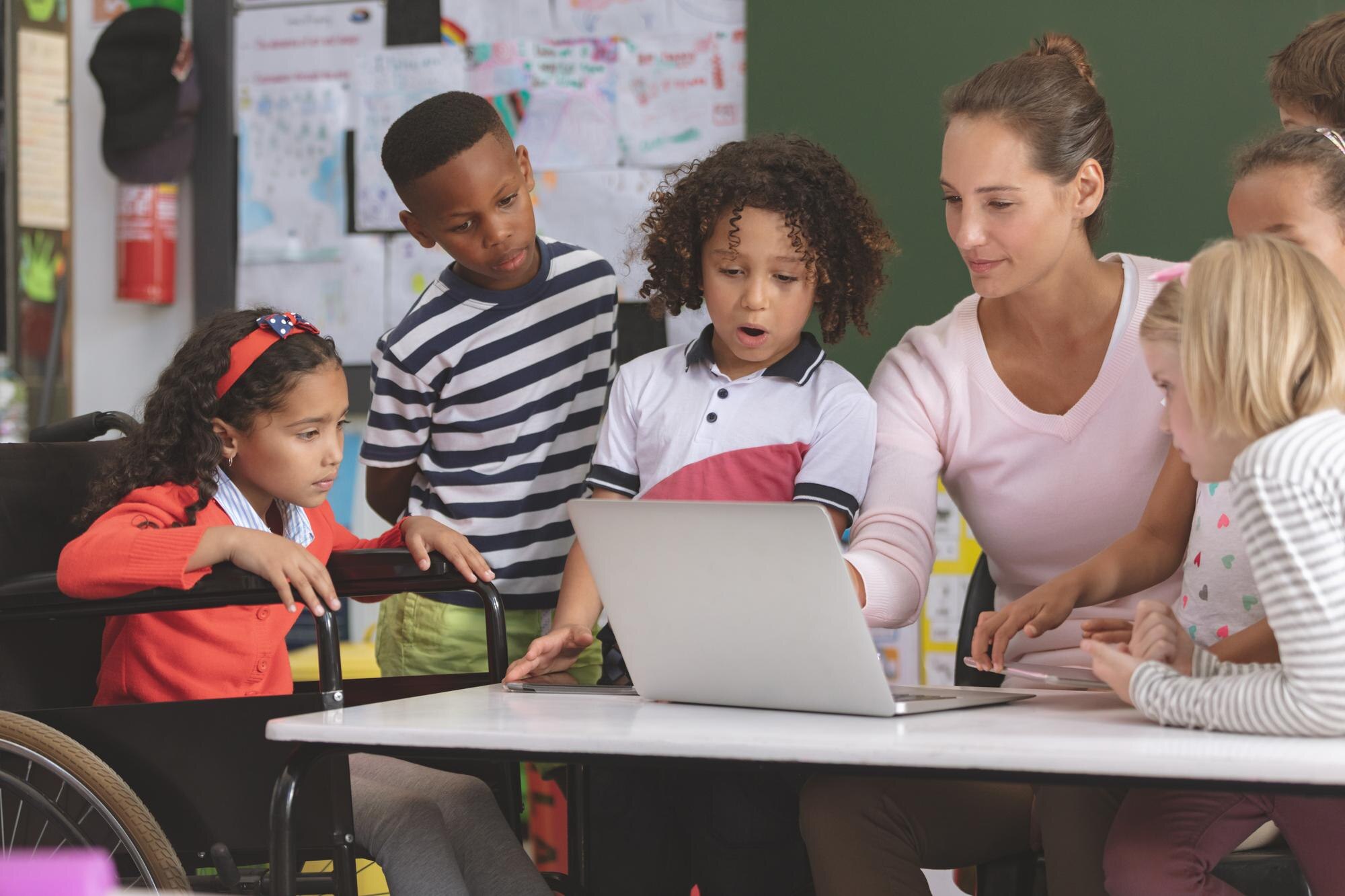
    We’ve all heard the stereotypes. The math whiz with no social skills. The nonverbal child in their own world. The “low-functioning” versus “high-functioning” binary that tells us nothing about who a person actually is.
    The Harm in a Single Story

    Stereotypes aren’t just inaccurate; they’re limiting. They tell our kids what they can’t do, and they tell educators where to set the bar. Moving beyond them means getting curious. It means asking: What are this child’s unique strengths? What does their communication look like? What brings them joy? It means trading the label for a learner’s profile.

    Celebrating the Neurodiverse Garden

    I love the metaphor of a neurodiverse garden. In our dream garden, you wouldn’t get mad at an orchid for not being a sunflower. You’d learn what the orchid needs, more humidity, indirect light, a specific kind of care, and you’d be rewarded with a breathtaking, unique bloom.
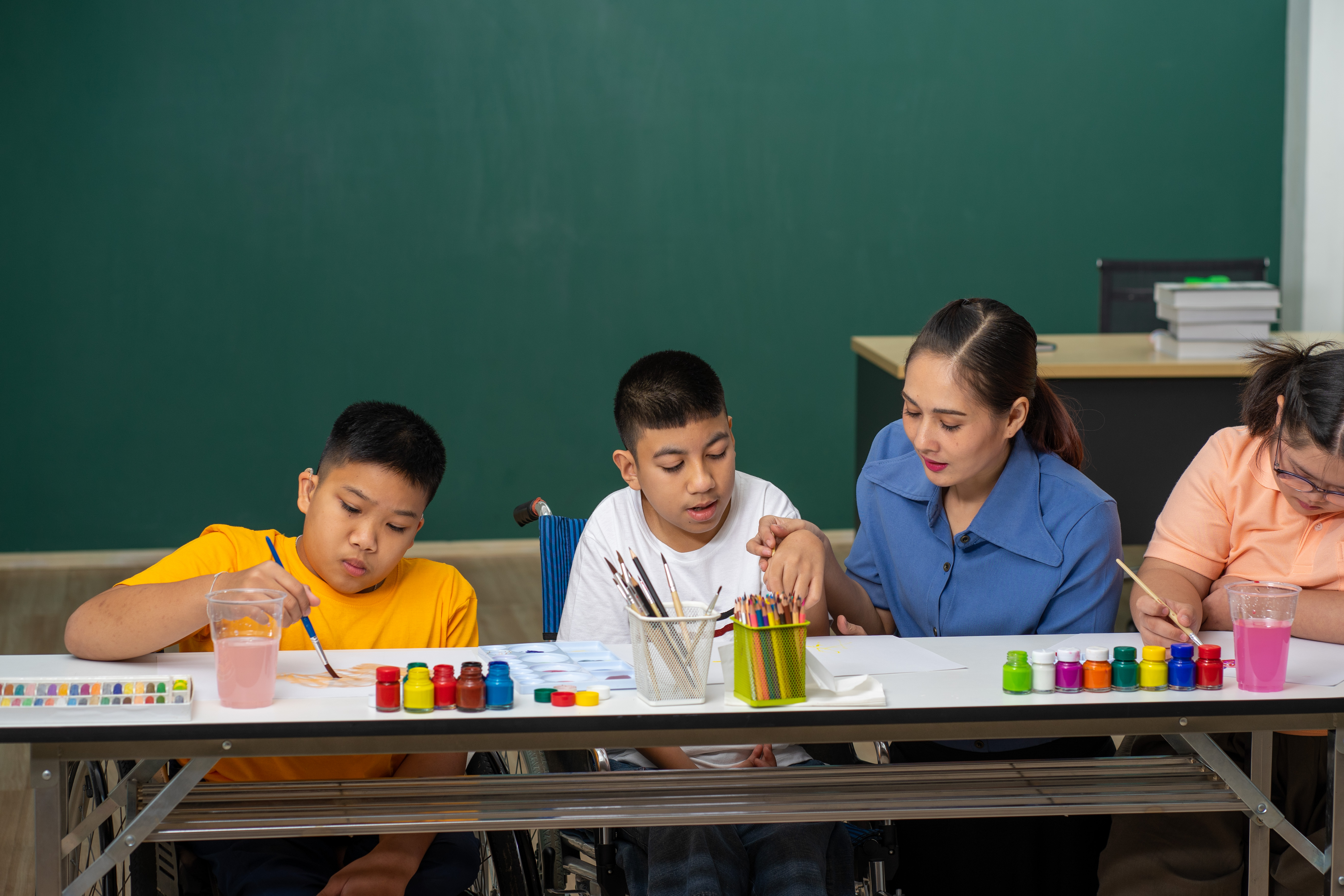
    Guille is my orchid. He communicates without many words, but his language of touch, gesture, and expression is profound. A classroom that embraces neurodiversity doesn’t try to force him to be a sunflower. It appreciates his unique beauty and structures the soil so he can thrive. It understands that the goal isn’t to make him “normal,” but to help him grow into his fullest, most magnificent self. This shift in perspective, from “fixing” to “nurturing”, changes everything.

    From Understanding to Action: Real Strategies That Work

    So how do we turn this philosophy into a Monday morning practice? Here are some things I’ve seen work, both in my kids’ blessed classrooms and in stories shared by parents fighting for change.

    Designing the Space for All Brains

    Inclusion starts with the physical space. Think about a “quiet corner” not as a time-out spot, but as a recharge station, with noise-canceling headphones, a weighted lap pad, and soft lighting. It’s a proactive tool, not a punishment. Adrián Teacher, Mr. Nuria has the best calm corner in school and she made it thinking about all her students needs which gives it more meaning. And Guillermo has his teacher create a calm classroom the entire classroom is adapted to have sensory needs covered! It has flexible seating and visual schedules (pictures for Guille, written lists for Adrián) aren’t accommodations for “special” kids; they’re tools that reduce anxiety and increase independence for many kids. When Adrián’s class started using a visual timer for transitions, the whole room got calmer.

    Teaching Empathy, Not Just Tolerance

    Empathy isn’t something you lecture about. It’s something you model and create experiences for. One of the most powerful tools I’ve seen is using story to build connection. When a teacher reads a book from our Loving Pieces Books collection that features an autistic character, it’s not a “lesson about autism.” It’s an invitation into a different perspective. Kids start asking questions. They might say, “Oh, that’s why Guille wears headphones!” It builds understanding from a place of narrative curiosity, not from a list of rules. This is how you build a classroom community that protects and includes everyone.

    Partnering, Not Just Reporting

    This is the most critical shift. For parents who aren’t seen as partners, school can feel like a fortress. True inclusion means teachers and parents are on the same team. It looks like a teacher asking me, “What works for Guille when he’s overwhelmed at home?” and actually using that information. It looks like co-creating simple, one-page profiles that list a child’s strengths, triggers, and calming strategies, not just their deficits. This partnership tells a child, “The important adults in my life are talking, and they both get me.”

    Building a Wider Circle of Support

    Change in one classroom is wonderful. Systemic change is the goal. I love how in Adri’s and Guille School all the classrooms whether they have a neurodivergent student or not has a calm corner!

    For the Educators Asking for More

    If you’re an educator reading this and wanting to learn, thank you. Your willingness to learn is the first and biggest step. Seek out resources written by actually autistic adults and parents in the trenches. They offer the real-world insight that manuals often miss. Our FREE Resources page is one place to start, built from our lived experience.

    For the Parents Fighting for a Seat at the Table

    To every parent who has had to be a relentless advocate, I see you. I hear your stories. It should not be this hard. My heart is with you. Sometimes, the most powerful tool you can bring is a story a story about your child’s brilliance, their struggles, their humanity. Sometimes, it’s finding that one ally in the building and starting there.

    We have been fortunate. But our story shouldn’t be rare. It should be the standard. Every child deserves to walk into a school that is ready to see them, support them, and be delighted by who they are. Let’s keep sharing our stories, the hard and the hopeful, until that becomes every child’s reality.